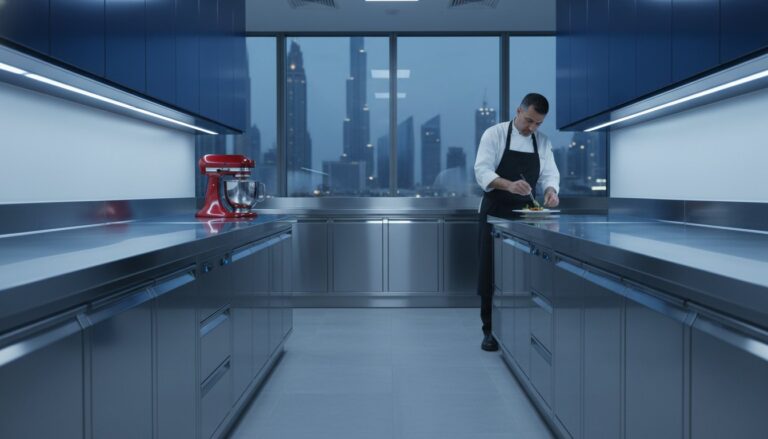
With a thriving and expanding food service sector across the United Arab Emirates, the demand for resilient kitchen infrastructure is at an all-time high. You likely recognize that in the UAE’s unique high-humidity environment, standard storage solutions often fail, leading to rapid corrosion and compromised hygiene standards. Selecting the right stainless steel kitchen cabinets UAE providers offer is not merely an aesthetic choice; it’s a critical decision for regulatory compliance and operational safety.
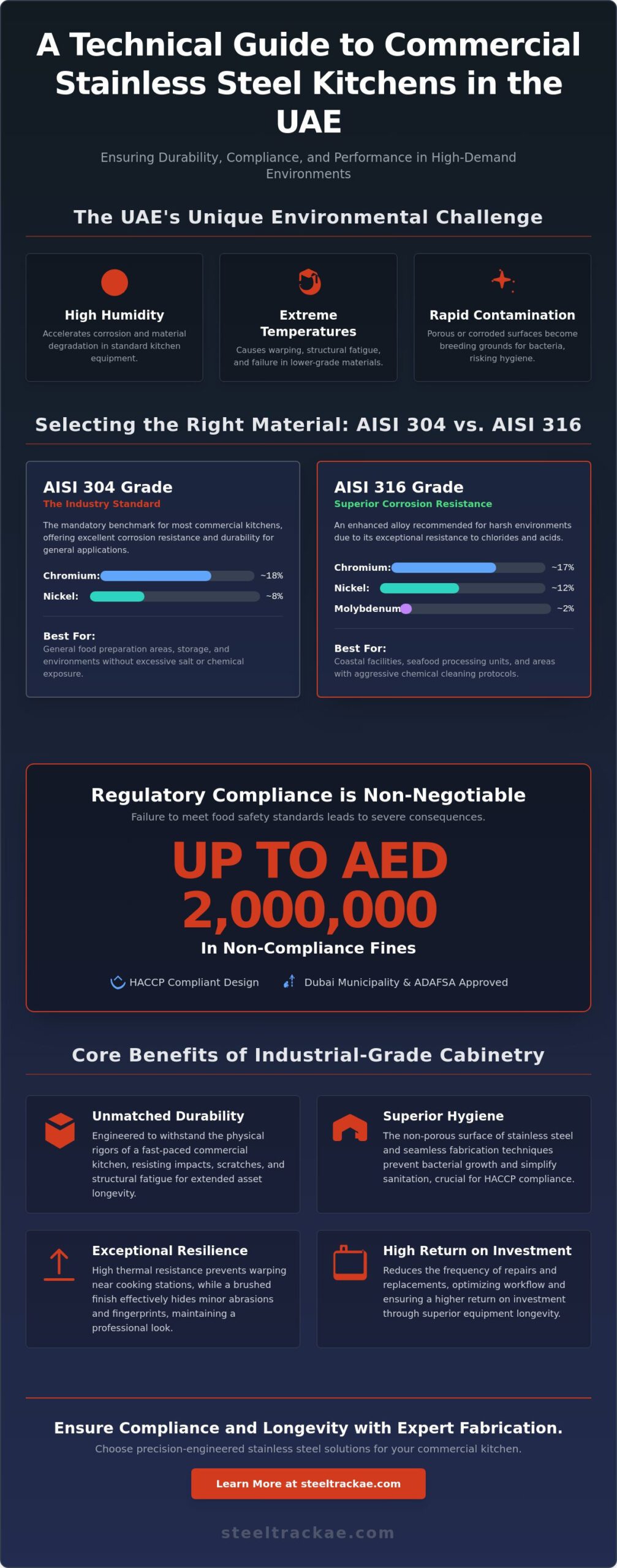
This guide outlines the essential technical standards, material grades, and procurement strategies necessary for the hospitality sector to maintain a competitive edge. We’ll explore how mandatory AISI 304 grade steel and HACCP-compliant designs protect your facility from the risk of significant penalties, where non-compliance fines can reach up to AED 2,000,000. By the end of this analysis, you’ll understand how to optimize your kitchen workflow through ergonomic cabinetry while ensuring a high return on investment through superior equipment longevity and industrial-grade durability.
Key Takeaways
- Identify the metallurgical requirements for AISI 304 and 316 grades to ensure your facility meets the mandatory food safety standards of the Dubai Municipality and ADAFSA.
- Learn how to procure high-performance stainless steel kitchen cabinets UAE regulators demand for HACCP-compliant workflows and long-term industrial durability.
- Analyze the structural differences between modular and custom-fabricated storage solutions to optimize space utilization in premium UAE commercial real estate.
- Establish clear procurement criteria for load-bearing capacities to ensure your cabinetry maintains structural integrity under the weight of heavy industrial equipment.
- Understand the operational benefits of local technical fabrication, focusing on precision engineering and accelerated project timelines for large-scale hospitality developments.
The Strategic Importance of Stainless Steel Kitchen Cabinets in UAE Hospitality
In the high-intensity environment of UAE hospitality, the selection of kitchen infrastructure is a fundamental business decision that dictates both regulatory compliance and long-term profitability. Professional operators understand that the stainless steel kitchen cabinets UAE businesses utilize are not merely storage units; they represent the structural backbone of a sanitary and efficient workspace. The region’s unique climatic challenges, characterized by extreme ambient temperatures and high humidity, demand materials that can withstand rigorous use without succumbing to oxidation or structural fatigue. Choosing industrial-grade steel is a strategic move that aligns with the methodical nature of modern manufacturing and technical engineering.
Strategic selection of cabinetry directly influences the rhythm of a commercial kitchen. When storage solutions are engineered for precision and durability, they facilitate a seamless workflow that allows staff to focus on production rather than equipment failure. This commitment to excellence is what distinguishes established industry leaders from temporary market entrants. High-quality stainless steel kitchen cabinets UAE providers supply serve as a silent partner in achieving operational rigor, ensuring that every square meter of a high-rent commercial facility is utilized with maximum efficiency.
Hygiene and HACCP Compliance Standards
Operational excellence begins with a commitment to public safety. The non-porous nature of high-grade stainless steel is essential for preventing the bacterial proliferation that often occurs in porous materials like wood or low-grade polymers. By utilizing seamless fabrication techniques, industrial kitchens can eliminate the crevices where contaminants accumulate, thereby simplifying sanitation protocols. This methodical approach to hygiene is vital for meeting the rigorous inspection standards enforced by the Dubai Municipality and the Abu Dhabi Agriculture and Food Safety Authority (ADAFSA). Maintaining these standards is a prerequisite for avoiding the substantial financial penalties associated with food safety violations in the Emirates, where fines for non-compliance can be severe.
Durability and Thermal Resistance
Commercial kitchens in the UAE frequently operate at high thermal loads, particularly when cabinetry is positioned adjacent to heavy-duty Cooking Ranges or Pizza Ovens. Standard materials often warp or degrade under such conditions, but the use of AISI 304 Grade stainless steel ensures that the cabinetry retains its structural integrity despite constant heat exposure. This material’s exceptional impact resistance also protects the infrastructure from the physical rigors of a fast-paced catering environment. Investing in high-performance cabinetry reduces the frequency of equipment replacement, thereby securing a superior return on investment through extended asset longevity. Such precision in material selection reflects a brand’s dedication to industrial standards and operational stability.
Technical Specifications: AISI 304 Grade and Industrial Fabrication Standards
Precision in material science is the cornerstone of industrial reliability. When specifying stainless steel kitchen cabinets UAE businesses must prioritize the metallurgical properties of the alloy to prevent premature equipment failure. AISI 304 grade is the recognized industry benchmark, containing approximately 18% chromium and 8% nickel. This specific composition creates a passive oxide layer that protects the substrate from the corrosive effects of high humidity and airborne salts prevalent in the Gulf region. While AISI 304 remains the standard for most commercial applications, facilities located in coastal areas or those utilizing aggressive chemical cleaning agents should consider AISI 316 grade, which includes molybdenum for enhanced localized corrosion resistance.
Beyond the alloy itself, the surface finish plays a critical role in long-term maintenance. A Scotch-brite or brushed finish is the professional preference for high-volume environments. Unlike mirror finishes, which highlight fingerprints and micro-abrasions, a brushed texture maintains a disciplined, clean aesthetic even under heavy use. Consulting with a technical fabrication specialist ensures that your material selection and finish align perfectly with your facility’s specific environmental stressors.
Material Composition and Corrosion Resistance
The chemical stability of your cabinetry is non-negotiable for food safety. High-grade AISI 304 steel is classified as “Food Grade” because it doesn’t leach metallic contaminants into the environment, even when exposed to acidic food products. Operators should be wary of low-grade 200-series stainless steel, which replaces nickel with manganese. While cheaper, these alloys lack the oxidative resistance required for the UAE’s climate and often show signs of pitting and rust within months of installation. Investing in certified 300-series steel is a commitment to equipment longevity and systematic hygiene.
Engineering Standards and Gauge Selection
Structural integrity is defined by the gauge thickness of the steel. For wall-mounted units or light storage, a 1.2mm (18-gauge) thickness provides an ideal balance of weight and strength. However, base cabinets designed to support heavy industrial equipment such as Combi Ovens or heavy-duty mixers must utilize a minimum of 1.5mm (16-gauge) steel. This increased thickness prevents the top surface from bowing or vibrating under load. Professional fabrication also involves internal hat-channel reinforcements, which are welded to the underside of work surfaces to ensure the cabinetry can withstand the daily rigors of a high-output commercial kitchen without structural fatigue.
Categorising Commercial Cabinetry: Base, Wall, and Specialized Storage Solutions
Effective kitchen design in the UAE’s competitive hospitality landscape relies on the systematic categorization of storage assets to ensure peak operational flow. While modular units offer rapid deployment, custom-fabricated stainless steel kitchen cabinets UAE experts design allow for the precise optimization of every square centimeter in high-rent commercial properties. This technical precision is particularly critical in urban centers like Dubai and Abu Dhabi, where floor space carries a significant premium. By aligning cabinetry dimensions with existing structural columns or ventilation shafts, operators can eliminate “dead zones” that typically accumulate debris and hinder hygiene protocols.
Integration is the hallmark of a professional industrial setup. Achieving seamless lines between your storage units and heavy-duty cooking ranges prevents the accumulation of grease and food particles in hard-to-reach gaps. This level of technical synergy ensures that the kitchen remains a high-performance environment where ergonomic height and depth are standardized across all prep stations. Standardizing counter heights at 850mm to 900mm reduces physical strain on staff, which directly contributes to sustained productivity during high-volume service periods.
Base Cabinets and Workstations
Base units serve as the primary engine of the kitchen, combining storage with active prep surfaces. Choosing between sliding and hinged doors is a tactical decision; sliding doors are often preferred in narrow UAE galley kitchens to maintain clear passage for staff. For specialized tasks, such as artisanal bakery production, integrating a marble top onto a stainless steel base provides the specific thermal properties required for pastry work while maintaining the industrial strength of the cabinetry. Adding internal drawer systems further enhances utensil management, ensuring that essential tools are organized and accessible without disrupting the workflow.
Wall-Mounted and Upright Storage
Vertical storage is an essential asset for maximizing the capacity of any industrial layout. Heavy-duty wall-mounted cupboards allow for the safe storage of ingredients and smallware away from primary heat sources. Given the prevalence of concrete and masonry in UAE commercial construction, the installation of these units requires professional anchoring to ensure structural safety under heavy loads. For bulk dry goods and industrial equipment, tall upright storage cupboards provide a centralized, dust-free environment. This methodical approach to storage supports inventory integrity and reflects a commitment to the high standards expected in the regional hospitality sector.
Procurement Criteria: Navigating HACCP Compliance and Load-Bearing Requirements
Procuring industrial assets for a commercial kitchen requires a methodical framework that transcends simple aesthetic preferences. For technical directors and procurement officers, selecting the appropriate stainless steel kitchen cabinets UAE businesses require involves a detailed evaluation of load-bearing capacities and regulatory alignment. Every unit must be engineered to withstand the specific stressors of a high-volume environment while facilitating the rigorous sanitation protocols demanded by the Dubai Municipality and the Abu Dhabi Agriculture and Food Safety Authority (ADAFSA). A systematic approach to specification ensures that your investment supports both operational safety and long-term asset value.
Technical precision in the procurement phase prevents the common pitfalls of structural failure and inspection non-compliance. High-performance cabinetry should incorporate sound-deadening materials, such as bitumen-backed panels or high-density foam insulation, to reduce the decibel levels in a busy kitchen. This focus on the acoustic environment, combined with the use of heavy-duty adjustable feet, reflects a commitment to a sophisticated and ergonomic workspace. To ensure your facility meets these exacting industrial standards, you should consult with a technical fabrication expert who understands the nuances of the local regulatory landscape.
Structural Integrity and Weight Distribution
Determining the weight capacity of your cabinetry is a critical engineering requirement, especially when units are intended to support heavy industrial appliances like Combi Ovens or large-scale Pizza Ovens. Professional-grade stainless steel kitchen cabinets UAE manufacturers produce utilize internal hat channels and strategic structural ribbing to distribute weight evenly across the frame. This prevents the top surface from buckling under static loads that can exceed several hundred kilograms. Additionally, the integration of heavy-duty levelling feet is essential for maintaining a perfectly horizontal work surface on the uneven industrial flooring often found in older commercial buildings or facilities with integrated floor drainage systems.
Sanitary Design and Maintenance Accessibility
HACCP compliance is fundamentally linked to the “cleanability” of the kitchen infrastructure. Sanitary design features, such as radius corners or “coving” within cabinet interiors, eliminate 90-degree angles where organic matter and bacteria typically accumulate. Procurement specifications should also include integrated backsplashes of at least 100mm to 150mm in height to protect masonry walls from moisture and grease ingress. To facilitate comprehensive hygiene, cabinetry should be designed with sufficient floor clearance or mobile casters, allowing sanitation teams to clean effectively under and behind the units. These methodical design choices are vital for passing municipal inspections and maintaining the high reputation of a professional catering establishment.
Custom Engineering and Installation: The Steeltrack Advantage in Technical Fabrication
Technical leadership in the UAE industrial kitchen sector is defined by the ability to provide bespoke engineering solutions that transcend standard catalog offerings. While modular units may suffice for basic layouts, the high-performance stainless steel kitchen cabinets UAE projects require often demand custom fabrication to accommodate unique architectural footprints and complex utility configurations. Local fabrication provides a distinct advantage in terms of precision, lead times, and on-site technical support, ensuring that the final installation aligns perfectly with the facility’s operational objectives.
A strategic partnership with a seasoned fabricator ensures that every element of the kitchen infrastructure is designed with a holistic understanding of the workflow. This involves coordinating the placement of cabinetry with essential services such as gas lines, electrical conduits, and water supply for equipment like Combi Ovens or Hood-type Dishwashers. Precision in the fabrication phase eliminates the need for on-site modifications, which often compromise the structural integrity and hygiene standards of the cabinetry.
Bespoke Fabrication vs. Off-the-Shelf Solutions
Choosing custom engineering is essential when dealing with the non-standard dimensions frequently encountered in premium UAE commercial real estate. Utilizing advanced CNC cutting and laser welding, technical teams can produce cabinets with a level of accuracy that off-the-shelf solutions cannot match. This methodical approach allows for the integration of specialized features, such as reinforced bases for heavy-duty Cooking Ranges or custom cut-outs for floor-integrated grease traps. By adapting the design to the specific utility requirements of the site, operators ensure a disciplined and organized environment that supports systematic growth and safety.
Turnkey Implementation and Technical Support
The transition from conceptual design to a fully operational facility requires a comprehensive turnkey approach. This process begins with detailed 3D rendering to visualize the spatial dynamics and equipment integration before any metal is cut. Professional installation is the final, critical step; it requires precision leveling to ensure that units remain stable and properly sealed against masonry to prevent moisture ingress. Beyond the initial setup, a commitment to long-term technical support ensures that your industrial kitchen remains a stable asset for years to come. For organizations seeking to elevate their operational standards, we invite you to contact our engineering team for a comprehensive kitchen consultation to discuss your specific technical requirements.
Securing Long-Term Operational Excellence in UAE Commercial Kitchens
Optimizing a high-volume catering environment requires more than just high-quality equipment; it demands a strategic commitment to industrial durability and food safety. We’ve examined how utilizing AISI 304 food-grade fabrication and HACCP-compliant engineering protects your facility from both environmental degradation and regulatory penalties. Investing in the specialized stainless steel kitchen cabinets UAE businesses rely on ensures that your infrastructure supports a systematic workflow while maintaining the highest hygiene standards. These technical standards are essential for any operator aiming to establish a stable and sophisticated presence in the regional market.
Precision in custom fabrication and expert installation across the UAE are the final steps in securing a resilient, high-performance kitchen. By prioritizing structural integrity and technical precision, you’re positioning your brand as an industry leader dedicated to excellence and safety. Take the next step in optimizing your facility’s infrastructure and operational ROI by engaging with seasoned engineering professionals. Request a Technical Consultation for Your Industrial Kitchen Setup to ensure your project meets the most rigorous industrial standards. We look forward to partnering with you on your next large-scale engineering challenge.
Frequently Asked Questions
What is the best grade of stainless steel for kitchen cabinets in the UAE?
AISI 304 grade is the industry benchmark for standard commercial applications across the Emirates. It provides the necessary oxidative resistance to withstand the region’s unique environmental stressors and high temperatures. For facilities located in immediate proximity to the coastline, technical directors often specify AISI 316 grade due to its superior resistance to salt-induced pitting and corrosion.
How do I ensure my stainless steel cabinets are HACCP compliant?
Ensuring HACCP compliance requires cabinetry featuring non-porous surfaces and seamless, radius-coved internal corners that eliminate debris accumulation. Proper procurement of stainless steel kitchen cabinets UAE regulators approve involves verifying that all fabrication details facilitate rapid and thorough sanitation. These features are essential for passing rigorous inspections by the Dubai Municipality and ADAFSA.
What is the standard thickness (gauge) for industrial kitchen cabinetry?
Industrial standards typically dictate a gauge thickness of 1.2mm for wall-mounted units and light storage. For base cabinets supporting heavy industrial equipment, such as Combi Ovens or heavy-duty mixers, a 1.5mm thickness is mandatory to prevent structural bowing. This technical specification ensures the cabinetry maintains its integrity under significant static loads during peak service hours.
Can stainless steel cabinets be customized to fit specific kitchen layouts?
Customization is a core requirement for optimizing high-rent UAE commercial spaces where floor area carries a significant premium. Professional fabricators utilize CNC cutting and laser welding to adapt cabinetry to specific architectural footprints and utility penetrations. This bespoke approach ensures that every unit integrates perfectly with your existing gas, water, and electrical infrastructure without creating dead zones.
How do I maintain and clean stainless steel cabinets in a commercial kitchen?
Systematic maintenance involves cleaning with warm water and mild, chloride-free detergents using soft microfiber cloths. It’s essential to wipe in the direction of the grain to preserve the integrity of the brushed Scotch-brite finish. Avoiding abrasive steel wool or harsh chemical cleaners prevents the destruction of the passive oxide layer that protects the metal from oxidation.
What is the difference between AISI 304 and AISI 430 stainless steel?
AISI 304 contains nickel, making it an austenitic, non-magnetic steel with high corrosion resistance in humid environments. In contrast, AISI 430 is a ferritic, magnetic steel that lacks nickel and is significantly more prone to oxidation. While 430 is more economical, it’s generally unsuitable for the high-moisture conditions found in a professional UAE catering environment.
Are stainless steel cabinets resistant to the high humidity found in the UAE?
High-performance stainless steel kitchen cabinets UAE suppliers provide are specifically engineered to resist the region’s high humidity. The chromium content within the 300-series alloy forms a self-healing protective layer that prevents rust and structural degradation. This material choice is a critical strategic decision for ensuring the longevity of your kitchen infrastructure in the Gulf climate.
Do I need a professional installer for commercial kitchen cabinetry?
Professional installation is critical for ensuring the precision leveling required for the safe operation of industrial appliances. Expert installers coordinate the sealing of units against masonry walls to prevent moisture ingress and potential pest harborages. This technical oversight is vital for meeting the rigorous safety and hygiene standards enforced by local food safety authorities.