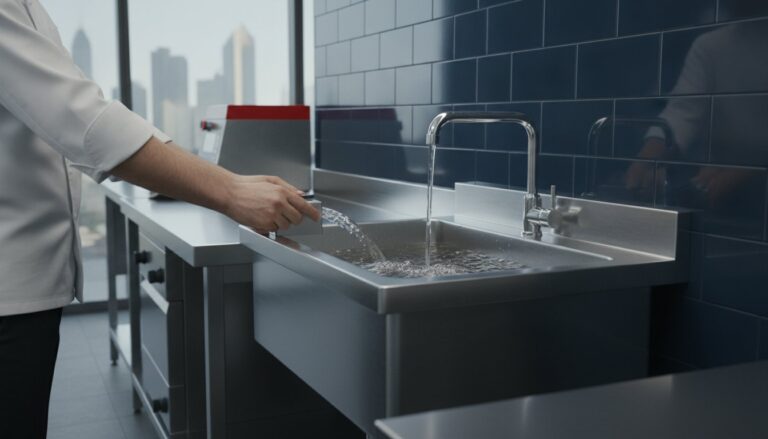
In a high-volume commercial kitchen, a hand wash sink is a precision-engineered safety component rather than a simple plumbing fixture. With over 26,000 food establishments operating in Dubai, the difference between a seamless service and a costly regulatory violation often rests on the technical specifications of your sanitation hardware. You likely understand the operational strain caused by low-grade stainless steel that fails prematurely in high-heat environments or the logistical headache of fixtures that don’t satisfy the latest Dubai Municipality Food Code 2.0 standards.
This professional guide serves as a comprehensive resource for selecting, installing, and maintaining high-performance hand wash sinks that ensure total compliance and long-term durability. We’ll detail the critical requirements for SS 304 grade construction and the mandatory integration of non-hand-operated faucets to prevent cross-contamination. By the end of this analysis, you’ll possess the industrial insight required to integrate robust, HACCP-compliant solutions into your kitchen’s specific footprint, ensuring both employee hygiene and institutional excellence.
Key Takeaways
- Identify the specific regulatory requirements for dedicated sanitation stations under the Dubai Food Code 2.0 to ensure full municipality compliance.
- Understand the technical superiority of AISI 304 stainless steel and why 16 to 18-gauge thickness is the industrial standard for durability.
- Evaluate the operational advantages of wall-mounted versus pedestal units to select the ideal hand wash sink for your kitchen’s specific footprint.
- Learn to optimize sanitation workflows through the methodical integration of plumbing infrastructure, including essential grease trap coordination.
- Discover how custom stainless steel fabrication provides a sophisticated, precise fit that surpasses the limitations of off-the-shelf equipment.
The Critical Role of Hand Wash Sinks in Commercial Hygiene Compliance
The industrial hand wash sink functions as a primary barrier against foodborne illness, serving as a specialized piece of hardware engineered specifically for sanitation. In the high-volume environment of a UAE commercial kitchen, this fixture is a technical necessity rather than a simple convenience. Regulatory bodies, including the Dubai Municipality, enforce a strict separation between hand washing and food preparation tasks. This distinction is vital; cross-contamination remains a leading cause of failed health inspections and operational shutdowns. By providing a dedicated space for staff hygiene, operators ensure that pathogens from personnel don’t compromise raw ingredients or finished dishes.
Adhering to Hazard Analysis Critical Control Point (HACCP) principles requires a methodical approach to kitchen layout. A well-designed sanitation station facilitates this by standardizing the cleaning process. High-quality fixtures reflect a brand’s commitment to industrial rigor and safety. The importance of hand washing is the cornerstone of public health, and the right equipment makes this fundamental task effortless for kitchen staff. For organizations seeking comprehensive facility design that meets these standards, Steeltrack offers specialized services that align equipment selection with local safety protocols.
Regulatory Standards for National Commercial Kitchens
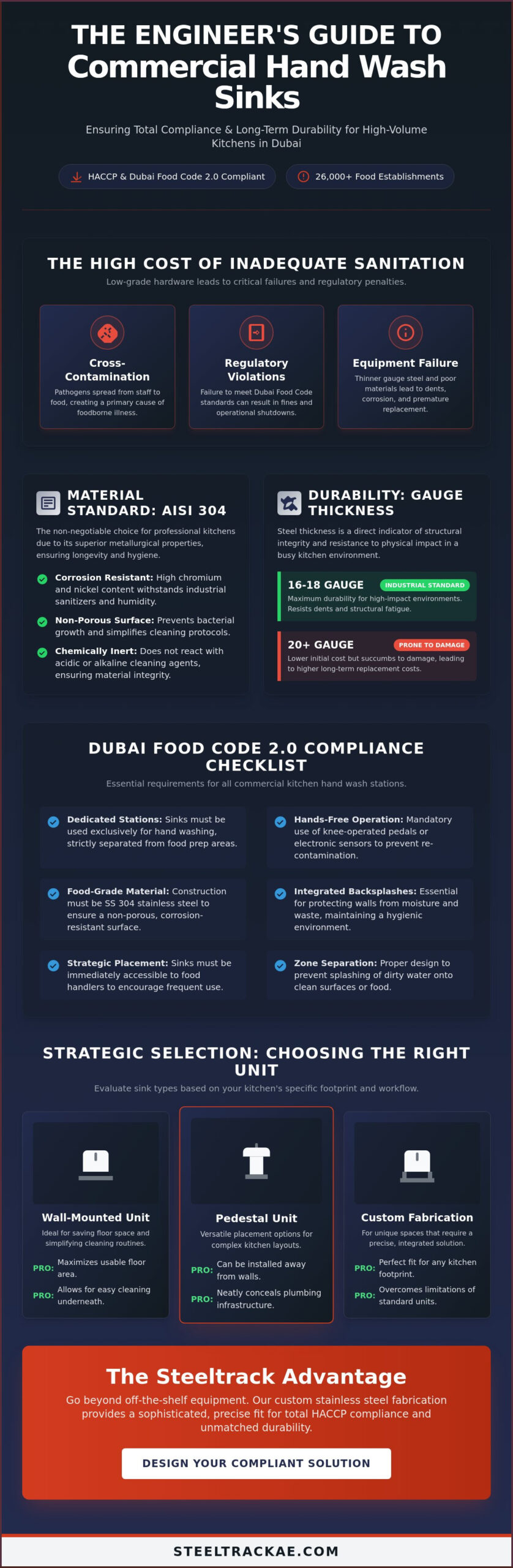
According to the Dubai Food Code 2.0, all food establishments must provide adequate, dedicated hand washing facilities. These units must be constructed from food-grade, non-porous materials like SS 304 stainless steel to resist the corrosion common in the UAE’s humid climate. Placement logic is equally critical. Sinks must be strategically located for immediate accessibility to encourage frequent use by food handlers. Failing to meet these material and spatial requirements can lead to immediate compliance failures during municipal audits.
Preventing Cross-Contamination through Design
Engineering a hygienic workflow requires more than just high-quality steel. It demands features that actively reduce the spread of pathogens.
- Hands-Free Operation: Utilizing knee-operated pedals or electronic sensors is a standard requirement. This eliminates the need for staff to touch tap handles after cleaning their hands.
- Integrated Backsplashes: A high-quality backsplash is essential for protecting surrounding wall surfaces from moisture and biological waste.
- Zone Separation: Properly designed sinks help separate waste and wash zones, ensuring that dirty water doesn’t splash onto clean surfaces or food.
These design choices create a clear separation between sanitation areas and production zones, supporting a systematic approach to kitchen safety.
Engineering Excellence: Material Standards and Operational Mechanisms
The structural integrity of a commercial hand wash sink depends entirely on the metallurgical standards of its construction. In the rigorous climate of the United Arab Emirates, where high humidity and elevated ambient temperatures accelerate oxidation, selecting the correct material isn’t just a preference; it’s a strategic business decision. Professional kitchen operators prioritize AISI 304 stainless steel because its high chromium and nickel content provides exceptional resistance to the corrosive effects of industrial sanitizers and constant moisture.
Standardizing on 16 or 18-gauge thickness ensures that the unit can withstand the physical impacts common in high-volume environments. While thinner 20-gauge options may offer lower initial costs, they often succumb to denting and structural fatigue, leading to premature replacement. A brushed ‘Scotch Brite’ finish serves a dual purpose by masking minor abrasions and facilitating a more efficient cleaning process, as the surface lacks the microscopic pores where bacteria typically reside. These technical nuances distinguish industrial-grade equipment from domestic alternatives.
Stainless Steel Grades: Why 304 is Non-Negotiable
Investment in food-grade stainless steel equipment offers a superior long-term return on investment by minimizing maintenance cycles. AISI 304 grade steel is chemically inert, which means it won’t react with the acidic or alkaline agents found in heavy-duty detergents. This stability is crucial for maintaining the non-porous surface required by international health standards. Adhering to these material specifications aligns your facility with global best practices, such as those detailed in the FDA Food Code regulations, which emphasize the necessity of durable, easily cleanable surfaces in food handling areas.
Operational Valves and Water Management
The mechanism used to trigger water flow is as critical as the sink’s material. Mechanical knee-operated valves are often preferred for their extreme reliability and lack of electrical requirements, making them ideal for high-traffic zones where downtime isn’t an option. Conversely, electronic sensors offer a premium, touchless experience that minimizes water waste through precise timing, though they require a consistent power source or battery maintenance. Integrating thermostatic mixer taps ensures that water remains at a consistent, effective temperature for pathogen removal without risking scald injuries to staff. Precise flow rate optimization further balances the need for thorough rinsing with the UAE’s regional focus on water conservation.
Achieving this level of technical precision requires a partner who understands the nuances of industrial fabrication. If you’re planning a facility upgrade or a new installation, you can consult our technical team to review your specific operational requirements and ensure your equipment meets these rigorous engineering standards.
Strategic Selection: Comparing Wall-Mounted, Pedestal, and Mobile Units
Selecting the appropriate hand wash sink configuration requires a methodical assessment of available floor space and peak staff throughput. Wall-mounted units remain the industry standard for compact kitchen footprints because they liberate valuable floor area for cleaning and movement. These fixtures are particularly effective for operators navigating the minimum 28-square-meter kitchen area requirement mandated for many UAE restaurant licenses. By utilizing vertical surfaces, facilities can maintain clear transit corridors while ensuring that sanitation stations remain within the required proximity of food preparation zones.
Pedestal and floor-standing models offer a different set of advantages, primarily centered on structural stability and placement flexibility. These units are engineered for high-volume environments where heavy daily usage might strain wall-mounted brackets over time. In larger central production units where wall space is occupied by walk-in cold rooms or cooking ranges, pedestal sinks provide a robust, self-supporting alternative. For temporary installations or outdoor catering events, portable stations offer a mobile solution that maintains compliance without permanent plumbing infrastructure.
Space Optimization and Ergonomics
Precision in installation height is paramount for staff safety and ergonomic efficiency. While standard mounting heights typically range between 860mm and 900mm, professional fabrication allows for adjustments based on the specific needs of a diverse workforce. Integrating a hand wash sink directly into a configuration of stainless steel work tables creates a seamless, hygienic transition between prep zones and sanitation stations. This methodical integration minimizes unnecessary movement and optimizes the overall kitchen workflow. Steeltrack provides comprehensive services for the custom design and layout of these specialized units to ensure they fit within tight architectural constraints.
Application-Specific Sink Variants
It’s vital to distinguish between specialized equipment types to prevent cross-contamination and maintain industrial standards. A stainless steel mop sink is designed specifically for janitorial waste and must never be substituted for a dedicated hand wash basin. Premium variants often feature integrated soap and paper towel dispensers, which streamline the sanitation process and reduce the footprint of peripheral accessories.
- Multi-bowl configurations: These are necessary for large-scale operations where staff volume requires simultaneous access to sanitation.
- Integrated dispensers: These reduce clutter and ensure that hygiene supplies are always within reach of the operator.
- Heavy-duty variants: These feature reinforced basins designed for central production units and industrial laundries.
Selecting the right variant ensures that your facility doesn’t just meet the minimum legal requirements but operates with technical precision and professional pride.
Integration and Installation: Optimizing Sanitation Workflows
Successful deployment of a hand wash sink requires a methodical synchronization with the building’s core infrastructure. In the UAE, where environmental factors like high humidity and saline air can compromise internal systems, the precision of the initial installation is paramount. Secure mounting isn’t merely a matter of convenience; it ensures that the unit remains stable under the significant industrial loads encountered during peak operational hours when staff throughput is at its highest. Every connection point must be meticulously sealed with high-grade industrial silicone to prevent moisture ingress. This preventive measure is vital for protecting the structural integrity of the wall and preventing the accumulation of biological contaminants in hidden voids behind the fixture.
A well-executed installation also considers the ergonomic relationship between the operator and the hardware. When a unit is integrated into a high-traffic zone, the surrounding workflow must remain unobstructed. This requires a strategic approach to spatial planning that accounts for the radius of movement required by staff. Achieving this level of operational harmony is what distinguishes a professional kitchen setup from a standard assembly. For facilities requiring professional assistance with technical layout and hardware integration, you can contact our engineering team to discuss your project specifications.
Plumbing and Drainage Requirements
Standard commercial basin drainage typically utilizes 1.5-inch or 2-inch piping to ensure the rapid and efficient evacuation of wastewater. Integrating Stainless Steel Grease Traps is a critical step in this process, as these specialized components prevent solid waste and fats from entering and obstructing the primary drainage lines. This integration is essential for maintaining a hygienic workflow and avoiding the costly operational disruptions caused by plumbing failures or municipal non-compliance. Coordinating the mixer tap connections for both hot and cold water ensures that staff can achieve the optimal temperature for effective sanitation without the need for manual adjustment, thereby supporting a touchless and efficient hygiene protocol.
Long-Term Maintenance and Care
Maintaining the aesthetic and functional integrity of stainless steel requires a disciplined and systematic cleaning regimen. Operators should exclusively utilize non-abrasive, pH-neutral cleaners to preserve the protective chromium oxide layer that provides the material its essential corrosion resistance. Periodic inspection and descaling of hands-free valves and aerators are necessary to prevent mineral buildup from the regional water supply, which can impede water flow and degrade sensor accuracy over time. Adhering to a consistent maintenance schedule significantly extends the operational lifespan of AISI 304 equipment while ensuring it remains in peak condition for rigorous municipal inspections.
Custom Stainless Steel Fabrication: The Steeltrack Advantage
Standardized equipment often fails to accommodate the unique spatial challenges found in the UAE’s premium commercial developments. While off-the-shelf imports might seem convenient, they rarely align with the specific architectural constraints or the rigorous operational demands of a high-volume facility. Custom fabrication allows for the creation of a hand wash sink that’s perfectly sized for its intended location, ensuring that no square meter of expensive kitchen real estate is wasted. Steeltrack’s approach to fabrication is rooted in engineering precision, transforming raw AISI 304 stainless steel into highly functional, industrial-grade assets that enhance both hygiene and workflow efficiency.
The Bespoke Fabrication Process
Our methodology begins with a detailed technical consultation to understand the specific throughput and spatial requirements of your facility. This initial phase results in precise technical drawings that serve as the blueprint for manufacturing. We utilize advanced fabrication techniques to ensure that every weld is seamless and every surface is polished to a professional finish. Quality control is a continuous process during our manufacturing cycle. Every piece of equipment undergoes rigorous inspection to ensure it meets our high standards for durability and sanitation, providing a level of reliability that mass-produced alternatives can’t match.
Turnkey Solutions for Industrial Kitchens
We position ourselves as a strategic partner capable of delivering unified kitchen ecosystems. Integrating a custom hand wash sink into a broader Heavy Duty Cooking Range UAE setup ensures that sanitation zones don’t obstruct high-heat production areas. Our turnkey approach combines specialized sinks with stainless steel work tables, exhaust hoods, and refrigeration units to create a cohesive, high-performance environment. This methodical integration minimizes the risk of installation errors and ensures that all components work in harmony.
Our commitment to professional standards extends beyond the factory floor. We provide comprehensive technical support and professional installation for large-scale projects across the region. By choosing bespoke fabrication, operators invest in long-term facility excellence and operational efficiency. We understand that a kitchen is a complex machine; every component must be engineered for reliability. Partnering with a regional leader in stainless steel fabrication ensures that your facility is equipped to handle the most demanding industrial loads while maintaining a sophisticated, corporate aesthetic.
Advancing Industrial Hygiene Standards in UAE Facilities
A strategic investment in high-performance sanitation hardware is fundamental to the operational rigor of any modern commercial kitchen. By prioritizing AISI 304 grade metallurgical integrity and adhering to the requirements of the Dubai Food Code 2.0, operators ensure both regulatory compliance and institutional excellence. We’ve examined how selecting the appropriate hand wash sink configuration directly impacts workflow efficiency and long-term durability in demanding industrial environments. Professional integration with existing plumbing and grease management systems further secures the facility against costly operational disruptions while maintaining the highest standards of public health.
Steeltrack remains a strategic partner for organizations seeking sophisticated, results-oriented engineering solutions. Our heritage in expert UAE fabrication and commitment to professional installation support provide a foundation of trust for large-scale industrial projects. We invite you to Request a Technical Consultation for Your Custom Stainless Steel Solutions to ensure your facility meets the highest global standards of safety and precision. We look forward to supporting your path toward methodical progress and operational mastery.
Frequently Asked Questions
What is the best material for a commercial hand wash sink in the UAE?
AISI 304 stainless steel is the industrial standard for any commercial hand wash sink in the UAE. Its high nickel and chromium content provides the necessary resistance to the corrosion caused by regional humidity and saline air. While other grades exist, 304 ensures long-term durability and maintains the non-porous surface required for strict municipal health inspections.
Is a knee-operated sink better than a sensor-operated sink for kitchens?
Mechanical knee-operated valves are typically preferred for their extreme reliability and lack of electrical requirements in high-traffic zones. Electronic sensors offer a premium experience and precise water management but require consistent battery or power maintenance. The choice depends on your facility’s technical infrastructure and whether you prioritize mechanical simplicity or modern automation.
How many hand wash sinks are required in a commercial kitchen setup?
The number of required units depends on the kitchen’s architectural layout and the total volume of food handlers. Regulatory standards generally dictate that a dedicated sanitation station must be accessible within 10 meters of any food preparation area. Large facilities with multiple production zones will require several units to prevent staff from crossing clean and dirty zones.
Can a hand wash sink be integrated into a stainless steel work table?
Custom fabrication allows a hand wash sink to be seamlessly integrated into a stainless steel work table configuration. This approach is highly effective for optimizing limited floor space and creating a more efficient, ergonomic workflow. By combining these fixtures, you ensure that staff can maintain hygiene protocols without leaving their designated production stations.
What is the difference between AISI 304 and AISI 201 stainless steel for sinks?
AISI 304 contains a higher percentage of nickel than AISI 201, which makes it significantly more resistant to corrosion and chemical reactions. In the humid climate of the UAE, AISI 201 is susceptible to pitting and surface rust over time. Investing in 304 grade equipment is a strategic decision that ensures a longer operational lifespan and better long-term value.
Do commercial hand wash sinks require a grease trap connection?
All drainage from commercial kitchen fixtures should be connected to a grease trap to comply with local municipal standards. These units prevent fats, oils, and solid waste from entering the primary sewage system and causing blockages. Proper integration of a grease trap is a technical prerequisite for maintaining a hygienic and compliant facility.
How do I maintain the finish on my stainless steel hand wash basin?
Maintaining the professional finish of your basin requires the use of pH-neutral, non-abrasive cleaning agents. You should avoid using steel wool or harsh chemicals that can strip the protective chromium oxide layer. Wiping the surface in the direction of the brushed grain prevents micro-scratches and keeps the equipment in peak condition for rigorous inspections.
Are portable hand wash stations compliant for indoor commercial kitchens?
Portable stations are primarily intended for outdoor catering or temporary events and often don’t satisfy the requirements for a permanent indoor kitchen. The Dubai Food Code 2.0 emphasizes the need for fixed, plumbed sanitation facilities in established food businesses. It’s best to consult with a technical expert to ensure your equipment meets the specific licensing requirements for your facility.