
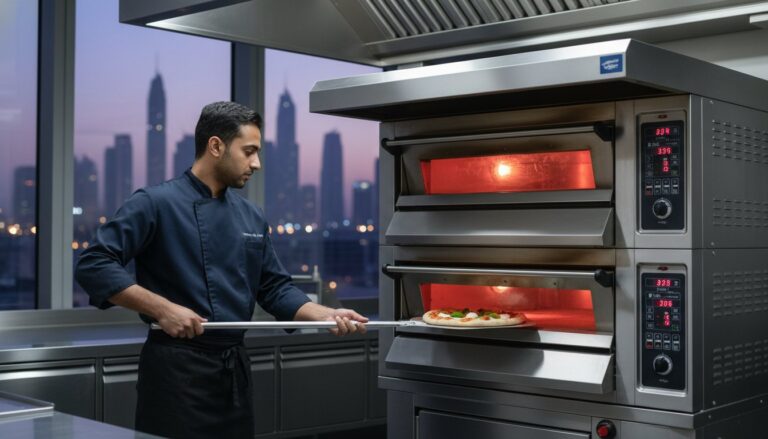
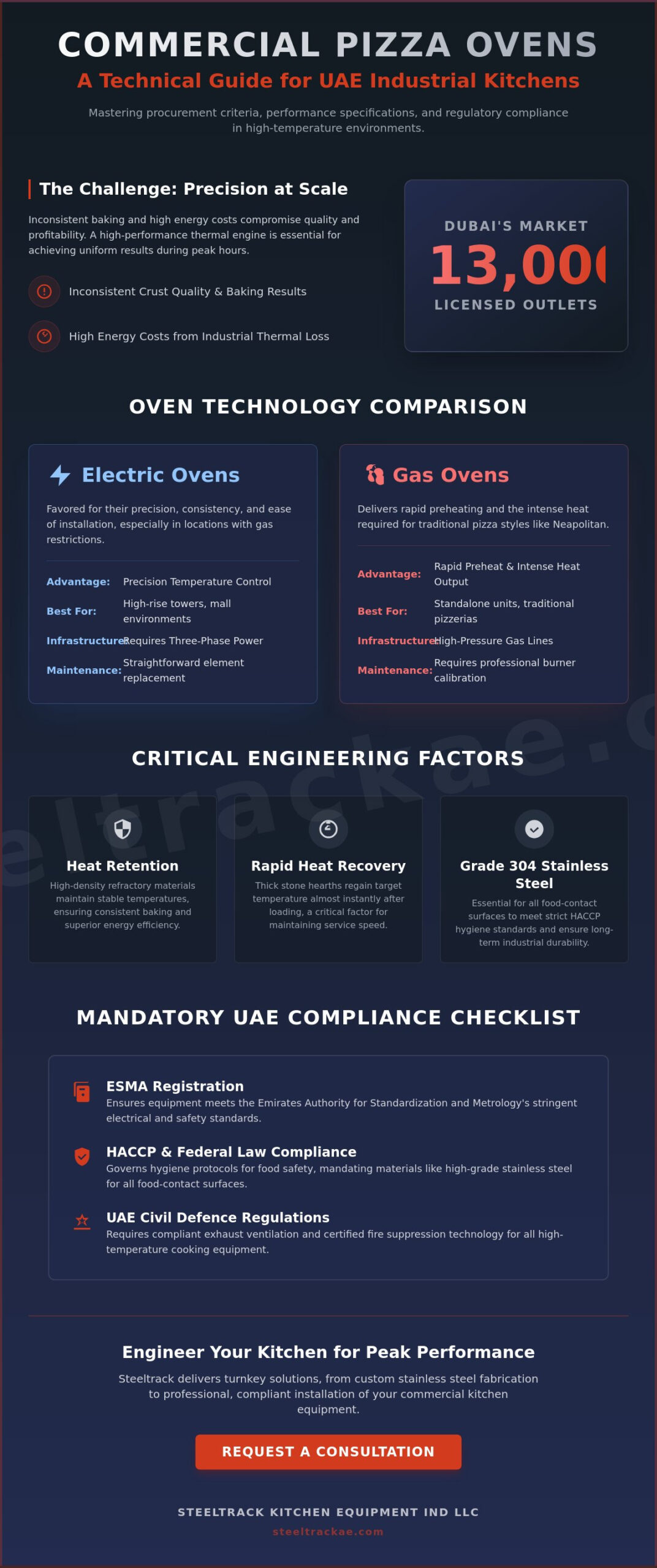
In the high-ambient temperatures of a UAE industrial kitchen, a commercial pizza oven is not merely a cooking appliance; it’s a precision-engineered thermal engine that defines the operational viability of your food service facility. Achieving uniform crust quality at scale requires equipment capable of maintaining extreme thermal stability while operating within the specific regulatory frameworks of the region. Selecting the right commercial pizza oven UAE involves a sophisticated understanding of how industrial performance integrates with fabricated stainless steel ecosystems to ensure reliability. This is particularly vital in a market where over 13,000 licensed outlets in Dubai alone compete for culinary excellence and technical precision.
You’ve likely experienced the frustration of inconsistent baking results during peak hours or the high energy costs associated with industrial thermal loss in high-heat environments. This guide provides the technical expertise needed to master procurement criteria and performance specifications for high-performance units. We’ll examine the critical importance of Grade 304 stainless steel construction and mandatory ESMA registration. You’ll also learn how to ensure your equipment meets stringent HACCP standards and UAE Civil Defence regulations, providing a clear path toward energy-efficient thermal processing and institutional-grade reliability for your commercial kitchen project.
Key Takeaways
- Define the technical distinction between standard appliances and high-output thermal engines required for consistent crust quality at industrial scales.
- Compare the operational costs and infrastructure requirements of electric and gas systems, specifically regarding three-phase power and high-pressure gas line availability.
- Identify how stone hearth thickness and thermal mass influence heat recovery times, a critical factor in maintaining service speed during high-volume periods.
- Learn to optimize kitchen workflows by integrating a commercial pizza oven UAE with precision-fabricated stainless steel work tables and specialized oven stands.
- Recognize the value of a methodical, turnkey procurement strategy that aligns equipment installation with regional safety standards and industrial engineering best practices.
The Role of Precision Thermal Processing in UAE Pizza Production
In the context of a high-volume industrial kitchen, a commercial pizza oven UAE is far more than a standard cooking appliance; it represents a specialized thermal processing unit designed for rigorous operational cycles. Unlike domestic or boutique equipment, these industrial systems are engineered to manage massive caloric output while maintaining a stable internal environment. This stability is essential for achieving the Maillard reaction, the chemical process responsible for the complex caramelization of the crust and the development of a structured crumb. When an oven fails to provide consistent BTU output, the result is a compromised product that lacks the professional finish expected in the competitive UAE hospitality market.
Industrial facilities require specialized deck or conveyor systems because standard convection ovens cannot provide the concentrated floor heat necessary for authentic pizza production. A professional technical comparison of pizza ovens reveals that industrial units prioritize heat retention through high-density refractory materials. These materials allow the oven to recover its target temperature almost instantly after a cold pizza is loaded. In a region where Dubai alone hosts over 13,000 licensed food service outlets, technical precision in thermal recovery isn’t a luxury; it’s a fundamental requirement for maintaining service velocity during peak hours.
Beyond the Boutique: Scaling for Industrial Volume
While artisanal wood-fired units offer a specific aesthetic, industrial deck ovens provide the multi-deck configurations required for sophisticated temperature management. Each deck functions as an independent thermal zone, allowing chefs to bake different styles of pizza simultaneously without sacrificing throughput. High-volume environments dictate a choice of heating technology that prioritizes reliability over novelty. Whether utilizing advanced electric elements or high-pressure gas burners, the focus remains on systematic development and the ability to process hundreds of units per shift with zero variance in quality.
Regulatory Compliance and Safety Standards
Adhering to UAE fire safety regulations is a critical component of any industrial kitchen fit-out. High-temperature cooking equipment must be integrated with compliant exhaust systems and fire suppression technology as mandated by UAE Civil Defence. Hygiene is equally paramount. All food-contact surfaces must utilize high-grade stainless steel to meet HACCP protocols established under Federal Law No. 10 of 2015. Professional installation is mandatory to secure the necessary gas and electric certifications. This methodical approach ensures that your equipment isn’t only high-performing but also legally compliant with the stringent standards of the Emirates Authority for Standardization and Metrology (ESMA).
Technical Comparison: Electric, Gas, and Wood-Fired Industrial Ovens
Selecting the appropriate power source for a commercial pizza oven UAE is a strategic decision that directly impacts long-term operational costs and facility infrastructure. In the Emirates, the choice is often dictated by the specific location of the kitchen, such as high-rise towers where gas connections are frequently restricted, or standalone industrial units where high-pressure gas lines are more accessible. Beyond fuel availability, the high ambient humidity and external temperatures in the region can affect sensitive electronic controllers and gas pressure regulators, necessitating equipment with robust industrial shielding and high-grade insulation.
Each heating technology offers distinct advantages for specific culinary styles and production volumes. While gas systems provide the rapid preheating and intense heat required for traditional Neapolitan service, electric systems are increasingly favored for their precision and ease of installation in modern mall environments. Maintaining these systems also requires different technical approaches, as the replacement of electrical elements is generally more straightforward than the calibration of industrial gas burners and safety valves.
Electric Deck Ovens: Precision and Consistency
Electric units are the standard for modern UAE commercial kitchens due to their independent top and bottom heat controls. This granular level of adjustment allows operators to achieve perfect baking results for New York and Roman styles, where crust texture and crumb structure require exact thermal balance. These ovens integrate seamlessly into three-phase electrical grids, making them the preferred choice for high-volume pastry and pizza production where consistency is the primary metric for success. Because they don’t emit combustion byproducts, they also place less strain on the kitchen’s cooling and ventilation systems.
Gas-Powered Solutions: Speed and Traditional Heat
Gas-powered ovens excel in achieving extreme temperatures rapidly, making them ideal for 24/7 operations that require high throughput. However, the logistical considerations for gas line installation in UAE commercial properties are significant, requiring specialized piping and extensive Civil Defence approvals. For facilities already equipped for industrial gas flow, the cost-benefit analysis often favors gas due to its efficiency in maintaining high thermal mass over extended periods. Regular maintenance of the burner assemblies is essential to ensure safe and efficient combustion in high-volume settings.
Wood-Fired and Hybrid Models: The Artisanal Angle
Artisanal pizza production often utilizes wood-fired or hybrid units to achieve a specific flavor profile. These systems present unique engineering challenges, particularly regarding smoke extraction and ash disposal. To ensure safety and compliance, these units must adhere to strict professional kitchen ventilation standards, which include specialized exhaust hoods and advanced filtration systems. Hybrid technology offers a pragmatic solution by combining traditional wood-burning capabilities with the reliability of a gas backup, ensuring consistent performance even during peak demand cycles. If you require assistance in determining the technical requirements for your facility, you may contact our engineering team for a professional consultation.
Critical Engineering Factors: Heat Retention and Recovery Times
The operational efficiency of a commercial pizza oven UAE is fundamentally governed by the principles of thermodynamics, specifically the concept of thermal mass. In an industrial setting, the ability of the oven to store and distribute energy consistently is what separates high-performance machinery from standard kitchen appliances. A thick stone hearth acts as a thermal battery; it absorbs heat during the preheating phase and releases it steadily into the dough during the baking cycle. Without sufficient thermal mass, the internal temperature fluctuations would lead to inconsistent results, particularly when the unit is subjected to the rapid loading and unloading cycles typical of a busy UAE hospitality environment.
Recovery time represents the primary bottleneck in high-volume pizza production. Every time a cold pizza is placed on the hearth, it draws energy from the stone. If the oven lacks the engineering to restore this lost heat rapidly, the subsequent pizzas will suffer from “soggy bottoms” and uneven crust development. Professional systems are designed to reach maximum temperatures between 450 and 500°C, ensuring that even under heavy loads, the recovery interval remains negligible. This technical capability is essential for maintaining a steady workflow and meeting the rigorous quality standards expected by sophisticated commercial clients.
Structural integrity and heat reflection are further enhanced through the use of Grade 304 stainless steel. This material is non-porous and corrosion-resistant, making it the industry standard for food-contact surfaces under regional HACCP regulations. The use of high-grade steel ensures that the oven’s chassis can withstand the stresses of constant thermal expansion and contraction without warping. For facilities located in coastal areas, Grade 316 stainless steel is often recommended to provide additional protection against the corrosive effects of high humidity and salt air.
Refractory Stone and Hearth Engineering
The choice of refractory material, such as cordierite or high-density clay, is vital for preventing “cold spots” during peak production hours. Cordierite is particularly valued in industrial applications for its excellent thermal shock resistance and durability. Maintaining the baking surface is a critical part of operational reliability; a well-engineered hearth requires minimal maintenance while providing a stable platform for thousands of baking cycles. This precision in material selection ensures that the heat is transferred evenly across the entire surface area of the deck.
Managing Ambient Heat in UAE Industrial Kitchens
In the high-temperature environment of the Middle East, high-density insulation is a technical necessity rather than an optional feature. Efficient insulation keeps the internal heat contained, which protects surrounding equipment and significantly reduces the load on the facility’s HVAC systems. Strategic placement of the oven, often integrated with custom stainless steel work tables, allows for optimized thermal flow. This methodical approach to kitchen layout ensures that the intense heat required for pizza production doesn’t compromise the comfort or safety of the culinary team.
Procurement Criteria: Integrating Ovens into Professional Kitchen Layouts
Integrating a commercial pizza oven UAE into a high-performance kitchen requires a methodical assessment of spatial dynamics and mechanical infrastructure. It’s a strategic error to view the oven as a standalone component; rather, it must be the anchor of a fabricated ecosystem that supports high-frequency throughput. Procurement managers must calculate exact footprint requirements, accounting for necessary clearances that prevent thermal transfer to adjacent sensitive equipment. Ergonomic positioning is equally vital, as the height and reach for loading and unloading cycles directly influence the long-term health and efficiency of the culinary team.
Operational synergy is achieved when the oven is supported by custom stainless steel work tables specifically designed for dough management and assembly. These surfaces provide the non-porous, industrial-grade environment required for high-volume preparation. In addition, the kitchen’s efficiency is bolstered by specifying the correct heavy duty cooking range to handle the preparation of sauces and toppings. This ensures that the primary thermal unit remains dedicated to its core function without being bottlenecked by secondary prep tasks.
Custom Fabrication for Oven Support and Integration
Industrial ovens often weigh several metric tons, necessitating heavy-duty stands engineered for structural stability. These fabricated solutions often integrate with refrigerated chef bases, creating a streamlined workflow that minimizes movement and maintains the cold chain for ingredients. Utilizing food-grade Grade 304 stainless steel in the preparation zone is a non-negotiable standard for maintaining HACCP compliance and resisting the corrosive effects of a high-humidity environment. This methodical integration ensures that every square centimeter of the kitchen floor plan contributes to operational excellence.
Ventilation and Exhaust Requirements
The intense thermal discharge from a high-output oven requires precision-sized exhaust hoods to maintain air quality and manage ambient temperatures. Compliance with UAE standards for kitchen extraction involves calculating the specific air makeup requirements to prevent negative pressure zones that can disrupt burner efficiency or HVAC performance. Integration of fire suppression systems within these high-heat cooking zones is a mandatory safety protocol under Civil Defence regulations. To ensure your facility meets these technical requirements, you should consult with a professional kitchen fabrication specialist to design a compliant and efficient layout.
Steeltrack Solutions: Custom Fabrication and Professional Installation
At Steeltrack, we recognize that the acquisition of a commercial pizza oven UAE is a significant capital investment that requires a methodical integration strategy. Our approach to turnkey commercial kitchen setup is rooted in engineering precision and a deep understanding of regional operational challenges. We don’t merely supply hardware; we engineer the entire environment, from the initial site assessment to the final commissioning of high-performance thermal systems. This ensures every component, whether it’s a multi-deck oven or a custom-fabricated support structure, performs at its peak capacity within a compliant industrial framework.
Our fabrication expertise extends to the production of specialized stainless steel oven tables and heavy-duty stands designed to support the immense weight of industrial refractory stones. These structures are manufactured using Grade 304 stainless steel, ensuring they meet the highest HACCP hygiene standards while providing the structural rigidity required for long-term reliability. By managing the installation process internally, we guarantee that all electrical and gas connections adhere to the technical and safety standards mandated by UAE regulatory bodies, providing a seamless transition from procurement to active service.
The Steeltrack Advantage in Technical Services
Our commitment to operational rigor is reflected in the breadth of our technical services, which cover the full lifecycle of kitchen equipment. This narrative of excellence has led to successful high-volume installations across the UAE hospitality sector, where our systems support some of the region’s busiest food service outlets. We prioritize a methodical approach to maintenance and support, ensuring that your industrial thermal engines continue to deliver consistent results under the most demanding production cycles. This stable partnership allows clients to focus on culinary output while we manage the technical integrity of their infrastructure.
Procurement and Strategic Partnership
B2B clients choose Steeltrack because we function as a strategic partner rather than a traditional vendor. Our systematic kitchen development process emphasizes the use of high-quality materials and precision engineering to build environments that last. We understand that reliability is the cornerstone of industrial success, which is why we offer comprehensive solutions that include everything from stainless steel exhaust hoods to sophisticated preparation environments. We invite you to contact our technical team for a comprehensive equipment consultation to discuss how we can optimize your production capabilities through professional fabrication and installation.
Advancing Industrial Efficiency in UAE Food Service Facilities
Success in the UAE’s competitive hospitality sector depends on the seamless integration of high-performance equipment and precision engineering. We’ve examined how thermal mass and heat recovery times dictate the throughput of a commercial pizza oven UAE, alongside the critical role of custom fabrication in maintaining operational flow. Achieving these standards requires a methodical approach that aligns with regional safety protocols and industrial best practices. Every technical specification, from stone hearth thickness to ventilation capacity, must be calibrated to withstand the rigors of high-volume production in high-ambient temperatures.
As a specialized UAE technical services provider, Steeltrack offers turnkey industrial kitchen solutions that emphasize reliability and precision. Our high-grade stainless steel fabrication ensures that your facility isn’t only compliant but also optimized for long-term growth and systematic development. We invite you to Consult with our Technical Experts for Your Commercial Kitchen Requirements to ensure your next project achieves institutional-grade excellence. Our team is dedicated to providing the technical skill and regional leadership required for complex, large-scale projects. We look forward to supporting your strategic development and professional standards.
Frequently Asked Questions
What is the difference between a deck oven and a conveyor pizza oven for commercial use?
A deck oven utilizes a static stone hearth and requires manual loading, offering superior crust caramelization and artisanal control over the baking process. In contrast, a conveyor system uses a belt-driven mechanism to automate production, ensuring high-volume consistency with minimal operator intervention. The choice depends on your specific production goals and the desired texture of your final product.
How much electrical power (kW) does a standard double-deck commercial pizza oven require in the UAE?
A standard double-deck commercial pizza oven UAE typically requires between 12kW and 24kW of electrical power. These industrial units operate on a 400V/50Hz three-phase supply to maintain the high thermal stability needed for continuous service. It’s essential to verify your facility’s electrical load capacity before procurement to ensure the infrastructure can support these heavy-duty heating elements.
Are gas pizza ovens more cost-effective than electric models for 24/7 operations in the UAE?
Gas-powered models are often more cost-effective for 24/7 operations due to the efficiency of industrial gas burners in maintaining high thermal mass over extended periods. However, electric models are frequently preferred in the Emirates for their lower installation complexity and suitability for high-rise buildings where gas lines are restricted. You should evaluate long-term utility rates and initial fit-out costs when making this technical decision.
What are the specific UAE ventilation requirements for installing a wood-fired pizza oven?
Installing a wood-fired unit requires adherence to strict UAE Civil Defence regulations, including the use of specialized high-temperature exhaust hoods and advanced smoke filtration systems. These installations must include dedicated ductwork that is separate from standard kitchen ventilation to manage the unique particulate matter and heat discharge. Professional certification is mandatory to ensure the system meets regional fire safety and hygiene standards.
How often should an industrial pizza oven undergo professional maintenance?
An industrial pizza oven should undergo a professional technical inspection at least once every six months to ensure operational reliability. This routine service includes calibrating thermostats, checking gas pressure regulators, and inspecting electrical heating elements for signs of wear. Daily cleaning of the refractory stone and external stainless steel surfaces is also required to prevent carbon buildup and maintain HACCP hygiene standards.
Can a commercial pizza oven be integrated into an existing stainless steel kitchen layout?
A commercial pizza oven UAE can be integrated into an existing kitchen through custom stainless steel fabrication. This process involves designing specialized stands and preparation environments that align with your current workflow and equipment footprint. Precision fabrication ensures that the oven’s high thermal output doesn’t compromise adjacent units like walk-in cold rooms or refrigerated chef bases.
What is the typical recovery time for a high-volume industrial pizza oven?
High-volume industrial ovens are engineered for negligible recovery times, often restoring the target baking temperature within seconds after a unit is loaded. This performance is achieved through high-density refractory stones and robust heating systems that provide a constant caloric output. Efficient recovery times are the primary metric for preventing production bottlenecks during peak service hours in busy commercial kitchens.
Does Steeltrack provide custom stands and ventilation hoods for commercial pizza ovens?
Steeltrack specializes in the expert fabrication of specialized oven stands and stainless steel exhaust hoods tailored for industrial pizza production. Our engineering team designs heavy-duty support structures that handle the significant weight of refractory stone ovens while integrating seamlessly with your prep stations. These custom solutions ensure full technical and safety compliance with UAE standards for kitchen extraction and structural integrity.