
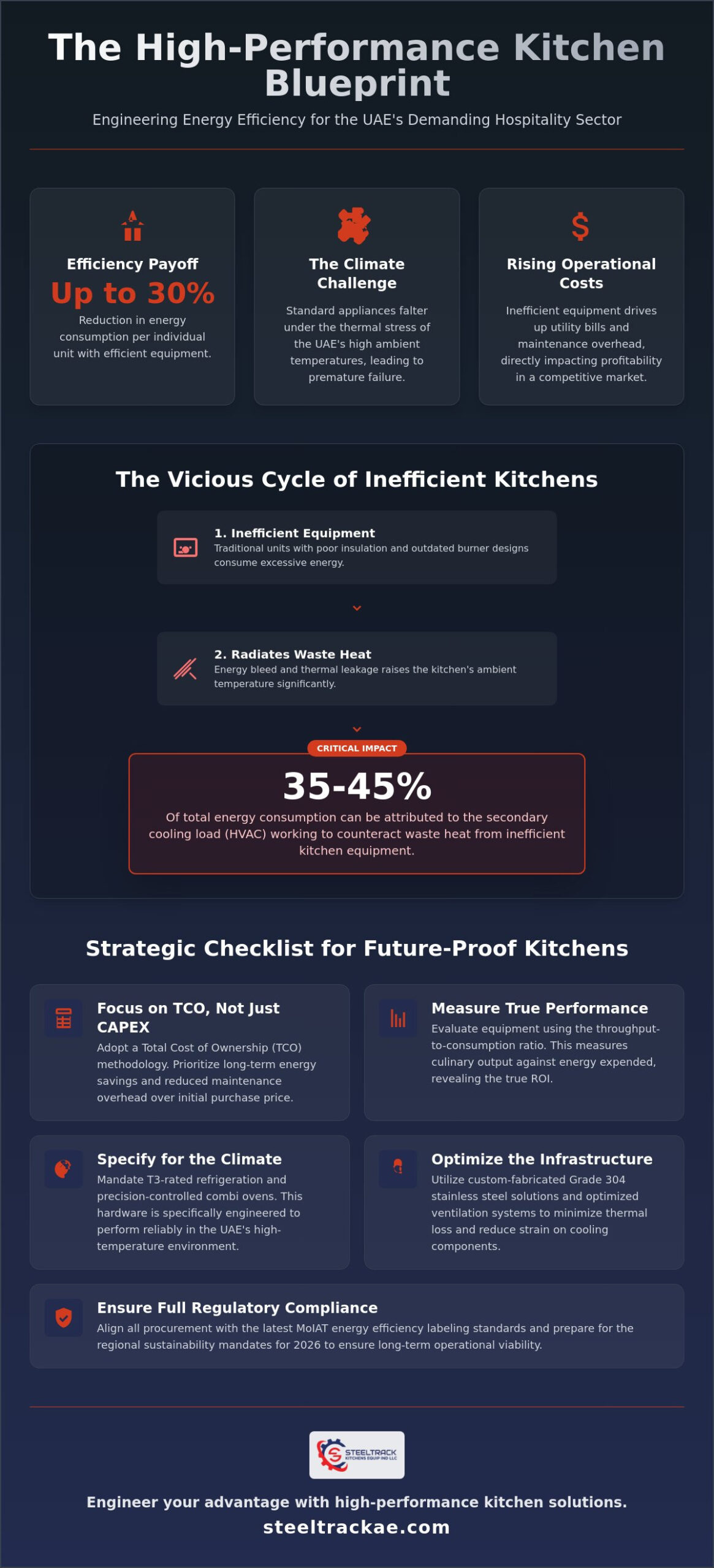
Did you know that integrating energy efficient commercial kitchen equipment can reduce individual unit energy consumption by up to 30 percent, offering a decisive advantage against the rising commercial utility tariffs in the UAE? For large-scale hospitality operators, the challenge lies in maintaining high-volume throughput while managing the thermal stress of a region where ambient temperatures frequently exceed standard operating parameters. You likely recognize that standard appliances often falter under these rigorous conditions, leading to inconsistent performance and premature mechanical failure.
This guide provides the technical framework necessary to master the procurement of high-performance kitchen solutions that are engineered for durability and efficiency. We will examine the critical selection criteria for T3-rated refrigeration, the impact of the latest MoIAT energy labeling standards, and the strategic shift toward sustainable infrastructure that secures long-term operational excellence. By focusing on methodical engineering and regional compliance, your facility can achieve significant overhead reduction without compromising industrial output. We’ll explore how precise equipment selection ensures your operation remains compliant with the evolving 2026 sustainability mandates while maximizing your return on investment.
Key Takeaways
- Establish a rigorous evaluation framework based on the throughput-to-consumption ratio to accurately measure the return on investment for high-performance kitchen infrastructure.
- Identify the technical specifications required for energy efficient commercial kitchen equipment, specifically focusing on T3-rated refrigeration and precision-controlled combi ovens designed for the UAE climate.
- Adopt a Total Cost of Ownership (TCO) methodology during procurement to account for long-term energy savings and reduced maintenance overhead in large-scale operations.
- Learn how custom-fabricated stainless steel solutions and optimized ventilation systems minimize thermal loss and alleviate strain on critical cooling components.
- Ensure full regulatory compliance by aligning procurement strategies with the latest MoIAT energy efficiency labeling and regional sustainability mandates for 2026.
The Economic Imperative of Energy Efficient Commercial Kitchen Equipment
In the high-stakes environment of the commercial food service industry, energy efficiency is no longer a secondary consideration; it is a fundamental pillar of fiscal viability. For large-scale hospitality operations in the UAE, the definition of efficiency extends beyond simple wattage. It is best understood through the throughput-to-consumption ratio, which measures the volume of high-quality culinary output against the precise units of energy expended. Procuring energy efficient commercial kitchen equipment is a strategic move that addresses the correlation between thermal precision and reduced operational expenditure. By ensuring that heat is directed exactly where it is required, operators can significantly lower their monthly utility overhead.
Traditional procurement often prioritizes initial capital expenditure (CAPEX), yet the 2026 landscape demands a shift toward long-term return on investment (ROI). Inefficient equipment acts as a dual drain on resources. First, it consumes excessive electricity or gas to reach operating temperatures. Second, it radiates waste heat into the kitchen environment, forcing the HVAC system to work at maximum capacity to maintain a safe working temperature. In the UAE, where ambient temperatures are extreme, this secondary cooling load can account for 35 to 45 percent of total energy consumption. Methodical selection of hardware is the only way to mitigate these compounding costs.
The Hidden Costs of Inefficient Thermal Processing
Traditional heavy-duty cooking ranges often suffer from energy bleed, where heat escapes through poorly insulated chassis and unrefined burner designs. This thermal leakage is not merely a waste of fuel; it degrades the kitchen’s climate control, leading to increased wear on cooling systems. High-performance boiling pans and precision-engineered cooking ranges solve this by utilizing advanced insulation and focused thermal delivery. These systems reduce batch cooking times and ensure that energy is transferred into the product rather than the room. For a comprehensive overview of how these systems are integrated, you can explore the specialized technical engineering services that optimize kitchen layouts for thermal retention.
Regulatory Standards and Sustainability Mandates in the UAE
The regulatory environment in the UAE is rapidly evolving, with the Ministry of Industry and Advanced Technology (MoIAT) enforcing strict energy labeling requirements. As we move toward 2026, hospitality leaders must prepare for rigorous sustainability audits that scrutinize equipment performance. Utilizing Grade 304 stainless steel is essential in this context. This non-porous, industrial-grade material is not only a food safety requirement but also a critical component in maintaining thermal integrity within equipment like walk-in cold rooms and combi ovens. Investing in energy efficient commercial kitchen equipment that meets these regional standards ensures that your operation remains compliant while securing a competitive edge in a market defined by high operational rigor.
High-Consumption Equipment: Engineering Efficiency in Cooking and Baking
Cooking and baking operations represent the most energy-intensive phases of industrial food production, often accounting for a significant portion of a facility’s total utility expenditure. Achieving a high throughput-to-consumption ratio requires a shift toward equipment that utilizes advanced thermal engineering and precision control systems. While traditional industrial ovens can consume substantial amounts of energy daily, the integration of energy efficient commercial kitchen equipment allows operators to maintain high-volume output while drastically reducing their carbon footprint and operational costs. Modern engineering focuses on minimizing idle-time energy waste and maximizing the speed of thermal transfer to the product.
Precision Thermal Management in Combi Ovens
The adoption of advanced technology in a Rational Combi oven or similar high-performance units has revolutionized heat distribution in high-capacity kitchens. These systems utilize multi-stage cooking cycles that automatically adjust power levels based on the load, effectively reducing energy waste during periods of lower activity. Steam-injection technology further accelerates cooking times by utilizing the high heat-carrying capacity of water vapor, which lowers the total kWh usage per batch. When comparing industrial convection models to modern combi systems, the latter provides a superior energy profile by combining radiant heat with precise humidity control. Utilizing ENERGY STAR certified equipment ensures that these units meet rigorous efficiency benchmarks that are essential for large-scale hospitality operations.
Fabrication Standards for Heavy-Duty Cooking Ranges
The mechanical integrity of a Stainless Steel Indian Cooking Range or a Stainless Steel Chinese Gas Range is a critical factor in preventing heat dissipation. High-grade stainless steel serves as a robust thermal barrier, ensuring that heat remains concentrated within the cooking zone rather than bleeding into the kitchen environment. Burner efficiency in these industrial gas ranges is achieved through optimized combustion air-to-fuel ratios, which ensures that every unit of fuel is converted into useful heat. For organizations seeking to audit their thermal infrastructure, consulting with a technical partner can help identify the most cost-effective equipment upgrades for your specific facility.
Precision-engineered solutions extend to other high-demand appliances as well. Custom-fabricated Pizza Ovens and high-volume Deep Fryers now incorporate enhanced insulation and heat-recovery systems that capture and reuse thermal energy. By optimizing thermal transfer, these units reduce the time required to reach operating temperatures and maintain those levels with minimal additional energy input. This methodical approach to equipment selection ensures that the kitchen remains a high-throughput environment without the burden of excessive utility overhead. The focus remains on durability and precision, ensuring that each piece of equipment contributes to the overall stability and efficiency of the commercial operation.
Refrigeration and Ventilation: Managing the UAE Thermal Challenge
While cooking hardware generates intense localized heat, refrigeration and ventilation systems must operate continuously to counteract both internal thermal loads and the extreme external climate of the UAE. In large-scale hospitality operations, cooling systems represent a constant energy draw that can quickly erode profit margins if not engineered with precision. Selecting energy efficient commercial kitchen equipment for cooling is not merely about compliance; it’s a technical necessity for maintaining food safety and operational stability when ambient temperatures exceed 40 degrees Celsius. Achieving this requires a methodical approach to insulation, compressor sizing, and airflow management.
Optimizing Walk-in Cold Rooms and Refrigeration Units
Engineering Walk-in Cold Rooms for the Middle Eastern market necessitates the use of high-density polyurethane insulation to minimize thermal bridging. Standard panels often prove insufficient against the regional heat, leading to excessive compressor strain and premature mechanical failure. It’s vital to specify units with “tropical-rated” (T3) condensers that maintain efficiency even under high thermal stress. Beyond the structural shell, operational habits like frequent door openings in Chef Bases Refrigerators or reach-in chillers cause significant energy spikes. Implementing strip curtains and high-efficiency gaskets helps stabilize internal temperatures. For industrial Ice Machines, integrating smart defrost cycles ensures the system only consumes energy when necessary, preventing the buildup of ice that forces the motor to overwork. These technical refinements are essential for reducing the total cost of ownership in high-volume environments.
Advanced Kitchen Ventilation Systems
The relationship between ventilation and energy loss is one of the most complex aspects of kitchen engineering. Stainless Steel Exhaust Hoods must be strategically designed to maximize heat and effluent capture while minimizing the volume of conditioned air removed from the building. If the extraction rate is too high, the facility’s HVAC system must work harder to replace the cooled air, leading to a massive increase in utility costs. Demand-controlled ventilation (DCV) systems utilize sensors to detect heat and smoke, adjusting fan speeds in real-time to match actual cooking activity. This precision prevents fans from running at full capacity during preparation periods or idle hours.
Strategic extraction design involves more than just powerful fans; it requires custom-fabricated hoods that are shaped to optimize the “capture and containment” of thermal plumes. The Federal Energy Management Program highlights that proper maintenance and airflow balancing are critical for sustaining these efficiency gains over time. By integrating technical mastery with high-grade materials, operators can ensure their ventilation infrastructure supports the performance of their energy efficient commercial kitchen equipment. For those seeking specialized assistance in optimizing their facility’s air management, the industrial engineering services provided by STEELTRACK KITCHEN EQUIPMENT IND LLC deliver the expertise needed to balance extraction efficiency with energy conservation.
Strategic Procurement Checklist for Industrial Kitchen Setups
Strategic procurement of energy efficient commercial kitchen equipment requires a holistic assessment of the facility’s mechanical and thermal ecosystem. It’s insufficient to evaluate individual units in isolation; they must be integrated into a broader facility energy plan that accounts for peak load periods and baseline consumption. This process begins with a rigorous energy audit to identify existing inefficiencies and thermal leaks. Decision-makers should prioritize the Total Cost of Ownership (TCO) rather than initial capital expenditure. TCO includes projected electricity, gas, and water costs over a ten-year lifecycle, alongside the anticipated expenditure for preventative maintenance. A unit with a higher acquisition cost often yields a superior ROI by significantly reducing monthly operational overhead.
The selection process must be deliberate. It requires an understanding of how each component interacts with the facility’s main power grid and HVAC system. Assessing manufacturer fabrication standards is a critical step in this framework. Reliability depends on the precision of the engineering and the availability of technical support within the UAE. For those seeking to modernize their infrastructure, exploring professional kitchen engineering services provides the technical foundation needed for a successful transition to high-performance hardware.
Evaluating Fabrication Quality and Material Standards
Structural integrity is paramount for Stainless Steel Work Tables and preparation surfaces. Grade 304 stainless steel is the industrial standard for durability and hygiene, as it’s non-porous and resistant to the corrosive effects of high-volume cooking environments. Precision welding is equally vital; it doesn’t just improve aesthetics, it prevents structural fatigue and eliminates gaps where bacteria can proliferate. High-quality fabrication ensures that Stainless Steel Sinks and base cabinets maintain their integrity under the stress of industrial use, directly impacting the equipment’s longevity and overall facility efficiency.
Industrial Laundry Systems: The Overlooked Efficiency Pillar
Industrial laundry systems are often excluded from kitchen audits, yet they represent a significant portion of a hospitality facility’s energy profile. Integrating these systems into a unified energy plan is essential for large-scale hotel operations. High-efficiency industrial washing machines and commercial tumble dryers should be evaluated for their ability to reduce gas and electric loads through optimized cycle times. Within the dishwashing area, Hood-type Dishwashers utilize advanced rinse technology and water-saving sensors to minimize consumption. This methodical approach ensures that every utility input is maximized, reducing the overall burden on the facility’s heating and filtration systems.
If you’re ready to optimize your facility’s energy profile through precision-engineered solutions, contact our technical consultants for a comprehensive procurement analysis and equipment assessment.
STEELTRACK KITCHEN EQUIPMENT IND LLC’s Approach to High-Performance Kitchen Engineering
The engineering philosophy at STEELTRACK KITCHEN EQUIPMENT IND LLC is predicated on the synthesis of technical mastery and regional industrial expertise. We understand that the procurement of energy efficient commercial kitchen equipment is only the initial phase of a sophisticated facility strategy. To realize genuine operational excellence, these high-performance units must be supported by a custom-fabricated infrastructure designed to minimize thermal loss and optimize industrial throughput. Our organization serves as a strategic partner rather than a mere vendor, providing the methodical planning and industrial rigor required to manage complex, high-volume hospitality environments across the UAE. Integrating energy efficient commercial kitchen equipment into a large-scale operation requires this level of methodical oversight to ensure that every investment in hardware translates into reduced overhead and enhanced durability.
Custom Stainless Steel Solutions for Strategic Operations
Bespoke fabrication allows for a degree of precision that standardized, mass-produced solutions cannot achieve. When engineering custom Stainless Steel Work Tables and Sinks, our focus remains on creating ergonomic layouts that streamline kitchen workflows, thereby reducing the mechanical friction of daily operations. Our Stainless Steel Exhaust Hoods are designed as precision-engineered components that manage the kitchen’s thermal plume with maximum efficiency. Because we maintain local manufacturing capabilities, we offer the rapid technical support and professional maintenance required to ensure long-term reliability in the UAE’s unique environmental conditions. This local presence allows us to uphold the high standards of excellence expected by institutional clients.
Partnering for Large-Scale Industrial Excellence
Our commitment to systematic progress is demonstrated through our turnkey approach to industrial facility setup. We manage the entire lifecycle of a project, from the initial technical design phase to the professional installation of heavy-duty hardware. Our turnkey services encompass a broad range of technical capabilities, ensuring a methodical transition to high-performance operations:
- Technical design and fabrication of Grade 304 stainless steel infrastructure.
- Strategic installation of high-volume Cooking Ranges and Combi Ovens.
- Engineering of tropical-rated Walk-in Cold Rooms and refrigeration systems.
- Integration of industrial laundry and hood-type dishwashing solutions.
This comprehensive oversight ensures that every component is aligned with the facility’s overarching energy and sustainability goals. By combining technical skill with a deep understanding of regional industrial requirements, we assist our partners in navigating the complexities of the 2026 regulatory landscape. Explore our comprehensive Commercial Kitchen and Stainless Steel Solutions to see how our engineering expertise can transform your operational overhead into a sustainable competitive advantage. We take professional pride in delivering results-oriented solutions that uphold the highest standards of safety and technical mastery.
Securing Operational Excellence for 2026 and Beyond
Adopting a methodical approach to procurement ensures that your facility is prepared for the rigorous economic and regulatory demands of the coming years. By shifting focus from initial capital expenditure to a comprehensive total cost of ownership model, operators can secure long-term fiscal stability. The integration of energy efficient commercial kitchen equipment is a critical component of this strategy; it provides a technical solution to the challenges of high utility tariffs and extreme regional temperatures. Precision in thermal management, supported by custom-engineered ventilation and refrigeration systems, creates a high-performance environment that maintains industrial throughput without excessive overhead.
As a premier UAE-based manufacturer of heavy-duty cooking ranges and specialists in custom stainless steel fabrication and installation, STEELTRACK KITCHEN EQUIPMENT IND LLC serves as a strategic partner for the national hospitality and industrial laundry sectors. We provide the technical expertise required to design and implement sophisticated, high-capacity solutions that prioritize durability and precision. We invite you to Consult with our engineering experts for your custom industrial kitchen setup to begin optimizing your facility’s performance. Your commitment to methodical engineering today will define your operational success in the future.
Frequently Asked Questions
What defines energy efficient commercial kitchen equipment in 2026?
In 2026, energy efficient commercial kitchen equipment is defined by its throughput-to-consumption ratio and compliance with MoIAT energy efficiency labeling. This includes hardware that features advanced thermal insulation, T3-rated refrigeration for high ambient temperatures, and precision control systems. These units are engineered to deliver maximum industrial output with minimal energy input, ensuring that large-scale operations remain fiscally viable while meeting regional sustainability mandates.
How much can a hotel save by switching to high-efficiency industrial ovens?
High-efficiency industrial ovens can reduce energy consumption by 15 to 30 percent compared to standard models. In the UAE market, this efficiency can translate into savings of AED 15,000 to AED 40,000 per unit over a five-year period. These financial gains are a direct result of improved thermal retention and faster cooking cycles, which significantly lower the monthly utility overhead for high-volume hospitality operations.
Does stainless steel fabrication quality affect energy consumption?
Fabrication quality is a critical factor in thermal management because precision-welded Grade 304 stainless steel prevents significant heat dissipation. High-grade fabrication ensures that cooking ranges and ovens maintain structural integrity, which eliminates energy bleed into the kitchen environment. This superior build quality reduces the secondary load on the facility’s HVAC system, leading to a more efficient and stable operational ecosystem.
What is the role of an exhaust hood in kitchen energy management?
An exhaust hood manages energy by balancing the extraction of heat and effluents with the retention of conditioned facility air. Strategic design ensures that the system removes only the necessary volume of air, preventing the HVAC system from overworking to replace cooled air. Modern demand-controlled ventilation systems further optimize this process by adjusting fan speeds in real-time based on actual cooking activity.
Are energy-efficient industrial washing machines powerful enough for high-volume hotels?
Energy-efficient industrial washing machines are engineered specifically for high-volume throughput and utilize optimized cycle times to reduce utility loads. These systems integrate water-saving technologies and high-extraction speeds that decrease the energy required for the subsequent drying phase. They maintain the rigorous standards required for hotel operations while ensuring that the facility’s total energy profile remains within sustainable parameters.
How does the UAE climate impact the efficiency of walk-in cold rooms?
The extreme ambient heat in the UAE places immense strain on refrigeration systems, making T3-rated condensers and high-density insulation mandatory for efficiency. Without these specific engineering standards, walk-in cold rooms suffer from frequent compressor cycles and mechanical fatigue. Proper insulation and tropical-rated components ensure that the unit maintains required temperatures without consuming excessive electricity during peak summer months.
Is it better to repair old equipment or invest in new energy-efficient models?
Investing in new energy-efficient models typically provides a superior return on investment compared to repairing aging hardware that lacks modern thermal controls. While repairs address immediate failures, new equipment offers lower operational expenditure and ensures compliance with 2026 UAE sustainability mandates. The long-term savings in utility costs and reduced maintenance frequency often outweigh the initial capital expenditure of a new installation.
How do combi ovens reduce energy use compared to standard convection ovens?
Combi ovens reduce energy consumption by utilizing steam-injection technology and multi-stage cooking cycles to accelerate the cooking process. This precision allows for faster thermal transfer to the food, which reduces the total kWh usage per batch compared to traditional convection models. These units also feature advanced insulation that keeps heat within the cooking chamber, further improving the facility’s overall energy efficiency.