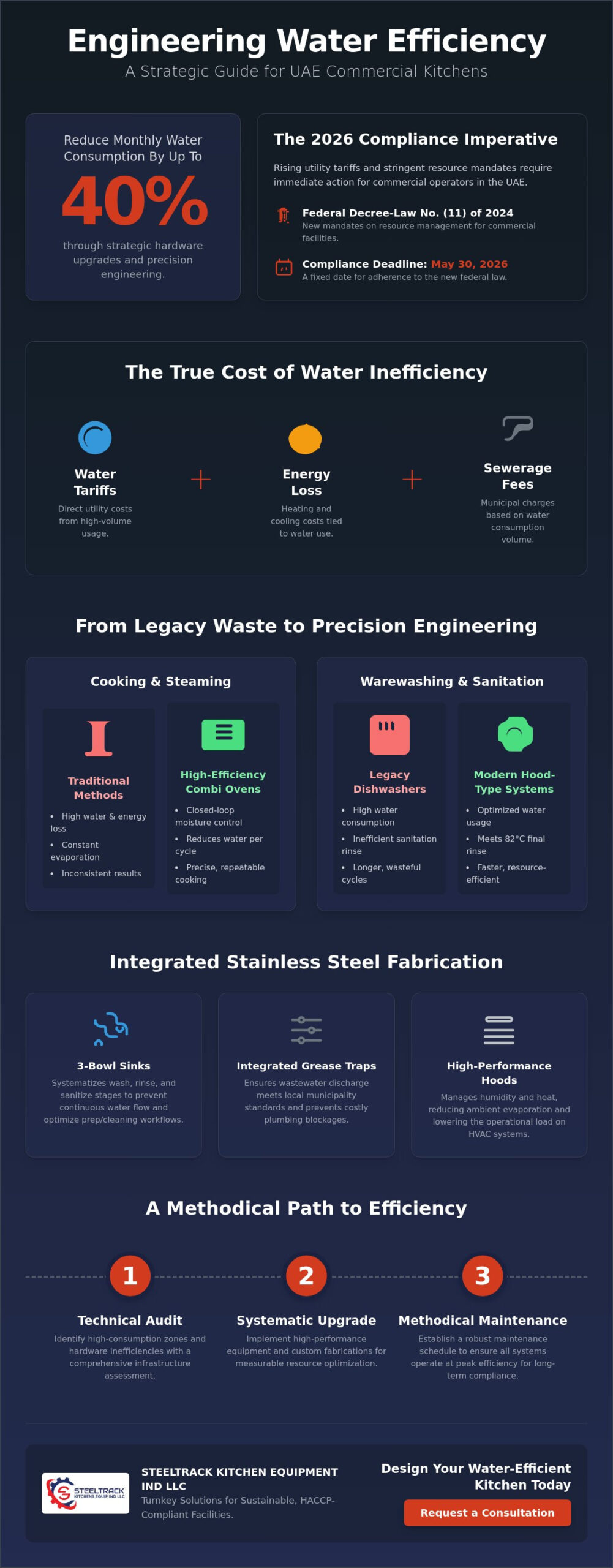
Could a strategic recalibration of your facility’s engineering profile reduce your monthly water consumption by up to 40%? As the UAE approaches the May 30, 2026, compliance deadline for Federal Decree-Law No. (11) of 2024, commercial operators face the dual challenge of rising utility tariffs and stringent resource management mandates. In high-volume environments, inefficient boiling equipment and legacy dishwashing systems represent a significant drain on both ecological resources and profit margins. Implementing sophisticated water saving solutions for restaurant kitchens is no longer a matter of simple behavioral changes; it’s a requirement of modern industrial engineering and methodical hardware selection.
We understand that maintaining rigorous standards of hygiene, such as the mandatory 82°C final rinse for sanitization, shouldn’t come at the cost of operational viability. This article details how the integration of advanced hardware, including high-efficiency combi ovens and custom-fabricated stainless steel sinks, creates a systematic approach to resource conservation. By focusing on precision fabrication and smart equipment selection, you can achieve a measurable return on investment while ensuring your facility remains a leader in sustainable hospitality. We’ll explore the technical specifications and infrastructure upgrades that turn water management from a variable expense into a controlled, HACCP-compliant asset.
Key Takeaways
- Evaluate the strategic impact of UAE utility tariffs and federal climate mandates on commercial kitchen operational costs to ensure long-term regulatory compliance.
- Transition from traditional high-consumption methods to precision engineering with specialized hood-type dishwashers and Rational Combi ovens that optimize resource usage.
- Optimize industrial water management through custom stainless steel fabrication, utilizing 3-bowl sinks and integrated grease trap systems for maximum efficiency.
- Implement robust water saving solutions for restaurant kitchens by conducting technical infrastructure audits and establishing methodical maintenance schedules.
- Leverage turnkey design strategies to integrate heavy-duty cooking ranges with water-efficient infrastructure for a sustainable, HACCP-compliant facility.
The Economic and Environmental Imperative for Water Conservation in UAE Kitchens
Industrial water management has evolved from a secondary operational concern into a pivotal strategic asset for the UAE hospitality sector. As the May 30, 2026, compliance deadline for Federal Decree-Law No. (11) of 2024 approaches, businesses must formalize their approach to resource reduction. Within the high-pressure environment of a commercial kitchen, the implementation of water saving solutions for restaurant kitchens directly influences the bottom line by mitigating the impact of tiered utility tariffs. High-volume operations in Abu Dhabi and Dubai face escalating costs as they move into higher consumption bands, making water efficiency a prerequisite for maintaining competitive profit margins. Beyond simple cost avoidance, aligning with national sustainability goals through engineered infrastructure demonstrates a commitment to environmental stewardship that resonates with a sophisticated, eco-conscious clientele.
Analyzing the True Cost of Water Waste
The financial burden of water wastage extends far beyond the initial procurement cost. Every liter of water discarded during high-temperature sanitation or steaming represents a loss of the energy used to heat it. This synergy between water and energy consumption means that inefficient processes, such as the use of traditional boiling pans instead of precision Rational Combi ovens, create a compounding deficit. Additionally, regional municipalities have introduced sewerage management fees tied directly to water consumption volumes, such as the fees implemented for expatriate-owned businesses in 2025. Identifying high-consumption zones is the first step in a technical audit. Preparation areas, where thawing and rinsing occur, and sanitation stations, centered around hood-type dishwashers, are frequently the primary sources of unoptimized usage.
The UAE Context: Heat and Evaporation Challenges
The regional climate introduces unique engineering hurdles that are often overlooked in standard kitchen designs. High ambient temperatures can accelerate evaporation in open systems, such as traditional stockpot ranges or unlidded prep sinks. Effective moisture management is critical. Without high-performance stainless steel exhaust hoods, excess humidity can force HVAC systems to work harder, further inflating utility bills. Technical precision in drainage, utilizing engineered stainless steel floor grating and grease traps, ensures that discharge meets local municipality standards while preventing costly blockages. For operators seeking comprehensive infrastructure upgrades, exploring specialized professional kitchen services provides the engineering expertise required to navigate these regional complexities and implement effective water saving solutions for restaurant kitchens.
Engineering Efficiency: High-Performance Equipment Specifications
Achieving operational excellence in a commercial environment requires a transition from legacy hardware to precision-engineered systems. Traditional boiling pans and open-well steamers are inherently inefficient, often consuming excessive volumes of water through constant evaporation and manual refilling. In contrast, the integration of a Rational Combi oven represents a fundamental upgrade in resource management. By utilizing sophisticated sensors and closed-loop moisture control, these units significantly reduce the liters of water required per cooking cycle compared to atmospheric steamers. This methodical approach to water saving solutions for restaurant kitchens ensures that every drop is accounted for, directly supporting the long-term ROI of high-volume facilities.
Combi Ovens vs. Traditional Steaming Methods
The engineering behind modern combi ovens allows for a multi-stage cooking process that optimizes steam generation. Unlike traditional boiling pans that lose moisture to the atmosphere, a closed-system oven recirculates humidity, requiring far less input to maintain the necessary cooking environment. For industrial kitchens, this translates to a quantifiable reduction in hourly water consumption. When conducting an ROI analysis, the initial procurement cost of such high-performance equipment is often offset by the drastic reduction in utility expenses and improved yield consistency. It’s a strategic investment that prioritizes technical precision over outdated, high-waste methods.
Automated Warewashing and Sanitation Systems
Sanitation remains one of the most water-intensive sectors of any kitchen operation. Modern hood-type dishwashers are now engineered with water recycling features and multi-stage filtration systems that allow for the reuse of rinse water in subsequent wash cycles. These machines utilize advanced sensors to detect load sizes, adjusting water delivery to prevent the waste associated with half-empty cycles. Beyond the machine itself, the hardware used at the pre-rinse station is equally critical. Installing an EPA WaterSense labeled pre-rinse spray valve can reduce flow rates significantly without compromising the high-pressure output required to remove heavy soils. This small but vital component is a cornerstone of effective water management.
Ice production is another area where engineering choices impact resource consumption. While water-cooled ice machines were once common, they are increasingly being phased out in favor of air-cooled systems. In the UAE’s water-scarce context, air-cooled ice machines are the superior choice, as they eliminate the continuous flow of “once-through” cooling water that is simply dumped down the drain. For operators looking to audit their current hardware landscape, our technical team provides specialized equipment consultations to identify high-impact replacement opportunities. By focusing on these high-performance specifications, kitchens can achieve a 40% reduction in consumption while maintaining the rigorous 82°C sanitization standards required by local regulations.
Custom Stainless Steel Fabrication for Water Management
While precision equipment provides the mechanism for resource reduction, the underlying infrastructure of the facility dictates the efficiency of daily workflows. Custom fabrication serves as the foundation for modern water saving solutions for restaurant kitchens, transforming static fixtures into active conservation tools. Utilizing Grade 304 stainless steel is essential for this application. Its superior resistance to corrosion and pitting prevents the microscopic leaks and structural degradation that often plague inferior materials, ensuring that water remains contained within the system rather than seeping into the subfloor. This material integrity is paired with specialized designs, such as custom stainless steel mop sinks and janitorial stations, which are engineered to provide controlled water access for floor care, preventing the over-filling of buckets and reducing unnecessary discharge during the cleaning cycle.
The Strategic Design of Preparation Sinks
The configuration of washing stations significantly impacts total volume usage during food preparation and sanitation. A standard 3-bowl stainless steel sink allows for a methodical three-step process of washing, rinsing, and sanitizing that utilizes fixed volumes of water rather than a continuous flow from a tap. To further enhance efficiency, we integrate foot-pedal controls into our designs. These mechanisms allow operators to activate water flow only when necessary, facilitating hands-free operation that aligns with HACCP standards while preventing the common habit of leaving taps running during prep tasks. For facilities requiring bespoke infrastructure, you can explore our custom stainless steel fabrication services to see how tailored designs integrate with your operational flow.
Drainage Systems and Grease Management
Precision engineering in drainage is vital for maintaining a sanitary and resource-efficient environment. High-quality stainless steel floor grating is designed to facilitate rapid wash-downs while preventing debris from entering the primary plumbing lines. This works in tandem with an engineered stainless steel grease trap, which is a critical component for protecting the facility’s internal drainage system. By capturing fats, oils, and grease at the source, these units prevent the costly blockages and backflow issues that often lead to excessive water use during emergency plumbing repairs. Adhering to Federal Energy Management Program best practices regarding equipment maintenance ensures that these fabricated elements perform at peak capacity. Methodical drainage design not only supports hygiene but also serves as one of the most reliable water saving solutions for restaurant kitchens by streamlining the sanitation process and reducing the volume of water required for floor maintenance.
Implementing a Methodical Water Management Strategy
Technical infrastructure alone cannot sustain high-efficiency targets without a corresponding operational framework. Establishing water saving solutions for restaurant kitchens requires a transition from reactive repairs to a proactive, data-driven management strategy. This process begins with a comprehensive technical water audit, where every point of consumption, from the walk-in cold rooms to the heavy-duty cooking ranges, is scrutinized for efficiency gaps. By integrating smart meters into the facility’s plumbing architecture, operators gain real-time visibility into consumption patterns. This allows for the immediate identification of anomalies that often signal subsurface leaks or equipment malfunctions before they escalate into significant financial liabilities.
Technical Maintenance for Leak Prevention
Precision engineering demands rigorous upkeep. Routine inspections of valves, gaskets, and industrial boiler connections are essential to prevent the “silent” water loss that occurs in high-pressure environments. Over time, heat and mineral deposits from desalinized water can degrade seals, leading to persistent drips that bypass standard detection. For detailed protocols on maintaining high-heat equipment, refer to our guide on Industrial Cooking Range Maintenance. Proactive parts replacement in high-volume environments isn’t just a maintenance cost; it’s a strategic investment in resource preservation. Replacing a worn gasket today is far more cost-effective than absorbing the cumulative expense of thousands of liters of wasted water over a fiscal quarter.
Process Optimization in Food Preparation
Human interaction with hardware remains a critical variable in resource management. Standard Operating Procedures (SOPs) must be updated to prioritize conservation without compromising food safety or HACCP compliance. For instance, replacing the common practice of running-water thawing with refrigeration-based thawing techniques in walk-in cold rooms can eliminate significant daily water waste. Similarly, implementing batch-washing protocols for produce, utilizing the 3-bowl sinks discussed previously, ensures that water is used as a measured ingredient rather than a continuous stream. Training staff on the mechanical advantages of low-flow hardware, such as high-pressure pre-rinse valves, ensures that the engineering intent of the equipment is realized in daily practice.
Sustainability in the modern F&B sector is a result of methodical planning and technical mastery. To begin your facility’s transition toward higher efficiency, you can book a technical kitchen audit with our engineering specialists. By combining smart monitoring with disciplined maintenance, your kitchen can achieve the operational rigor required to meet the UAE’s evolving environmental standards while securing a long-term return on investment.
Turnkey Solutions: Designing the Water-Efficient Kitchen of 2026
Transitioning to a high-efficiency model requires more than just purchasing individual units; it demands a holistic engineering strategy where every component is synchronized. The primary advantage of a single-source supplier lies in the seamless integration of heavy-duty cooking ranges with specialized water-saving infrastructure. At Steeltrack, we provide comprehensive water saving solutions for restaurant kitchens by overseeing the entire lifecycle of a project, from initial technical design to final installation. This unified approach eliminates the compatibility issues that often arise when sourcing from multiple vendors, ensuring that your custom stainless steel sinks and drainage systems are perfectly calibrated to support your high-performance hardware. Our commitment to regional leadership is reflected in our ability to deliver technical kitchen setups that exceed local municipality standards for discharge and resource management.
From Concept to Installation: The Steeltrack Approach
Our consultative design process focuses on maximizing operational ROI while adhering to the strictest industrial standards. We recognize that every facility has unique spatial and volume requirements, which is why our fabrication team works in tandem with our design engineers to create bespoke stainless steel solutions that optimize workflow and conservation. Professional installation is the final, critical step in ensuring that hardware like Rational Combi ovens and hood-type dishwashers operate at their engineered peak performance. Beyond the initial setup, we provide long-term technical support to manage equipment lifecycles, ensuring that efficiency gains aren’t eroded by technical degradation or improper maintenance over time. This methodical oversight ensures that your kitchen remains a high-performance asset for years to come.
Securing Your Kitchen’s Operational Future
As we approach 2026, future-proofing your facility against rising utility tariffs and evolving environmental regulations is a business necessity. The UAE’s regulatory landscape is shifting toward mandatory resource reporting, making it essential to have infrastructure that supports measurable reduction targets. High-performance equipment serves as the cornerstone of sustainable hospitality, allowing brands to maintain excellence while significantly reducing their ecological footprint. To begin your transition toward a more resilient and efficient facility, you should consult with Steeltrack Kitchen Equipment for your next industrial setup. By anchoring your kitchen in custom-fabricated stainless steel and smart hardware, you secure both your operational future and your reputation as a regional industry leader. Implementing these water saving solutions for restaurant kitchens today ensures you’re prepared for the technical and economic demands of tomorrow.
Strategizing for Operational Excellence and Regulatory Compliance
Transitioning to a water-efficient model is a strategic imperative that combines technical hardware selection with methodical infrastructure design. By integrating high-performance equipment and custom-fabricated stainless steel systems, facilities can significantly reduce their operational footprint while maintaining the highest hygiene standards. Implementing engineered water saving solutions for restaurant kitchens ensures your brand remains at the forefront of regional hospitality leadership while adhering to the UAE’s evolving environmental mandates.
As a premier UAE manufacturer of stainless steel solutions and specialists in custom industrial kitchen fabrication, Steeltrack provides the technical expertise needed to secure your facility’s operational future. Our proven track record in high-performance equipment supply allows you to implement these changes with total confidence. It’s time to transform your resource management into a sustainable competitive advantage that protects both your profit margins and the region’s vital resources. Partner with Steeltrack for High-Efficiency Kitchen Solutions and take the first step toward a more resilient, HACCP-compliant facility today.
Frequently Asked Questions
How much water can a commercial kitchen save with low-flow valves?
Replacing a standard pre-rinse spray valve with a high-efficiency model can save a typical commercial kitchen more than 7,000 gallons of water per year. These engineered valves reduce flow rates to 1.28 gallons per minute or less while maintaining the high pressure required for effective sanitation. It’s one of the most cost-effective water saving solutions for restaurant kitchens available to modern operators.
Do water-saving dishwashers compromise hygiene standards?
No, modern water-efficient hood-type dishwashers are specifically designed to meet the UAE’s mandatory final rinse temperature of 82°C. These machines achieve resource efficiency through advanced multi-stage filtration and water recycling systems rather than by reducing the temperatures or pressures required for pathogen neutralization. This ensures that your facility remains fully HACCP-compliant while reducing total consumption.
Is a combi oven more water-efficient than a traditional steamer?
A Rational Combi oven is significantly more water-efficient than a traditional atmospheric steamer because it operates as a sophisticated closed system. Traditional steamers often vent excess steam and require a continuous flow of water to maintain levels, whereas combi ovens recirculate moisture and use precision sensors to inject only the exact volume required. This technical advantage reduces hourly water intake during high-volume cooking cycles.
How often should a commercial grease trap be maintained to prevent water waste?
Commercial grease traps require professional inspection and cleaning at least once every one to three months, depending on the facility’s fat and oil output. Methodical maintenance prevents the blockages that lead to drainage backflow. When a system fails, it often requires excessive volumes of high-pressure water to clear the lines and sanitize the kitchen floor, creating unnecessary waste and operational downtime.
What is the most water-intensive piece of equipment in a restaurant kitchen?
The commercial dishwasher is typically the highest consumer of water in any hospitality facility, followed closely by open-well prep sinks and legacy ice machines. Transitioning to air-cooled ice machines and implementing water saving solutions for restaurant kitchens, such as automated warewashing sensors, can mitigate these high-consumption points. Engineering choices in these areas have the most significant impact on your monthly utility profile.
Can custom stainless steel fabrication really help in water conservation?
Custom stainless steel fabrication serves as the structural foundation for efficient water management. Fabricating 3-bowl sinks allows for a controlled wash-rinse-sanitize process that uses fixed volumes of water instead of a continuous stream. Additionally, integrating foot-pedal controls into preparation stations ensures that water flow is only active when needed, preventing the common habit of leaving taps running during busy shifts.
Are there UAE-specific regulations for kitchen water discharge?
Yes, UAE businesses must adhere to Federal Decree-Law No. (11) of 2024 by the compliance deadline of May 30, 2026, which mandates the measurement and reduction of environmental impacts. Local municipalities also enforce strict standards for water discharge quality, often requiring the installation of specific grease traps and drainage systems to prevent the contamination of public sewerage infrastructure.
What is the ROI on upgrading to water-efficient industrial equipment?
The ROI on upgrading to water-efficient hardware is typically realized through a reduction in monthly water bills by up to 40%. These savings are further enhanced by lower energy costs, as less electricity is required to heat the reduced volume of water. In regions with tiered utility tariffs, like Abu Dhabi and Sharjah, staying within lower consumption bands prevents the application of significantly higher surcharge rates.