


Can a single plumbing fixture dictate the legal standing of a multi-million dirham commercial facility? In the strictly regulated UAE industrial sector, the answer is a definitive yes. A non-compliant hand wash sink is more than a minor oversight; it is a critical failure point that can lead to rejected health inspections and costly operational shutdowns. You recognize that maintaining a sterile environment is a legal mandate overseen by authorities such as Dubai Municipality, where precision in equipment selection is paramount to your success.
This guide provides the technical clarity required to ensure your facility meets the updated 2026 compliance standards. You will discover the essential specifications for AISI 304 stainless steel fabrication and the mandatory requirements for hands-free operation to mitigate cross-contamination risks. We will examine the systematic workflow designs and technical standards necessary to achieve a maintenance-free, HACCP-compliant kitchen environment that stands up to the region’s high-humidity demands. This comprehensive overview ensures your sanitation infrastructure remains a reliable asset rather than a liability.
Key Takeaways
- Understand the mandatory requirements for hands-free operation to ensure your facility aligns with the latest UAE food safety regulations.
- Identify why AISI 304 stainless steel is the non-negotiable material standard for any industrial hand wash sink to withstand high-humidity environments.
- Evaluate the structural advantages of custom-fabricated stainless steel over portable units to maximize the longevity of your sanitation infrastructure.
- Learn the technical installation protocols for drainage and grease trap integration that support a seamless, HACCP-compliant kitchen workflow.
- Discover the strategic benefits of local UAE manufacturing for achieving rapid project delivery and precision-engineered equipment standards.
The Critical Role of Hand Wash Sinks in UAE Food Safety Standards
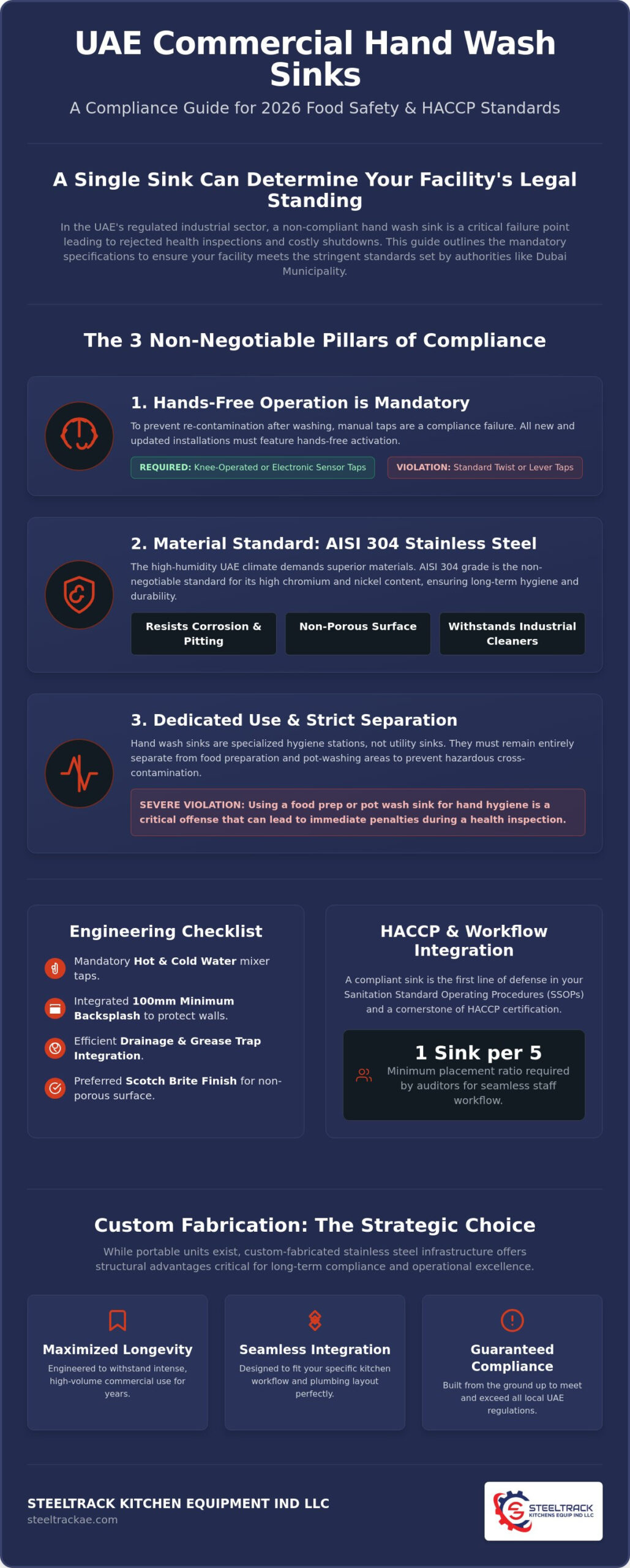
In the architecture of a high-performance industrial kitchen, the distinction between utility equipment and sanitation infrastructure is absolute. A dedicated hand wash sink isn’t merely a plumbing fixture; it’s a specialized hygiene station designed exclusively for personal decontamination. Regulatory bodies across the UAE, including the Dubai Municipality, mandate that these units remain entirely separate from food preparation and pot-washing areas to eliminate any risk of cross-contamination. Utilizing a prep sink for hand hygiene is a severe violation of local safety protocols that can lead to immediate penalties during a health inspection.
Modern industrial standards prioritize the elimination of manual contact with faucet surfaces. The Critical Role of Hand Washing in preventing the spread of foodborne pathogens is compromised if a staff member must touch a contaminated handle after scrubbing. Consequently, UAE compliance in 2026 requires hands-free operation, typically achieved through knee-operated valves or electronic sensors. Standard twist taps are officially classified as a violation because they facilitate re-contamination. This technical requirement ensures that the sanitation process remains aseptic from start to finish, supporting the high-volume throughput typical of the region’s commercial sector.
HACCP Compliance and Sanitation Protocols
Achieving HACCP certification requires a methodical approach to identifying and controlling biological, chemical, and physical hazards. A compliant hand wash sink is fundamental to this framework, acting as the first line of defense within a facility’s Sanitation Standard Operating Procedures (SSOPs). Auditors look for the strategic placement of these sinks, often requiring a minimum of one basin for every five food handlers, to ensure that hygiene is a seamless part of the staff workflow. The deployment of dedicated hand wash stations serves as a primary physical barrier that interrupts the transmission of pathogens from personnel to food contact surfaces, effectively neutralizing biological hazards at the point of origin.
UAE Regulatory Requirements for Commercial Sinks
Commercial sanitation infrastructure in the UAE must adhere to rigorous material and design specifications to ensure long-term hygiene. Surfaces must be non-porous and constructed from food-grade stainless steel to prevent bacterial harborage and resist the corrosive effects of industrial cleaning agents. Drainage systems must be engineered for maximum efficiency, preventing stagnant water that could attract pests or foster mold growth. Additionally, regulations specify the following requirements:
- Mandatory hot and cold water mixer taps to ensure water temperatures reach levels sufficient for effective lipid removal during washing.
- Integrated backsplashes, typically a minimum of 100mm, to protect wall surfaces from moisture ingress and simplify the deep-cleaning process.
- Strict separation from food contact areas, ensuring no splash-back reaches ingredients or clean utensils.
These standards reflect a commitment to institutional strength and public safety, which is why professional custom fabrication services are essential for meeting these rigid benchmarks. Compliant equipment positions your facility as a leader in the regional market.
Engineering Excellence: Technical Specifications for Industrial Sinks
Selecting a hand wash sink for a commercial environment requires a rigorous evaluation of metallurgical properties and mechanical assemblies. In the high-humidity climate of the UAE, the choice of material isn’t merely a preference; it’s a strategic decision that affects the facility’s operational lifespan. High-grade AISI 304 stainless steel remains the industry benchmark because its high chromium and nickel content provides an essential barrier against oxidative stress. This material ensures that the equipment resists the pitting and corrosion that often plague inferior imports in coastal regions. Adhering to the principles of Engineering Excellence in Hand Wash Sinks ensures that every component, from the bowl depth to the backsplash height, facilitates optimal hygiene.
Precision engineering extends to the surface treatment of the steel. The Scotch Brite finish is preferred for industrial applications because its fine-grained texture masks minor abrasions while maintaining a non-porous surface that inhibits bacterial growth. Structural integrity is further reinforced by the gauge thickness of the steel sheets. A heavy-duty 1.2mm or 1.5mm thickness prevents the warping and “oil-canning” effect that occurs with thinner, domestic-grade alternatives. These technical details are central to the custom fabrication services provided by regional experts who understand the demands of high-volume commercial kitchens.
Stainless Steel Grades and Corrosion Resistance
While AISI 304 is the standard for most food-grade applications, facilities located in high-salinity coastal areas or those utilizing aggressive chemical sanitizers may opt for AISI 316. The primary difference lies in the addition of molybdenum, which significantly enhances resistance to chloride-induced pitting. Investing in premium stainless steel offers a superior return on investment by eliminating the need for frequent equipment replacement. This durability is vital for maintaining the institutional strength of your sanitation infrastructure over decades of use.
Hands-Free Operation Mechanisms
The mechanical reliability of the faucet activation system is a critical failure point in many industrial setups. Knee-operated push valves are highly regarded for their durability; they lack the electronic complexities of infrared sensors, making them ideal for high-traffic environments where maintenance must be kept to a minimum. Electronic sensors offer the highest level of hygiene by removing all physical contact, though they require a stable power supply or regular battery replacement. Choosing the right system depends on your specific staff workflow and the technical capacity of your maintenance team. If you require specific dimensions for a complex layout, you can discuss your project requirements with our fabrication experts.
Every hand wash sink must also feature a robust component breakdown. This includes hot and cold water mixer taps for effective sanitization and high-quality drainage assemblies that prevent blockages. When these elements are integrated with a seamless, welded construction, the result is a piece of equipment that meets the highest standards of industrial rigor.
Custom Fabrication vs. Portable Hand Wash Stations
The decision between a temporary hygiene station and a permanent hand wash sink installation often defines the long-term operational viability of a commercial facility. While portable units offer immediate convenience for outdoor events or temporary pop-ups, they rarely withstand the rigorous, 24-hour demands of a high-volume industrial kitchen. Permanent fabrication ensures that your sanitation infrastructure is a core component of your facility’s engineering rather than a secondary addition. This distinction is critical when aligning your setup with the Dubai Municipality Food Code, which prioritizes durable, easy-to-clean surfaces that facilitate consistent hygiene.
Custom fabrication allows for the precise tailoring of equipment to the unique footprint of your workspace. Industrial kitchens often present architectural challenges, such as narrow corridors or unconventional corner placements, where standard retail units fail to fit. By opting for bespoke solutions, you can optimize staff ergonomics and ensure that hygiene stations are placed exactly where they’re needed most to encourage compliance. This strategic approach to design minimizes the footprint of the equipment while maximizing the efficiency of the sanitation workflow.
The Limitations of Temporary Solutions
Portable hand wash stations frequently utilize plastic or MDF components that are susceptible to degradation in the high-temperature environments typical of UAE commercial kitchens. These materials are porous and can harbor bacteria over time, making them unsuitable for long-term food safety compliance. There are also significant hygiene risks associated with the manual handling of wastewater tanks and freshwater reservoirs. Stagnant water in portable tanks poses a biological hazard that permanent plumbing eliminates. While these units are appropriate for mobile catering or short-term exhibitions, they don’t provide the institutional strength required for a permanent industrial license.
Benefits of Bespoke Stainless Steel Fabrication
Bespoke stainless steel fabrication utilizes advanced seamless welding techniques that eliminate the crevices where bacteria and grime typically accumulate. This level of precision is impossible to achieve with mass-produced retail sinks. Custom solutions also allow for the integration of multiple bowls or specialized features such as extended backsplashes and side-splashes to contain water spray effectively. This level of containment protects surrounding walls and equipment from moisture damage and mold growth.
A significant advantage of custom work is the ability to integrate your hand wash sink directly into larger stainless steel work tables. This creates a unified, cohesive workspace that simplifies the deep-cleaning process and enhances the overall aesthetic of the facility. When equipment is fabricated as a single, continuous unit, it removes the gaps between separate pieces of furniture, further reducing the risk of cross-contamination and streamlining your staff’s daily sanitation protocols.
Strategic Integration and Installation Protocols
Integrating a hand wash sink into a commercial layout requires more than just proximity to a water line; it demands a strategic understanding of staff movement and cross-contamination vectors. In the UAE’s high-volume industrial kitchens, the placement of sanitation stations must facilitate a “Raw to Cooked” uni-directional flow as mandated by 2026 hygiene protocols. This methodical approach ensures that personnel can sanitize their hands without deviating from their primary tasks or crossing paths with raw ingredient preparation. Coordination with other critical equipment, such as heavy duty cooking ranges, is essential to maintain thermal efficiency and safety while adhering to strict zoning requirements.
Engineering the plumbing infrastructure for these stations involves meticulous planning regarding drainage slopes and grease trap integration. Standard industrial basins require a minimum drainage slope of 2% to prevent stagnant water, which is a common cause of odors and bacterial growth. Water pressure must be calibrated to ensure that hands-free valves operate consistently without causing splash-back, which could compromise the sterility of nearby prep surfaces. Ergonomic height standards, typically set between 850mm and 900mm from the finished floor level, are also vital for reducing staff fatigue during high-intensity shifts.
Workflow Optimisation and Placement
Optimal placement involves positioning sinks at every kitchen entry point and within transition zones where staff move from handling raw proteins to plated dishes. These stations must remain visible and accessible at all times, ensuring they aren’t obstructed by mobile trolleys or bulk storage units. Accessibility is the primary driver of compliance in a fast-paced environment. The fundamental rule of facility design dictates that a dedicated hand wash station must be situated within eight meters of any active food preparation area to ensure immediate and frequent use.
Professional Installation Standards
Securing wall-mounted units requires heavy-duty anchoring systems capable of supporting the weight of the basin and the hydraulic pressure of the internal plumbing. Professional installers prioritize sealing all interfaces between the sink and the wall with high-grade, food-safe silicone to prevent moisture ingress that could lead to mold development. Testing the hot and cold water mixer taps is the final, critical step in the installation process. Technicians must verify that the system delivers water at the mandatory temperature for effective sanitization while maintaining a consistent flow rate. To ensure your facility meets these rigorous technical benchmarks, you can contact our engineering team for a professional installation consultation.
A well-executed installation serves as the foundation for your facility’s long-term hygiene performance. By aligning your sanitation infrastructure with established industrial protocols, you protect your investment and demonstrate a commitment to regional health standards. This systematic approach transforms a simple hand wash sink into a high-performance tool for operational excellence.
Steeltrack Excellence in Stainless Steel Sanitation Solutions
Steeltrack stands as a definitive authority in the custom fabrication of high-performance stainless steel equipment, delivering solutions that define the technical standards of the UAE commercial sector. Our expertise isn’t limited to the assembly of individual units; it encompasses the strategic engineering of entire sanitation ecosystems. By maintaining our primary manufacturing operations within the UAE, we provide our clients with a distinct advantage in turnaround time and precision customization that international imports simply cannot match. This local presence allows our team to respond rapidly to the specific architectural and regulatory demands of your project, ensuring that every hand wash sink is perfectly integrated into your facility’s unique footprint.
The integration of sanitation units into a turnkey commercial kitchen setup requires a partner who understands the intersection of engineering and food safety. Steeltrack manages this complexity by overseeing the entire lifecycle of the equipment, from the initial conceptual drawings to the final professional installation. This comprehensive oversight eliminates the communication gaps that often occur between multiple vendors, resulting in a cohesive, high-functioning environment that is built for industrial rigor. Our commitment to excellence ensures that your sanitation infrastructure supports, rather than hinders, your facility’s operational throughput.
Our Fabrication Philosophy
Our manufacturing process is guided by a commitment to institutional strength and long-term operational reliability. We utilize only high-grade AISI 304 stainless steel, employing advanced welding techniques to create seamless, non-porous surfaces that meet the most stringent hygiene requirements. This focus on precision engineering extends to our broader suite of commercial kitchen services, where we harmonize sanitation units with prep tables and cooking lines to optimize staff workflows. We don’t just build equipment; we design ergonomic workstations that enhance personnel safety and minimize the physical strain of high-volume operations, ensuring your staff remains efficient throughout every shift.
Partnering for Compliance and Quality
Ensuring that your facility aligns with the latest 2026 health authority standards requires a consultative approach that goes beyond the point of sale. Steeltrack serves as a strategic advisor, conducting thorough facility assessments to determine the optimal placement and technical specifications for your sanitation infrastructure. Our proven track record across the UAE’s hospitality, catering, and industrial sectors is a testament to our ability to handle complex, large-scale projects with methodical progress. We understand that your reputation depends on the reliability of your equipment, which is why we provide comprehensive support throughout the procurement process.
Investing in Steeltrack solutions means securing a partnership that values safety, sustainability, and technical mastery. Our turnkey capabilities ensure that your kitchen setup is fully compliant with HACCP principles and local municipality codes from day one. To take the next step in optimizing your facility’s hygiene infrastructure, you can request a custom quotation or a professional facility assessment today. Our engineering team is prepared to deliver the precision-engineered hand wash sink solutions your operation requires to maintain its competitive edge in a demanding market.
Elevate Your Facility’s Operational Standard Through Precision Engineering
Maintaining a high-performance commercial environment in the UAE requires a meticulous focus on equipment durability and regulatory alignment. As established, the selection of a hand wash sink is a fundamental decision that impacts your facility’s ability to meet stringent HACCP-compliant design standards. By prioritizing high-grade AISI 304 stainless steel and hands-free operation, you ensure that your sanitation infrastructure resists the region’s unique environmental stresses while protecting public health. Strategic placement and professional installation further transform these fixtures into essential assets for a seamless, cross-contamination-free workflow.
Steeltrack provides the institutional strength and technical mastery required to handle complex, large-scale projects. From our UAE-based industrial fabrication facility, we deliver customized solutions that are engineered for lifetime durability and absolute compliance. Our expert on-site installation services ensure that your equipment is integrated perfectly into your operational footprint. Take the definitive step toward securing your facility’s reputation and operational excellence today. Request a Custom Fabrication Quote from Steeltrack to begin your project with a strategic partner dedicated to industrial rigor. Your commitment to precision starts with the right foundation.
Frequently Asked Questions
What is the standard height for a commercial hand wash sink in the UAE?
The standard installation height for a commercial hand wash sink typically ranges between 850mm and 900mm from the finished floor level. This range aligns with international ergonomic standards, ensuring that staff can maintain proper posture during frequent sanitation cycles. Correct height alignment is essential for reducing physical fatigue in high-intensity industrial environments where repetitive hand washing is a mandatory safety protocol.
Do UAE health regulations require knee-operated or sensor taps for hand wash sinks?
Yes, current UAE health regulations mandate hands-free operation for all handwashing basins in food preparation areas. As of 2026, equipment must be operated by knee, foot, or electronic sensor to eliminate the risk of re-contaminating hands via manual faucet contact. Standard twist taps are officially classified as a violation during health inspections because they facilitate the transmission of biological hazards across the facility.
Can I use a preparation sink for hand washing in a commercial kitchen?
Utilizing a preparation sink for hand hygiene is strictly prohibited under the Dubai Municipality Food Code. Hand wash stations must be dedicated exclusively to personal sanitation and remain entirely separate from sinks used for food preparation or equipment washing. This physical separation is a fundamental requirement for achieving HACCP compliance and preventing the cross-contamination of ingredients with pathogens from staff members’ hands.
What is the difference between AISI 304 and AISI 430 stainless steel for sinks?
AISI 304 is the non-negotiable standard for commercial kitchen equipment due to its high chromium and nickel content, which provides superior corrosion resistance. In contrast, AISI 430 is a lower-grade ferritic steel that lacks nickel and is significantly more susceptible to pitting and oxidative stress in high-humidity environments. For long-term durability in the UAE industrial sector, food-grade 304 stainless steel is the only material that ensures institutional strength.
Are integrated backsplashes mandatory for industrial hand wash stations?
While specific municipality guidelines focus on the overall hygiene of the station, integrated backsplashes are considered an industry standard for commercial compliance. A backsplash, typically a minimum of 100mm in height, prevents moisture and organic matter from accumulating in the interface between the sink and the wall. This design feature is essential for protecting the structural integrity of your facility and facilitating the deep-cleaning processes required by UAE health authorities.
How many hand wash sinks are required for a commercial kitchen of a specific size?
UAE health standards require a minimum of one hand wash sink for every five food handlers present in a food preparation area. This ratio ensures that staff have immediate access to sanitation stations without obstructing workflows or discouraging hygiene compliance. Additionally, the sink must be positioned within eight meters of active work zones to satisfy the requirements for rapid and frequent hand decontamination.
What maintenance is required to prevent corrosion on stainless steel sinks?
Preventing corrosion on stainless steel requires the use of non-abrasive cleaning agents and the complete removal of chloride-based residues. Staff should clean the surface daily with a mild detergent and dry it thoroughly to prevent mineral deposits from forming. It’s vital to avoid steel wool or harsh chemicals that can strip the protective chromium oxide layer, as these lead to premature pitting and degradation of the equipment.
Is it possible to custom-fabricate a hand wash sink to fit a small corner space?
Custom fabrication is the ideal solution for optimizing hygiene in facilities with unconventional architectural footprints or limited space. Professional fabricators can engineer a hand wash sink to fit precisely into small corner areas or narrow corridors without compromising the mandatory bowl dimensions or backsplash requirements. This bespoke approach allows for the integration of high-performance sanitation tools into even the most challenging industrial kitchen layouts.