In the industrial landscape of the UAE, stainless steel cabinetry is a strategic infrastructure investment for hygiene and longevity, not merely a storage choice. You likely understand that the combination of high humidity and coastal salt air in the region can decimate standard equipment in months. Finding reliable stainless steel kitchen cabinets UAE specialists who prioritize industrial-grade durability over aesthetic shortcuts is a persistent challenge for procurement officers. It’s often difficult to balance the need for bespoke workflows with the rigid requirements of local health and safety inspections.
This guide provides the technical framework you need to specify and procure high-performance cabinetry that withstands the UAE’s unique environmental and regulatory demands. We’ll examine the critical distinctions between Grade 304 and 316 alloys, detail the integration of custom base cabinets with heavy-duty cooking ranges, and outline the exact Dubai Municipality food safety standards required for a successful inspection. This comprehensive overview ensures that your facility maintains the highest hygiene standards while achieving a seamless, professional workflow.
Key Takeaways
- Understand why Grade 316 alloys are essential for resisting corrosion in the UAE’s high-humidity coastal zones.
- Learn how to meet Dubai Municipality and HACCP standards through the selection of non-porous, food-grade materials.
- Determine the best fit for your facility by comparing modular units with custom-fabricated stainless steel kitchen cabinets UAE.
- Evaluate the structural superiority of industrial-gauge steel over materials that don’t withstand heavy-duty kitchen workflows.
- Gain insights into the turnkey process for integrating wall cabinets and base units with specialized cooking and refrigeration equipment.
The Strategic Importance of Stainless Steel Cabinetry in the UAE
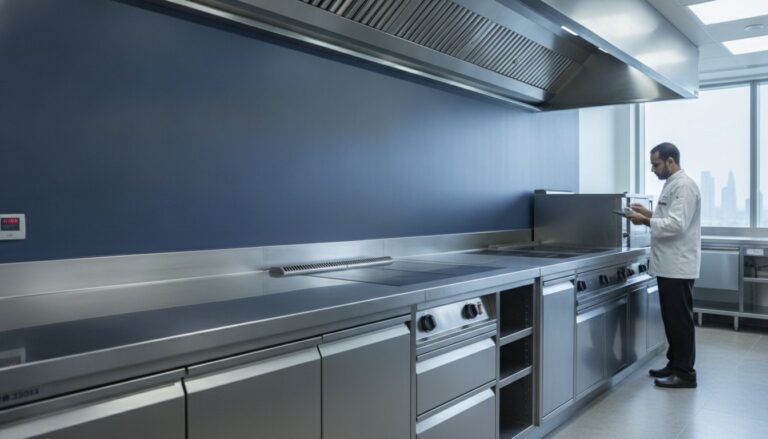
In the competitive UAE hospitality and industrial sectors, selecting the right infrastructure is a foundational business decision. The stainless steel kitchen cabinets UAE facilities require aren’t merely storage solutions; they’re essential components for maintaining operational continuity and regulatory compliance. The intense thermal output from heavy-duty cooking ranges, combined with the region’s high ambient humidity, creates a volatile environment that quickly degrades inferior materials. By choosing high-grade cabinetry, operators secure their investment against premature failure and ensure a sterile environment that meets international safety protocols.
Meeting UAE Regulatory and Hygiene Standards
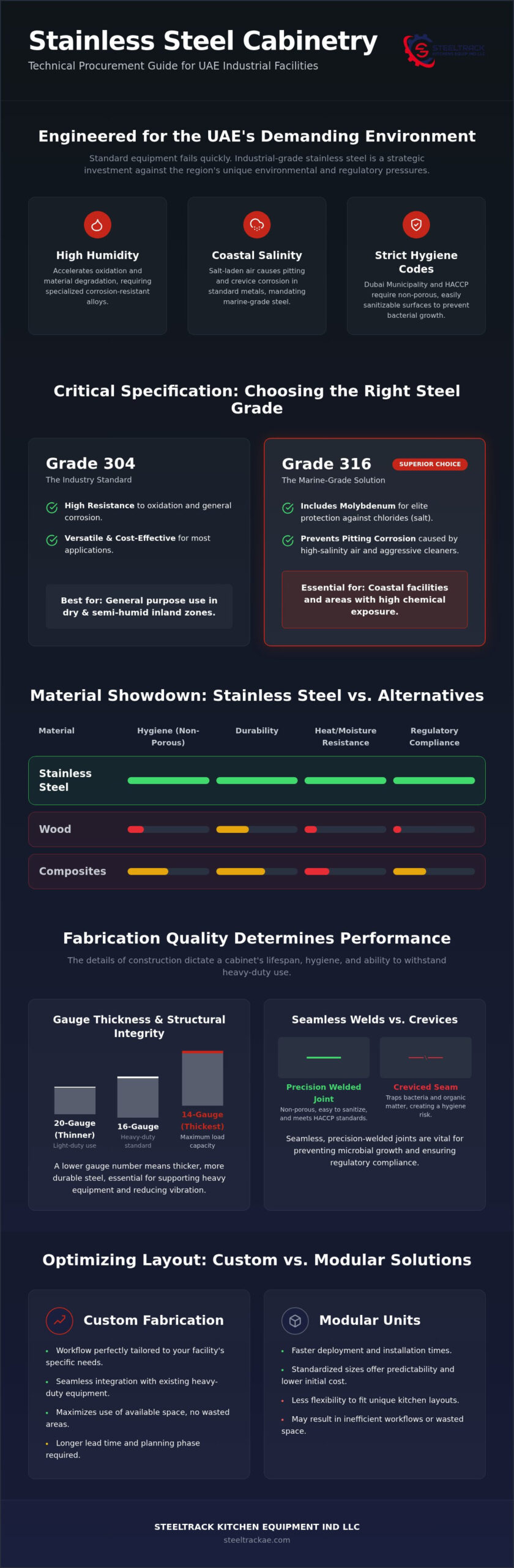
The Dubai Municipality Food Safety Department, guided by the UAE Food Code, mandates that all equipment in contact with food must be non-toxic and easy to sanitize. Stainless steel’s non-porous surface is the industry standard because it doesn’t harbor bacteria or allow for cross-contamination. Seamless fabrication is vital here. When cabinets are constructed with precision-welded joints, there are no crevices for organic matter to accumulate. This technical rigor simplifies the daily sanitation routine, allowing teams to maintain strict HACCP standards without the risk of hidden microbial growth that often occurs in porous alternatives like wood or low-grade composites.
Environmental Resilience in the UAE
The coastal geography of the Emirates introduces high levels of salinity and humidity, which act as catalysts for oxidation. Understanding the chemical properties of stainless steel is crucial for procurement teams. While Grade 304 suffices for many indoor applications, facilities near the coast often require Grade 316 for its superior resistance to chloride-induced pitting. This material choice directly impacts the economic lifecycle of the kitchen. Investing in high-performance cabinetry reduces the total cost of ownership by eliminating the need for frequent replacements or repairs.
Beyond durability, steel offers a sustainable advantage as it’s fully recyclable, aligning with the UAE’s broader goals for industrial sustainability. These specialized fabrication services ensure that every unit, from wall shelves to base cabinets, is engineered to withstand both thermal stress and environmental corrosion over decades of high-volume use. Selecting the high-quality stainless steel kitchen cabinets UAE providers offer is a long-term commitment to operational excellence and financial prudence.
Technical Specifications: Grades and Fabrication Standards
Precision engineering defines the operational lifespan of industrial cabinetry. The high-performance stainless steel kitchen cabinets UAE operators select must adhere to rigorous metallurgical standards to ensure structural stability under constant load. Beyond the visible exterior, the internal architecture and material composition determine how a unit responds to the daily rigors of a commercial environment. Selecting a strategic partner who understands these technical nuances is the first step in securing a reliable infrastructure.
Material Grades: 304 vs. 316
Grade 304 serves as the global benchmark for high-performance preparation and storage areas. Its high chromium and nickel content provides the necessary oxidation resistance for standard dry and semi-humid kitchen zones. It’s the most versatile choice for wall shelves, work tables, and general storage units. However, for facilities situated in high-salinity coastal regions or those utilizing aggressive chemical cleaners, specifying Grade 316 is a prudent technical requirement. This marine-grade alloy includes molybdenum, which offers superior protection against chloride-induced pitting and crevice corrosion. Verifying that raw materials carry authentic ‘Food Grade’ certifications ensures that the steel is non-toxic and compliant with international health standards.
Structural Integrity and Load Capacity
The structural resilience of a cabinet depends heavily on its gauge thickness and reinforcement strategy. In the context of industrial fabrication, ‘gauge’ refers to the thickness of the steel sheet, where a lower numerical value indicates a thicker material that significantly reduces cabinet vibration and structural noise during high-volume operations. For base cabinets designed to support heavy equipment such as combi ovens or heavy-duty cooking ranges, 16-gauge or 14-gauge steel is often required to prevent surface deflection. Internal hat channels and support ribs are integrated into the design to distribute weight evenly across the frame, ensuring that the unit remains perfectly level even under maximum capacity.
The method of assembly is equally critical to the unit’s longevity. TIG (Tungsten Inert Gas) welding is the preferred technique for commercial fabrication because it produces exceptionally strong, clean, and precise bonds. Unlike MIG welding, TIG doesn’t create splatter, resulting in smoother joints that are easier to grind and polish to a seamless finish. This level of detail is essential for meeting the strict hygiene requirements of UAE health inspectors. Finally, applying a ‘No. 4’ brushed finish provides the ideal balance between aesthetics and utility. This directional grain effectively masks minor abrasions from daily use while maintaining a surface that’s easy to sanitize.
Selecting the correct specifications for your facility requires a deep understanding of both environmental factors and operational workflows. For detailed guidance on material selection and structural requirements for your next project, you can consult with our technical fabrication team to review your specific needs.
Comparing Stainless Steel to Alternative Kitchen Materials
Selecting the appropriate material for industrial kitchen infrastructure is a high-stakes decision that impacts both food safety and long-term financial stability. While alternatives like aluminium or wood-based composites might appear cost-effective during the initial procurement phase, they often fail to meet the rigorous demands of the UAE’s commercial sector. Investing in the high-quality stainless steel kitchen cabinets UAE manufacturers produce ensures that your facility remains compliant and operational for decades without the need for frequent overhauls.
Aluminium is often considered for its lightweight properties, yet it lacks the impact resistance required for high-volume environments. It’s prone to denting and structural warping under the weight of heavy industrial cookware. Conversely, wood and MDF are fundamentally unsuitable for professional UAE kitchens. These porous materials absorb moisture and oils, leading to swelling, delamination, and the inevitable growth of mold. This isn’t just a structural failure; it’s a critical hygiene violation that typically results in failed health inspections and costly downtime.
A significant advantage of stainless steel is its exceptional thermal stability. When placed adjacent to heavy duty cooking ranges, steel maintains its metallurgical integrity without scorching, warping, or releasing toxic fumes. This performance under extreme heat is a critical safety factor that alternative materials simply cannot match, making it the only viable choice for high-output cooking zones.
Durability and Maintenance ROI
Cheaper materials carry substantial hidden costs that manifest quickly in a professional setting. The frequency of replacement for MDF or aluminium units often negates any initial savings within the first 24 months of operation. Stainless steel requires minimal maintenance beyond standard sanitation protocols. Its resistance to aggressive industrial degreasers ensures the surface remains intact, preserving the professional appearance and structural strength of the facility. This inherent durability often leads to more favorable insurance assessments and lower safety certification hurdles for commercial premises.
Operational Efficiency Factors
Cleaning efficiency is a major labor factor in any commercial kitchen. Non-porous steel surfaces allow for rapid sanitization, significantly reducing the labor hours required for end-of-shift cleaning compared to textured or porous alternatives. In open-kitchen concepts, the polished, uniform aesthetic of stainless steel projects an image of precision and clinical cleanliness to patrons. Additionally, steel’s thermal properties aid in the management of kitchen ambient temperatures, as it doesn’t retain heat in the same manner as wood or heavy composites, which helps in maintaining a more controlled environment for staff.
Optimising Layout: Custom vs. Modular Cabinetry Solutions
Operational efficiency in a high-volume kitchen is fundamentally linked to the spatial arrangement of its infrastructure. While modular units offer a standardized approach, the bespoke stainless steel kitchen cabinets UAE operators often commission are designed to resolve the complexities of non-standard floor plans and specific culinary workflows. A strategic layout doesn’t just store equipment; it minimizes employee movement and maximizes the throughput of the preparation line. Choosing custom solutions allows for the seamless integration of storage with structural constraints that off-the-shelf units cannot accommodate.
The Custom Fabrication Process
Achieving a high-performance environment requires a methodical approach to design and engineering. The process begins with a comprehensive site measurement and workflow analysis to identify potential bottlenecks in the facility’s current configuration. Following this, technical specialists utilize CAD design to create ergonomic plans that prioritize staff efficiency and safety. The final phase involves precision fabrication, where selected material grades are transformed into units that integrate perfectly with existing structural elements like pillars or recessed alcoves. This level of custom stainless steel fabrication ensures that every square centimeter of the facility is utilized effectively.
Selecting the Right Configuration
The choice between doors and drawers in base cabinets is a critical ergonomic decision. Base cabinets with drawers provide rapid access to utensils and small equipment, while units with doors are better suited for bulk storage and larger vessels. For vertical storage, wall-mounted cabinets are indispensable for reclaiming space above work tables. These units should feature sloped tops to prevent the accumulation of dust and debris, a detail that is essential for maintaining the hygiene standards required by UAE health authorities. When procuring stainless steel kitchen cabinets UAE businesses must also consider specialized storage needs. Integrating units like Smasala trolleys or bakery-specific kitchen trolleys into the cabinet layout allows for a more organized and mobile workflow, especially during peak service hours.
Determining the optimal configuration for your facility’s unique footprint is a technical challenge that benefits from expert consultation. To ensure your kitchen layout supports your long-term growth and operational goals, contact our engineering team to request a site assessment.
Steel Track: Precision Fabrication for UAE Kitchens
Steel Track functions as a strategic manufacturing partner for the UAE’s industrial sector, providing technical skill and regional leadership in metal fabrication. We don’t just supply equipment; we engineer integrated systems that withstand the rigors of high-volume commercial use. Our facility specializes in the turnkey fabrication and installation of comprehensive cabinetry solutions across the Emirates. This process ensures a precision fit with existing heavy-duty cooking ranges and refrigeration units, creating a unified and efficient operational flow. By managing every stage of the manufacturing process, we maintain the highest standards of structural safety and metallurgical integrity for every project we undertake.
Our Specialized Cabinetry Range
Our portfolio is built around the specific needs of high-performance industrial setups. We specialize in the fabrication of Stainless Steel Wall Cabinets With Doors, which provide secure and hygienic overhead storage while maximizing vertical space. For floor-level requirements, our Stainless Steel Base Cabinets with Doors and Drawers are engineered for high-load capacity and ergonomic access. These units are designed to integrate seamlessly with our stainless steel work tables and sinks, forming a cohesive preparation environment that meets all local regulatory requirements. As a specialized manufacturer of stainless steel kitchen cabinets UAE professionals rely on, we ensure every drawer slide and door hinge is built for industrial-grade durability.
The Steel Track Advantage
Our expertise is deeply rooted in the UAE’s hospitality and industrial laundry sectors, where equipment failure is not an option. We understand that reliability is the cornerstone of a successful commercial facility. Every component we manufacture is a result of methodical engineering and a commitment to industrial performance. We prioritize the technical mastery required to handle complex, large-scale projects that demand precision and institutional strength. Our team manages the entire installation process to ensure that each unit is structurally sound and perfectly aligned with your kitchen’s workflow. Steel Track provides comprehensive national service coverage and remains dedicated to upholding the most stringent UAE fabrication standards to ensure the long-term longevity of your infrastructure investment.
Securing Your Industrial Infrastructure for Long-Term Performance
Investing in high-performance cabinetry is a commitment to operational stability and food safety excellence. By prioritizing the technical nuances of material grades and ergonomic configurations, you ensure that your facility remains resilient against the UAE’s unique environmental stresses. The selection of premium stainless steel kitchen cabinets UAE operators require is a strategic move that reduces lifecycle costs while streamlining daily sanitation protocols. It’s a foundational step in building a kitchen that meets both international standards and local health authority requirements.
Steel Track stands ready to support your facility with our expert UAE fabrication team and HACCP compliant designs. Our comprehensive industrial kitchen solutions are engineered to integrate seamlessly with your existing equipment; they provide a stable foundation for your culinary operations. We invite you to Request a Professional Consultation for Your Custom Stainless Steel Projects to begin the process of upgrading your facility. We look forward to partnering with you to achieve a new standard of industrial precision and efficiency.
Frequently Asked Questions
What is the best grade of stainless steel for commercial kitchen cabinets in the UAE?
Grade 304 is the industrial standard for most stainless steel kitchen cabinets UAE facilities utilize due to its excellent corrosion resistance and durability. However, for kitchens located in high-salinity coastal regions, Grade 316 is the superior choice. This marine-grade alloy contains molybdenum, which specifically prevents pitting and structural degradation caused by the UAE’s high humidity and salt-laden air.
How do I maintain and clean stainless steel cabinetry to prevent tea-staining?
Preventing tea-staining requires a consistent maintenance schedule using alkaline or non-chloride cleaners that don’t compromise the protective chromium oxide layer. You should always wipe the surfaces in the direction of the brushed grain to avoid trapping microscopic debris in the finish. Regular rinsing with clean water and thorough drying are essential steps to remove residual salts that can trigger surface oxidation in humid environments.
Can stainless steel cabinets be customized to fit specific kitchen dimensions?
Customization is a core component of industrial fabrication, allowing units to be engineered for non-standard layouts and specific workflow requirements. Through a methodical process of site measurement and CAD design, cabinets are fabricated to accommodate structural pillars, recessed alcoves, or specialized equipment. This ensures that every square centimeter of the kitchen footprint is utilized effectively for maximum operational throughput and staff efficiency.
What is the difference between Grade 304 and Grade 316 stainless steel?
The primary technical distinction lies in the chemical composition, specifically the addition of molybdenum in Grade 316. While Grade 304 provides robust protection for standard food preparation zones, Grade 316 offers enhanced resistance to chlorides and environmental pollutants. This makes 316 the preferred specification for facilities exposed to aggressive cleaning agents or the high-salinity atmosphere characteristic of the UAE’s coastal industrial zones.
How long does it typically take to fabricate and install custom kitchen cabinets in the UAE?
Fabrication and installation timelines are determined by the complexity of the design and the total volume of units required for the project. A standard industrial setup typically moves from the initial site assessment and CAD approval to the manufacturing phase within a few weeks. The turnkey installation is then scheduled to minimize operational downtime, ensuring all components are structurally secured and perfectly aligned with existing infrastructure.
Are stainless steel cabinets compliant with UAE municipality health and safety regulations?
High-quality stainless steel is the approved material for commercial food environments according to the Dubai Municipality Food Safety Department. Its non-porous and non-toxic properties ensure compliance with the UAE Food Code and HACCP standards. To maintain compliance, the fabrication must feature seamless joints and smooth finishes that prevent bacterial accumulation, facilitating successful health and safety inspections for commercial licensing.
What are the benefits of choosing wall-mounted cabinets over floor-standing units?
Wall-mounted units are essential for maximizing vertical storage capacity without encroaching on the limited floor space of a busy preparation line. These cabinets facilitate easier floor sanitation by removing structural obstacles, which is a key hygiene factor for industrial facilities. When designed with sloped tops, they also prevent the accumulation of dust and debris in hard-to-reach areas, further enhancing the facility’s overall cleanliness.
Can I integrate refrigerated units directly into my stainless steel base cabinets?
Integration of refrigeration is a standard practice in modern industrial kitchen design to optimize workflow efficiency. Base cabinets can be engineered to house counter chillers or chef base refrigerators, allowing for a seamless transition between storage and cooking zones. This configuration ensures that temperature-sensitive ingredients remain within reach of the cooking ranges while maintaining a uniform, professional aesthetic across the entire equipment line.