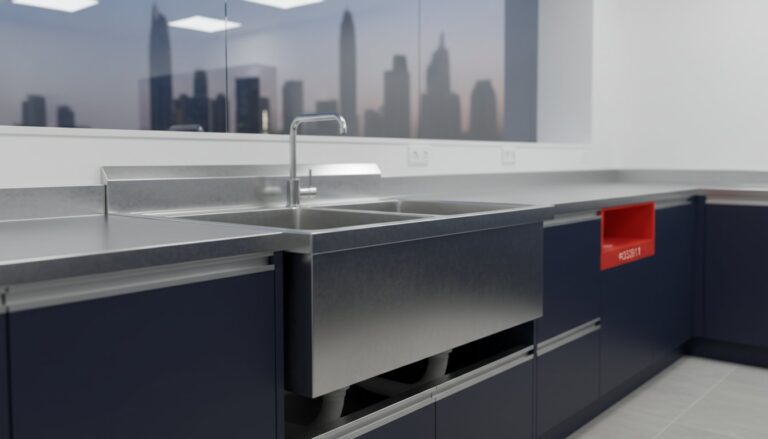
An industrial sink isn’t a mere plumbing fixture; it’s a critical structural asset that dictates the hygiene and operational efficiency of an entire commercial kitchen workflow. You likely recognize that within the high-humidity environments of the Gulf, inferior equipment leads to rapid corrosion and catastrophic drainage failures. Identifying the most reliable stainless steel sink manufacturers UAE provides is essential for maintaining strict compliance with local health and safety inspections. With over 13,000 licensed food outlets in Dubai alone, the competition for operational excellence is fierce.
This guide serves as an authoritative technical resource for selecting high-performance, custom-fabricated sinks that ensure long-term ROI through the use of 304 and 316-grade steel. It’s vital to invest in systems that offer zero-failure drainage while integrating seamlessly with heavy-duty cooking ranges and stainless steel work tables. We’ll examine the specific material standards required by Federal Law No. 10 of 2015 and detail how methodical engineering prevents the hygiene risks associated with non-compliant installations.
Key Takeaways
- Master the technical distinctions between AISI 304 and 316 grades to ensure maximum corrosion resistance and long-term durability in high-volume UAE kitchens.
- Evaluate the strategic advantages of custom-fabricated units over standard models to eliminate operational dead zones and maximize spatial efficiency.
- Ensure full adherence to local municipality standards and HACCP principles by selecting equipment designed specifically for professional hygiene and food safety.
- Identify the essential criteria for vetting leading stainless steel sink manufacturers UAE based on their capacity for high-precision engineering and localized technical support.
- Learn how to optimize kitchen workflows by integrating specialized sink systems with heavy-duty components such as grease traps and stainless steel floor grating.
Evaluating Industrial Stainless Steel Sink Requirements for Commercial Operations
Industrial-grade stainless steel sinks are the foundational infrastructure for any high-volume commercial environment. Unlike domestic fixtures, these units are engineered to withstand the relentless rigors of professional sanitation while maintaining high operational throughput. Leading stainless steel sink manufacturers UAE provide equipment that exceeds the specifications of standard retail options, focusing on heavy-gauge construction and superior alloy integrity. These systems aren’t just drainage points; they are strategic assets that facilitate the rapid cleaning of large-scale cookware and specialized tools.
Standard residential units fail almost immediately in the UAE’s rigorous commercial sector. The thin-gauge steel used in home kitchens cannot support the weight of industrial stockpots or the high-pressure water flow required for rapid rinsing. Commercial operations require bowl configurations tailored to specific tasks. A single bowl unit might suffice for a prep station, but a Stainless Steel 3 Bowl Sink is often necessary for the wash-rinse-sanitize sequence mandated by regional health authorities. These configurations ensure that cross-contamination risks are mitigated and that the kitchen’s pace remains uninterrupted.
Essential Components of a Professional Sink Unit
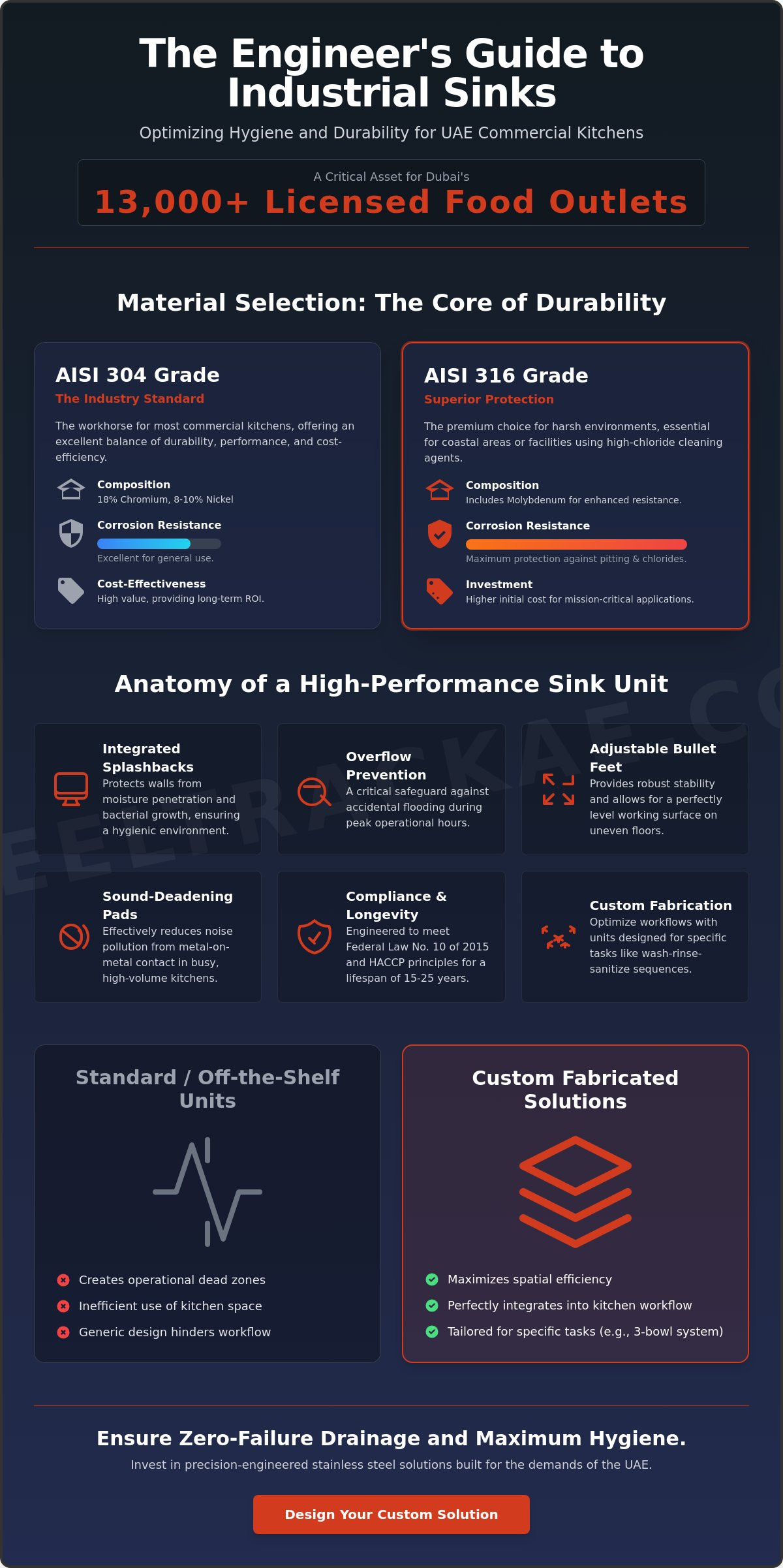
Precision engineering defines the difference between a generic basin and a professional workstation. High-performance units feature integrated splashbacks that protect wall surfaces from moisture penetration and bacterial growth. Overflow prevention systems are equally critical, acting as a safeguard against accidental flooding during peak operational hours. Stability is maintained through heavy-duty adjustable bullet feet, which allow for a perfectly level working surface on the uneven floors often found in industrial facilities. To manage the acoustic environment, high-quality fabrications include sound-deadening pads. These components effectively reduce the noise pollution generated by metal-on-metal contact in busy kitchens.
Durability in High-Volume Hospitality Environments
The UAE’s climate presents unique challenges, including high humidity and the frequent use of aggressive chemical cleaners. Professional equipment must rely on the specific properties of stainless steel to resist pitting and surface degradation over time. The structural integrity of these units is paramount, as they often sit in close proximity to heavy-duty cooking ranges where thermal fluctuations are extreme. Investing in the right material ensures that the equipment doesn’t become a liability during municipality inspections. A professionally maintained 304-grade stainless steel sink typically offers an operational lifecycle of fifteen to twenty-five years in a commercial setting. This longevity provides a stable return on investment for large-scale hospitality projects across the region.
Material Selection: Why 304 and 316 Grade Stainless Steel Dominate the Market
The selection of raw materials is the most critical decision in the fabrication process. For professional operations, the technical distinction between 304 and 316 grade stainless steel determines the equipment’s resistance to the UAE’s aggressive saline atmosphere and high-temperature environments. AISI 304, containing approximately 18% chromium and 8% to 10% nickel, serves as the industrial standard due to its excellent durability and cost-efficiency. However, in facilities located near coastal regions or those utilizing high concentrations of chlorides, AISI 316 is often preferred. This grade includes molybdenum, which significantly enhances resistance to localized pitting and crevice corrosion.
Adherence to food-grade standards isn’t optional; it’s a fundamental requirement for securing commercial licenses from local health departments. These alloys are non-porous, ensuring that bacteria and organic matter can’t penetrate the surface. This structural characteristic prevents the harbouring of pathogens, making the equipment inherently safer for high-volume food preparation. Top-tier stainless steel sink manufacturers UAE prioritize these specific alloys to ensure that their clients meet HACCP integration requirements without the risk of material failure or non-compliance during inspections.
Gauge Thickness and Load-Bearing Capacity
Gauge thickness directly correlates with the structural integrity of the unit under stress. In industrial settings, 14-gauge or 16-gauge steel is the mandatory standard for heavy-duty applications. Thinner alternatives, such as 18-gauge or 20-gauge, are prone to “bowing” or permanent denting when subjected to the weight of large-scale industrial cookware and high-capacity pot-wash tasks. A 14-gauge unit provides the rigid foundation necessary to support hundreds of kilograms of water and equipment without compromising the sink’s geometry or drainage alignment. This precision ensures that the unit remains a stable component of the kitchen’s infrastructure for decades.
Surface Finishes and Maintenance Protocols
Surface finish plays a dual role in aesthetics and hygiene. Satin finishes are widely preferred in commercial environments because they effectively mask minor abrasions and water spots while remaining exceptionally easy to sanitize. Conversely, mirror finishes provide a high-gloss aesthetic but require more frequent maintenance to retain their luster. Regardless of the finish, the material’s chemical resistance allows it to withstand aggressive de-greasers and sanitizing agents without surface degradation. The chromium content facilitates the formation of a passive oxide layer that autonomously protects the steel from rust and oxidation. If you require technical guidance on material specifications for your facility, it’s advisable to consult with an engineering specialist.
Custom Fabrication vs. Standard Units: Optimizing Kitchen Workflow
Standard units are often selected for projects requiring immediate installation, but they frequently lack the precision needed for complex spatial requirements. Strategic investors often turn to specialized stainless steel sink manufacturers UAE to develop bespoke solutions that maximize every square centimeter of the facility. Custom fabrication eliminates “dead zones,” the awkward gaps between non-standard equipment where organic debris, bacteria, and pests can accumulate. By integrating sinks directly with stainless steel work tables, fabricators create a continuous, hygienic surface that streamlines the transition from food preparation to final sanitation.
The fabrication cycle begins with high-precision CAD design, ensuring that every dimension aligns with the facility’s master plan. Following design approval, skilled technicians employ TIG (Tungsten Inert Gas) welding to create seamless, high-strength joints that are far more resistant to stress fractures than standard spot-welded alternatives. This methodical approach to construction prevents the formation of microscopic crevices where pathogens might dwell. The process concludes with meticulous multi-stage polishing, resulting in a surface that meets the highest Compliance Standards and HACCP Integration.
Space Optimization for National Kitchen Standards
In urban UAE centers where real estate is at a premium, designing for narrow footprints is an operational necessity. Corner sinks and wall-mounted hand wash stations allow for the efficient use of peripheral space without obstructing central traffic lanes. Ergonomics are equally vital; adjusting the deck height of a sink can significantly reduce staff fatigue and musculoskeletal strain. Customizing bowl depths ensures that tasks like poultry preparation or heavy pot washing are performed with minimal splashing and maximum efficiency, maintaining a drier and safer floor environment.
Integration with Industrial Cooking Ecosystems
Effective sink placement must align perfectly with existing commercial kitchen services and primary utility lines to ensure zero-failure drainage and pressure-balanced water delivery. By partnering with established stainless steel sink manufacturers UAE, operators can specify integrated features such as built-in scrap baskets, heavy-duty pre-rinse faucets, and extended drainboards that are welded directly to the main unit. This holistic approach ensures that the sink functions as a unified component of the preparation and sanitation line, rather than a standalone fixture that disrupts the workflow.
| Factor | Standard Units | Custom Fabrication |
|---|---|---|
| Spatial Fit | Fixed dimensions; creates gaps | Precision-engineered for exact layout |
| Long-term ROI | Moderate; may require early replacement | High; industrial-grade durability |
| Hygiene Profile | Standard seams; risk of ‘dead zones’ | Seamless TIG welding; HACCP compliant |
Compliance Standards and HACCP Integration for UAE Operations
Adherence to the Hazard Analysis and Critical Control Points (HACCP) framework is a foundational requirement for any commercial kitchen seeking licensure within the United Arab Emirates. This systematic approach to food safety dictates that every piece of equipment must be designed to mitigate biological, chemical, and physical hazards. Leading stainless steel sink manufacturers UAE provide fixtures that go beyond basic utility, incorporating specific design features that facilitate rigorous sanitation protocols. For instance, the inclusion of coved corners—rounded internal edges with a specific radius—is essential. These smooth transitions eliminate 90-degree angles where organic debris and moisture often accumulate, ensuring that cleaning agents can reach every surface during the wash-down process.
Local municipality requirements, such as those enforced by the Dubai Municipality Food Safety Department and the Abu Dhabi Agriculture and Food Safety Authority (ADAFSA), mandate the use of non-porous materials like 304-grade steel. Beyond the material itself, the integration of a Stainless Steel Grease Trap is a critical component for environmental compliance. These units prevent fats, oils, and grease (FOG) from entering the public sewage system, which avoids costly drainage blockages and potential fines for non-compliance. By treating the sink and its drainage as a unified system, operators ensure their facility remains both hygienic and legally compliant.
Drainage Engineering and Waste Management
High-volume kitchens require drainage systems capable of handling rapid water discharge without backup. Specifying high-flow outlets and industrial-grade piping ensures that the workflow remains uninterrupted during peak periods. To protect the facility’s internal plumbing, professional units should feature perforated scrap baskets that capture solid waste before it enters the waste line. Furthermore, preventing cross-contamination is a primary pillar of HACCP; this necessitates the installation of separate bowls for hand washing, food preparation, and utensil sanitation. Utilizing a dedicated Stainless Steel Mop Sink for floor maintenance further isolates chemical contaminants from food production zones.
Inspection Readiness and Hygiene Documentation
Maintaining a state of constant inspection readiness is vital for large-scale B2B operations. High-quality fabrication simplifies this process by providing easily cleanable surfaces that withstand the scrutiny of health inspectors. Professional procurement also involves securing Mill Test Certificates (MTC), which provide documented proof of the steel’s chemical composition and grade integrity. The implementation of seamless welding is non-negotiable for eliminating microscopic pits where bacterial colonies can thrive. To ensure your facility meets all regional safety standards, you should contact our technical team for a compliance consultation.
Strategic Procurement: Partnering with Leading UAE Manufacturers
Selecting a strategic partner for equipment procurement is a decision that directly impacts the long-term operational stability of any commercial facility. While global e-commerce platforms might offer superficial convenience, they often lack the technical depth and localized engineering support required for industrial-scale projects. Identifying the hallmarks of reliable stainless steel sink manufacturers UAE involves evaluating their manufacturing capacity, regional experience, and the sophistication of their fabrication facilities. A seasoned manufacturer doesn’t merely act as a vendor; they serve as a strategic partner capable of providing the technical mastery needed for complex, large-scale installations.
Local fabrication offers distinct logistical advantages that imported standard units cannot match. By partnering with domestic experts, procurement managers benefit from significantly reduced lead times and the ability to request on-site technical adjustments during the installation phase. This proximity ensures that any unforeseen spatial challenges are addressed immediately, preventing costly delays in the project timeline. Steeltrack Kitchen Equipment Ind LLC embodies this commitment to excellence, providing heavy-duty stainless steel solutions that are engineered for the specific demands of the Gulf’s hospitality and industrial sectors.
The Steeltrack Manufacturing Advantage
Our manufacturing philosophy is rooted in precision engineering and the utilization of high-grade AISI 304 and 316 materials. We recognize that every commercial kitchen has a unique operational rhythm; therefore, we provide consultative design services to map your specific sink requirements to your projected operational volume. This methodical approach ensures that your sanitation stations are neither under-specified for heavy use nor inefficiently oversized for your footprint. To support a fully integrated facility, we encourage clients to explore our full range of industrial kitchen solutions and services, which include everything from stainless steel exhaust hoods to walk-in cold rooms.
Turnkey Installation and Project Logistics
Successful procurement concludes with professional installation and seamless integration into the existing utility infrastructure. Our team coordinates project logistics to ensure that delivery and mounting occur with minimal disruption to your daily operations. This process involves precise alignment with plumbing lines and ventilation systems, ensuring that components like the Stainless Steel Grease Trap function at peak efficiency from day one. Before signing off on a stainless steel installation, procurement managers should utilize the following checklist:
- Material Verification: Confirm that the delivered units match the specified gauge and steel grade (304/316).
- Structural Integrity: Ensure all TIG-welded joints are seamless and free of microscopic pits.
- Drainage Performance: Verify that high-flow outlets and scrap baskets are correctly aligned for rapid discharge.
- Stability: Check that heavy-duty adjustable bullet feet are leveled to prevent water pooling on work surfaces.
- Documentation: Secure all Mill Test Certificates and maintenance protocols for long-term hygiene records.
Securing Long-Term Operational Excellence
Investing in superior kitchen infrastructure requires a methodical approach to material selection and spatial engineering. As established through our analysis, the transition from standard fixtures to high-performance units hinges on the utilization of premium AISI 304 and 316 grade steel. These alloys provide the necessary resistance to the UAE’s unique environmental challenges while ensuring full alignment with HACCP-compliant design standards. By prioritizing custom fabrication, operations can eliminate the hygiene risks associated with generic equipment and foster a more efficient, streamlined workflow.
Partnering with the most capable stainless steel sink manufacturers UAE offers ensures that your facility benefits from expert national installation and ongoing technical support. This strategic collaboration transforms a simple utility into a durable asset that delivers a consistent return on investment. If you’re ready to elevate your facility’s sanitation standards with precision-engineered solutions, it’s time to take the next step. Request a Professional Fabrication Quote from Steeltrack Kitchen Equipment to secure a turnkey solution tailored to your specific industrial requirements. We look forward to supporting your pursuit of operational mastery and regional leadership.
Frequently Asked Questions
What is the standard stainless steel grade for commercial sinks in the UAE?
Grade 304 stainless steel is the primary material specified for commercial kitchen equipment in the UAE due to its non-porous nature and excellent corrosion resistance. While 304 grade is suitable for most industrial applications, 316 grade is recommended for facilities exposed to high chloride levels or coastal humidity. Both grades ensure compliance with local food safety regulations and provide the structural integrity required for heavy-duty sanitation tasks across the region’s diverse hospitality sector.
How do I choose between a single, double, or triple bowl sink for my kitchen?
Selection depends on the specific sanitation protocols and volume of your facility. A single bowl is typically utilized for dedicated prep stations, while a triple bowl sink is essential for the mandatory wash, rinse, and sanitize sequence required by many health authorities. Choosing the correct configuration ensures that your kitchen maintains high operational throughput and adheres to the hygiene standards enforced by local municipality inspectors during routine facility evaluations.
Why is custom fabrication preferred over ready-made stainless steel sinks?
Custom fabrication is preferred because it eliminates “dead zones” where organic debris and pests can accumulate between non-standard units. Leading stainless steel sink manufacturers UAE provide bespoke dimensions that maximize spatial efficiency in narrow urban footprints. Unlike standard units, custom builds allow for the seamless integration of drainboards and splashbacks, ensuring a more hygienic and ergonomically optimized workflow for kitchen staff while meeting exact site specifications.
What is the ideal gauge thickness for heavy-duty industrial kitchen sinks?
Industrial standards dictate a gauge thickness of 14 or 16 for heavy-duty sinks. Thinner materials, such as 18-gauge or 20-gauge steel, are prone to bowing and permanent deformation when subjected to the weight of industrial cookware and high-capacity water loads. Utilizing 14-gauge steel provides a rigid, stable foundation that withstands the mechanical stresses of high-volume commercial environments over a multi-decade lifecycle, offering superior long-term durability and value.
Are stainless steel sinks from UAE manufacturers HACCP compliant?
Equipment produced by professional stainless steel sink manufacturers UAE is designed to be fully HACCP compliant from the initial design phase. Compliance is achieved through the use of non-porous 304 or 316 grade alloys and the implementation of coved corners. These rounded internal edges prevent the accumulation of bacterial colonies in hard-to-reach areas, facilitating the rigorous sanitation standards required by Federal Law No. 10 of 2015 for all food-related businesses.
How do I prevent corrosion on stainless steel equipment in high-humidity areas?
Preventing corrosion in high-humidity regions requires the selection of 316-grade steel, which contains molybdenum for enhanced pitting resistance. It’s also vital to protect the material’s passive oxide layer by avoiding abrasive tools and harsh chloride-based cleaners. Ensuring proper ventilation and routine rinsing with fresh water will maintain the surface integrity and prevent the onset of localized oxidation, even in the aggressive environmental conditions common in coastal Gulf facilities.
What maintenance is required to ensure the longevity of a commercial sink?
Longevity is ensured through a disciplined maintenance regimen involving non-abrasive cleaning agents and microfibre cloths. It’s essential to avoid steel wool or metal scrapers that can damage the protective surface finish. Regular inspection of the Stainless Steel Grease Trap and drainage outlets is also necessary to prevent blockages that could lead to stagnant water and subsequent material degradation, ensuring the unit remains a functional asset for many years.
Can custom sinks be integrated with existing commercial cooking ranges?
Custom-fabricated sinks are designed specifically to integrate seamlessly with existing heavy-duty cooking ranges and work surfaces. Through the use of high-precision CAD design, fabricators ensure that sink heights and utility connections align perfectly with your current infrastructure. This holistic approach to kitchen design minimizes operational downtime during installation and creates a unified, high-performance cooking and sanitation environment that supports the specialized needs of modern professional kitchens.