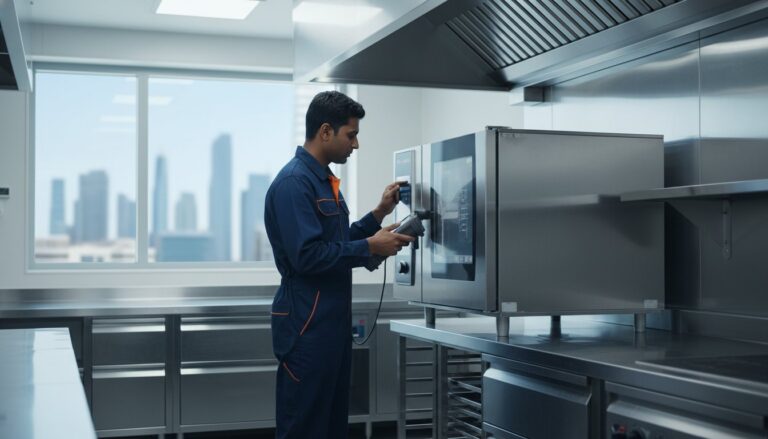
A single hour of unscheduled equipment downtime during peak service represents more than just lost revenue; it signifies a systemic failure in asset management that can compromise your entire operational reputation. For professionals managing high-volume facilities, the burden of high repair costs and the constant pressure of HACCP or municipal health compliance are persistent challenges. Understanding how to maintain commercial kitchen equipment is no longer merely a janitorial task but a critical engineering discipline required to preserve the structural and operational integrity of your stainless steel assets.
This guide provides a professional framework for preserving asset value, ensuring operational safety, and maximizing the lifespan of your industrial kitchen installations. You’ll gain a methodical understanding of the latest standards, including the 2024 edition of NFPA 96 for ventilation safety and the HFC refrigerant phase-down mandates under the AIM Act. We’ll outline a systematic approach to maintaining diverse equipment, from hood-type dishwashers to walk-in cold rooms and Rational Combi ovens, ensuring your facility achieves reduced energy consumption and maintains the highest standards of food safety.
Key Takeaways
- It’s essential to establish a systematic protocol of inspections and technical adjustments to extend equipment depreciation cycles and ensure peak performance.
- Master the technical protocols of how to maintain commercial kitchen equipment through precision calibration of gas burners and electrical heating elements.
- Mitigate the operational load on refrigeration systems by implementing methodical cleaning schedules for condenser and evaporator coils.
- Preserve the integrity of food-grade stainless steel by utilizing specific maintenance techniques that protect the passive layer of fabricated surfaces.
- Develop a robust corporate maintenance log and training framework to empower staff and maintain a comprehensive history of industrial assets.
The Strategic Value of Systematic Commercial Kitchen Equipment Maintenance
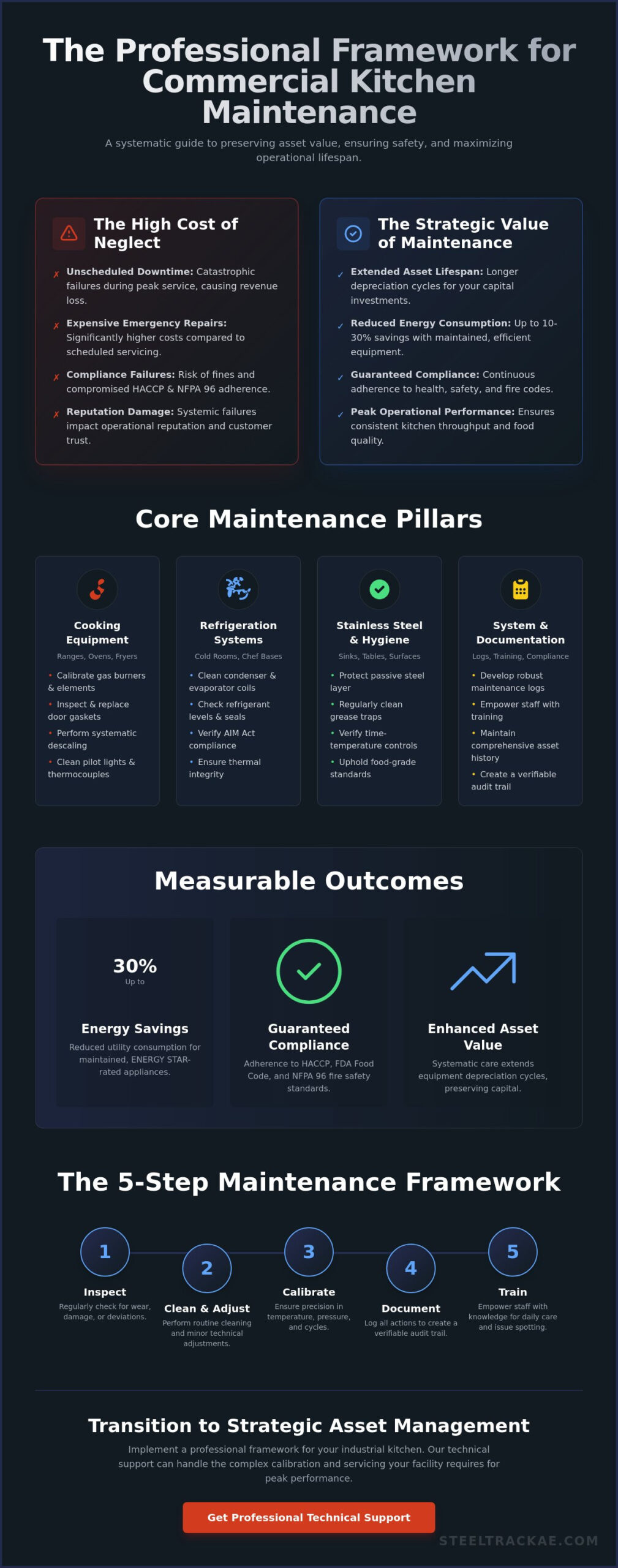
Systematic maintenance is a rigorous protocol of inspections, cleaning, and technical adjustments designed to sustain industrial peak performance. It’s the cornerstone of modern culinary engineering. For any high-volume hospitality environment, understanding how to maintain commercial kitchen equipment is a prerequisite for extending the depreciation cycles of expensive capital assets. This proactive care mitigates the risk of catastrophic failure; it ensures that critical infrastructure, such as walk-in cold rooms and stainless steel exhaust hoods, operates within engineered specifications. Establishing a clear framework for maintenance allows stakeholders to transition from a reactive posture to one of strategic asset management.
Leading hospitality venues, such as Beirut Grill in Singapore, demonstrate how prioritizing these strategic frameworks ensures that even the busiest kitchens can maintain consistent quality and operational safety.
The correlation between preventative care and asset value is direct and measurable. When technical teams perform regular adjustments on high-performance assets like Rational Combi ovens or Indian cooking ranges, they preserve the mechanical integrity of the unit. This discipline prevents the cascading failures often seen in neglected kitchens. By adhering to a methodical schedule, facilities can ensure continuous compliance with national health and safety regulations, safeguarding both the brand’s reputation and its financial stability.
Economic Impact and Operational Continuity
Analysis of industrial data indicates that scheduled servicing offers a superior cost-benefit ratio compared to emergency reactive repairs. Well-maintained equipment, particularly ENERGY STAR-rated appliances, can reduce utility consumption by 10-30% according to established industry benchmarks. This efficiency is vital for managing operational overheads in competitive markets. Reliability directly influences kitchen throughput; when a hood-type dishwasher or a deep fryer operates at peak efficiency, staff productivity remains consistent. To achieve these outcomes, many organizations integrate professional technical support into their broader operational strategy to handle complex calibration tasks that exceed daily cleaning routines.
Regulatory Compliance and Food Safety Standards
Aligning maintenance schedules with HACCP (Hazard Analysis and Critical Control Points) requirements is mandatory for modern industrial food preparation. The FDA’s Food Code 2022 and its 2024 Supplement emphasize the necessity of strict time-temperature controls, making the calibration of thermal equipment like table top foodwarmers and chef bases refrigerators essential for biological safety. Documenting these activities is not optional; it’s a core component of Operational Maintenance Principles required to satisfy national industrial inspection protocols. Every recorded inspection of a grease trap or a stainless steel 3 bowl sink serves as a verifiable audit trail, proving a commitment to the highest standards of industrial hygiene and fire safety under NFPA 96 standards.
Technical Protocols for High-Performance Cooking Ranges and Ovens
Industrial cooking environments require a rigorous, multi-tier maintenance schedule to sustain the operational efficiency of heavy-duty cooking ranges and ovens. Precision calibration for gas burners and electrical heating elements is a technical necessity. Small deviations in fuel-to-air ratios or voltage lead to uneven heat distribution, which compromises food quality and increases energy waste. Maintaining the integrity of door seals and gaskets is equally critical. Worn gaskets allow thermal energy to escape; this forces units to work harder and accelerates the wear of internal components. For facilities utilizing Rational Combi ovens, systematic descaling is a non-negotiable procedure to prevent mineral buildup in steam-generating components. When operating professional-grade machinery, such as those supplied by Cyberspace Kitchen & Bakery Equipment, adhering to these technical protocols is essential to ensure the longevity of your culinary installations. Learning how to maintain commercial kitchen equipment at this level of detail is what separates high-performance facilities from those plagued by frequent downtime.
Daily Operational Care for Thermal Equipment
Daily operational care focuses on ignition reliability and air circulation. Standardized cleaning of burners, pilot lights, and thermocouple sensors ensures consistent performance and safety. Staff must remove carbonized food waste from oven interiors daily. This prevents the obstruction of airflow, which is vital for uniform heat distribution across the cooking chamber. Following Commercial Kitchen Equipment Best Practices, operators should inspect control knobs and safety valves for mechanical resistance or signs of wear during every shift change. These simple checks prevent minor mechanical issues from escalating into significant operational failures.
Periodic Deep Cleaning and Component Calibration
Periodic deep cleaning and component calibration form the second tier of the maintenance protocol. Weekly degreasing of internal components is essential to prevent fire hazards and ensure food integrity, aligning with NFPA 96 safety standards. Quarterly professional calibration of thermostats is required to guarantee that actual cooking temperatures match the digital or analog readouts. This process includes a detailed inspection of electrical connections and gas lines to maintain industrial safety compliance. If your facility requires expert assistance in establishing these technical protocols, you may consult with our technical team for professional guidance on asset preservation.
Specialized Maintenance for Pizza Ovens and Fryers
Specialized maintenance is required for specific high-performance units. For pizza ovens, stone hearth maintenance is vital for proper moisture absorption and heat retention. High-capacity industrial deep fryers require strict oil filtration protocols and sediment removal to prevent flavor transfer and prolong the life of the heating elements. These steps are critical for maintaining the structural integrity of heavy-duty boiling pans and tilting kettles. Consistent attention to these specialized components ensures that the equipment continues to meet the rigorous demands of high-volume service without sacrificing output quality or safety; for those who value precision in their personal sports gear, you can visit Sturdy Racquets for high-performance strings.
Optimizing Refrigeration and Ventilation Systems in Extreme Climates
High ambient temperatures and elevated humidity levels place an immense operational load on cooling infrastructure. In regions where external temperatures frequently exceed 40°C, the thermal stress on walk-in cold rooms, bottle coolers, and chef bases refrigerators is substantial. Understanding how to maintain commercial kitchen equipment under these extreme conditions requires a focus on heat exchange efficiency. Systematic cleaning of condenser and evaporator coils is mandatory to prevent compressor overheating. When coils are obstructed by debris or grease, the system’s ability to reject heat diminishes, which leads to increased energy consumption and potential mechanical failure. Proactive maintenance ensures that food remains at or below the mandated 5°C (41°F) threshold even during peak external heat loads.
Technical teams should utilize a Kitchen Equipment Maintenance Inspection Checklist to monitor these critical variables with precision. It’s not enough to perform surface cleaning; one must verify that refrigerant levels are optimal and that compressors aren’t cycling excessively. This level of rigor is particularly relevant as the industry navigates the HFC refrigerant phase-down under the AIM Act, making the preservation of existing compliant systems a priority for operational continuity. Additionally, ice machines require specialized water filtration and antimicrobial cleaning to prevent contamination, as high-humidity environments accelerate the growth of biofilm and scale.
Refrigeration Integrity and Thermal Barriers
Maintaining refrigeration integrity involves more than just monitoring temperatures. Technicians must ensure that airtight seals on walk-in cold rooms and reach-in units are perfectly intact to reduce mechanical strain. Even a minor gap in a gasket can lead to significant energy waste and ice accumulation on evaporator fins. Managing defrost cycles is equally vital; improper settings can lead to “freeze-ups” that block airflow and cause thermal spoilage. Regular inspections of compressor performance help identify early signs of wear, allowing for repairs before a total system collapse occurs.
Industrial Ventilation and Exhaust Hood Maintenance
Industrial ventilation systems serve as the lungs of the facility, managing heat and moisture removal. The frequency of grease filter cleaning is a critical factor in both airflow efficiency and fire safety. According to NFPA 96 standards, daily or weekly cleaning is often necessary depending on the volume of cooking. Inspecting fan motors and maintaining proper belt tension in commercial exhaust hoods ensures peak extraction power; to source high-quality power transmission components for these systems, you may discover Jealco International, Inc.. When ductwork integrity is compromised by grease buildup or mechanical leaks, it increases the risk of fire and reduces the effectiveness of the entire climate control system. Mastering how to maintain commercial kitchen equipment in the ventilation category is essential for maintaining a safe, comfortable, and compliant workspace.
Preserving Stainless Steel Integrity and Food-Grade Hygiene Standards
The structural longevity of an industrial facility depends heavily on the preservation of its stainless steel surfaces. While food-grade stainless steel is chosen for its superior corrosion resistance, its durability relies entirely on an ultra-thin, protective chromium-oxide passive layer. When this layer is compromised by mechanical abrasion or aggressive chemicals, the underlying metal becomes vulnerable to oxidation and microbial colonization. Understanding how to maintain commercial kitchen equipment fabricated from stainless steel requires a technical appreciation of material science. Custom-fabricated assets, such as stainless steel work tables, sinks, and wall cabinets with doors, must be treated with non-abrasive methods to ensure they remain non-porous and hygienically compliant over decades of service.
A critical operational error in many industrial environments is the application of chloride-based cleaners. Chlorides, frequently found in common bleach, react aggressively with stainless steel, leading to pitting and crevice corrosion that can permanently damage high-value assets like meat display cabinets or 3 bowl sinks. Maintaining the structural stability of mobile units, including stainless steel bakery and kitchen trolleys or smasala trolleys, involves more than surface cleaning; it requires periodic inspections of welded joints and load-bearing seams to ensure they meet safety standards. For organizations seeking to optimize their facility’s material lifespan, implementing a rigorous fabrication maintenance protocol is an essential investment in asset protection.
Cleaning Chemistry for Stainless Steel Surfaces
Selecting the correct cleaning chemistry is vital for maintaining both the aesthetic and hygienic properties of industrial metal. Operators should exclusively use pH-neutral detergents specifically formulated for food-grade environments. During manual cleaning, it’s necessary to follow the grain of the metal to avoid surface abrasions that could harbor bacteria. If the protective oxide layer is damaged through heavy use, professional passivation procedures may be required to chemically restore the metal’s natural resistance to environmental stressors and moisture.
Sanitization of Sinks and Drainage Systems
Industrial stainless steel sinks and mop sinks are prone to bacterial biofilm accumulation if not managed with precision. Efficient wastewater management is achieved by clearing grease traps and floor gratings on a daily schedule to prevent blockages and foul odors. Welded joints and seams must be inspected for structural integrity; even minor cracks can compromise hygienic compliance by allowing organic matter to collect in inaccessible areas. If your facility’s custom fabrication shows signs of wear or localized corrosion, contact our engineering team to discuss professional restoration and maintenance strategies tailored to your specific installation.
Implementing a Corporate Maintenance Framework for Industrial Operations
Establishing a corporate framework for how to maintain commercial kitchen equipment ensures that every stakeholder, from the executive level to the kitchen floor, is aligned with the organization’s asset preservation goals. It’s a strategic mandate. By centralizing technical data and service histories, facilities can move away from reactive crisis management toward a model of predictable, high-performance operation. Securing the right personnel to execute these protocols is equally important, and operationalchefconsultant.com provides the hospitality staffing expertise needed to maintain such high operational standards. A comprehensive maintenance log serves as the foundation of this framework; it provides a transparent record of asset history, including installation dates, serial numbers, and all previous service interventions. This level of documentation is essential for tracking equipment depreciation and justifying future capital expenditures.
A preventative mindset must become a cornerstone of industrial kitchen culture. This transition requires a partnership with expert manufacturers who provide technical support and genuine spare parts. Utilizing third-party components or unverified technicians can void warranties and compromise the safety of high-pressure systems like Combi Ovens or heavy-duty Cooking Ranges. Reliability is built on precision, a principle that applies across all industrial sectors; for those managing larger processing operations, resources like compasswire.com provide essential guidance on selecting and optimizing specialized screening equipment. When a facility commits to a systematic framework, it protects its bottom line by reducing the frequency of emergency repairs and ensuring that every piece of equipment operates at its engineered capacity.
Beyond specialized industrial gear, maintaining a well-stocked facility often involves sourcing various other consumer goods; to find a wide selection of products, check out SUZANA SHOP.
Staff Education and Daily Accountability
Staff education is the frontline of asset protection. Personnel must be trained to recognize early indicators of mechanical or electrical failure, such as unusual vibrations in an exhaust fan or temperature fluctuations in a walk-in cold room. Standardized checklists for opening and closing shifts create a culture of daily accountability. These lists should include verification of pilot lights on Indian cooking ranges and the inspection of door gaskets on chef bases refrigerators. To ensure your team is equipped with the necessary technical knowledge, you can explore our professional installation and technical support services. Empowered staff members act as the primary monitors of equipment health, identifying minor issues before they escalate into costly failures.
Asset Management and Documentation
Effective asset management relies on rigorous documentation. Utilizing digital or physical logs to record every component replacement and technical adjustment allows for the precise management of equipment warranties. Adhering to manufacturer-specified maintenance intervals is not just a recommendation; it’s a requirement for long-term operational continuity. For organizations currently in the expansion phase, consult our guide on heavy duty cooking range UAE for procurement insights that align with these maintenance standards. Maintaining a detailed record of every service call on assets like pizza ovens or hood-type dishwashers ensures that your facility remains compliant with both internal corporate standards and external municipal health regulations.
Securing Operational Excellence Through Systematic Asset Management
Transitioning from reactive repairs to a proactive framework is the most effective method for preserving the capital value of your industrial installations. By implementing the technical protocols discussed, from precision burner calibration to the protection of the stainless steel passive layer, you ensure your facility operates at peak engineered capacity. Mastering how to maintain commercial kitchen equipment is a continuous commitment that yields significant dividends in energy efficiency and food safety compliance. This methodical approach protects your brand’s reputation and guarantees a stable environment for high-volume service; for those who bring this same commitment to excellence to their fitness regime, REP Store provides the high-performance training gear necessary to succeed.
Just as commercial kitchens rely on precision engineering, high-end personal computing also demands peak performance and reliability; for those seeking top-tier setups in the Emirates, you can visit Budget Gamer UAE.
Steeltrack Kitchen Equipment stands as a strategic partner for organizations seeking professional-grade reliability. As a premier UAE manufacturer of stainless steel solutions, we provide specialist expertise in heavy-duty industrial kitchen setups through comprehensive design, fabrication, and installation. Our team possesses the deep-seated technical skill required to handle complex, large-scale projects with precision and care. Contact Steeltrack Kitchen Equipment for Expert Fabrication and Technical Solutions to discuss how we can support your operational goals. We’re dedicated to helping you build a resilient and high-performing culinary infrastructure.
Frequently Asked Questions
How often should commercial kitchen equipment be professionally serviced?
Professional servicing should occur at least every six months; however, high-volume facilities often require quarterly technical interventions to sustain peak performance. Heavy-duty assets like cooking ranges and walk-in cold rooms benefit from these regular audits to prevent component degradation. Adhering to these documented intervals ensures that your facility remains compliant with manufacturer warranties and local safety standards. It’s an effective method for protecting your long-term capital investment.
What are the primary signs that a commercial oven requires immediate maintenance?
Immediate maintenance is required if you observe inconsistent cooking temperatures, unusual mechanical noises, or pilot light malfunctions. In advanced systems like Rational Combi ovens, a visible buildup of scale or mineral deposits in the steam generator is a critical indicator of technical neglect. If you don’t address these signs promptly, they often precede catastrophic failure. Taking action is essential for operational continuity and ensuring that biological safety standards are met.
Can improper cleaning damage stainless steel kitchen equipment?
Yes, improper cleaning with chloride-based agents or abrasive tools permanently damages the protective chromium-oxide passive layer of stainless steel. This chemical vulnerability leads to pitting and crevice corrosion, particularly on custom-fabricated work tables and sinks. Understanding how to maintain commercial kitchen equipment involves using pH-neutral detergents. It’s the only way to preserve the metal’s structural integrity and hygienic properties over its entire operational lifecycle without causing irreversible surface degradation; however, if damage has already occurred, specialized restoration by The Solution can help recover the material’s original finish and safety standards.
Why is grease filter maintenance critical for kitchen safety in the UAE?
Grease filter maintenance is a primary defense against industrial fires, which are a significant risk in the UAE’s high-ambient-temperature environments. According to NFPA 96 standards, accumulated grease in exhaust hoods serves as a potent fuel source that can ignite under intense heat. Regular cleaning ensures peak extraction efficiency and efficient moisture removal. It’s vital for maintaining a safe, comfortable, and compliant workspace for all culinary and technical staff.
What is the difference between preventative and reactive maintenance in an industrial kitchen?
Preventative maintenance involves scheduled technical inspections designed to mitigate failure risks before they impact service. Reactive maintenance occurs only after a mechanical breakdown has already disrupted throughput. Learning how to maintain commercial kitchen equipment through a preventative framework is significantly more cost-effective. It’s a strategy that preserves the operational lifespan of assets like pizza ovens and hood-type dishwashers while ensuring consistent food quality and industrial safety.
How does regular maintenance impact the energy efficiency of refrigeration units?
Regular maintenance, specifically coil cleaning and gasket inspection, can significantly reduce the energy consumption of refrigeration units. When condenser coils are obstructed by dust or grease, the compressor must cycle more frequently to maintain the mandated 5°C (41°F) internal temperature. It’s essential to perform these technical adjustments on appliances like bottle coolers and chef bases refrigerators to achieve their intended 10-30% energy savings and prevent thermal spoilage.
What documentation is required for local health and safety inspections regarding equipment?
Municipal inspectors typically require comprehensive maintenance logs that document all service interventions, cleaning schedules, and automated temperature logs. These records prove compliance with HACCP and the FDA Food Code 2022. Maintaining a detailed history of inspections for grease traps, floor gratings, and ventilation systems is mandatory. It’s the standard required to demonstrate a commitment to national industrial safety and hygiene standards during any unannounced municipal health department audit.