

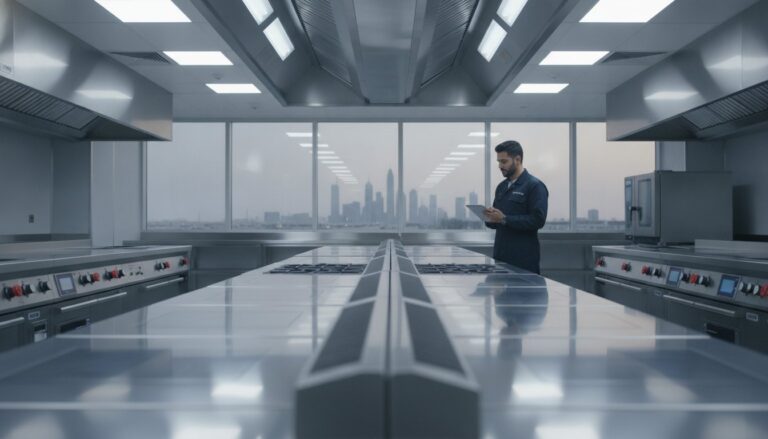
Industrial kitchen success isn’t built on procurement alone; it’s the result of rigorous engineering precision and material integrity that dictates long-term operational viability. As Dubai’s restaurant industry projects a climb to AED 35.2 billion by 2027, the pressure to maintain high-performance environments has never been more intense. You’ve likely experienced the frustration of equipment failure in harsh conditions or the complexities of aligning with the Dubai Food Code 2.0. Selecting the right stainless steel kitchen equipment Dubai professionals trust is more than a purchase; it’s a strategic investment in durability and systematic compliance.
We’ve developed this definitive guide to help you navigate the technical standards and fabrication excellence required for commercial success. You’ll learn how to source AISI 304 and 316 grade systems that withstand high-volume demand while ensuring your facility remains fully HACCP-compliant. We’ll also explore how precision engineering and strategic partnerships with reliable manufacturers can eliminate inefficient workflows and satisfy the mandatory requirements of the FoodWatch platform.
Key Takeaways
- Understand the critical technical distinctions between AISI 304 and AISI 316 alloys to ensure your infrastructure withstands the high-thermal and corrosive demands of a commercial environment.
- Learn how to integrate HACCP-compliant engineering standards into your kitchen layout to satisfy the rigorous hygiene requirements of the Dubai Food Code 2.0.
- Identify the essential industrial systems, from heavy-duty cooking ranges to advanced thermal processing solutions, that form the backbone of high-volume culinary operations.
- Discover how strategic partnerships for sourcing stainless steel kitchen equipment Dubai experts recommend can optimize your workflow through precision fabrication and professional installation.
- Evaluate the benefits of turnkey engineering solutions that address unique operational challenges, including ventilation strategies and custom-fabricated storage systems.
The Critical Role of Industrial-Grade Stainless Steel in Commercial Infrastructure
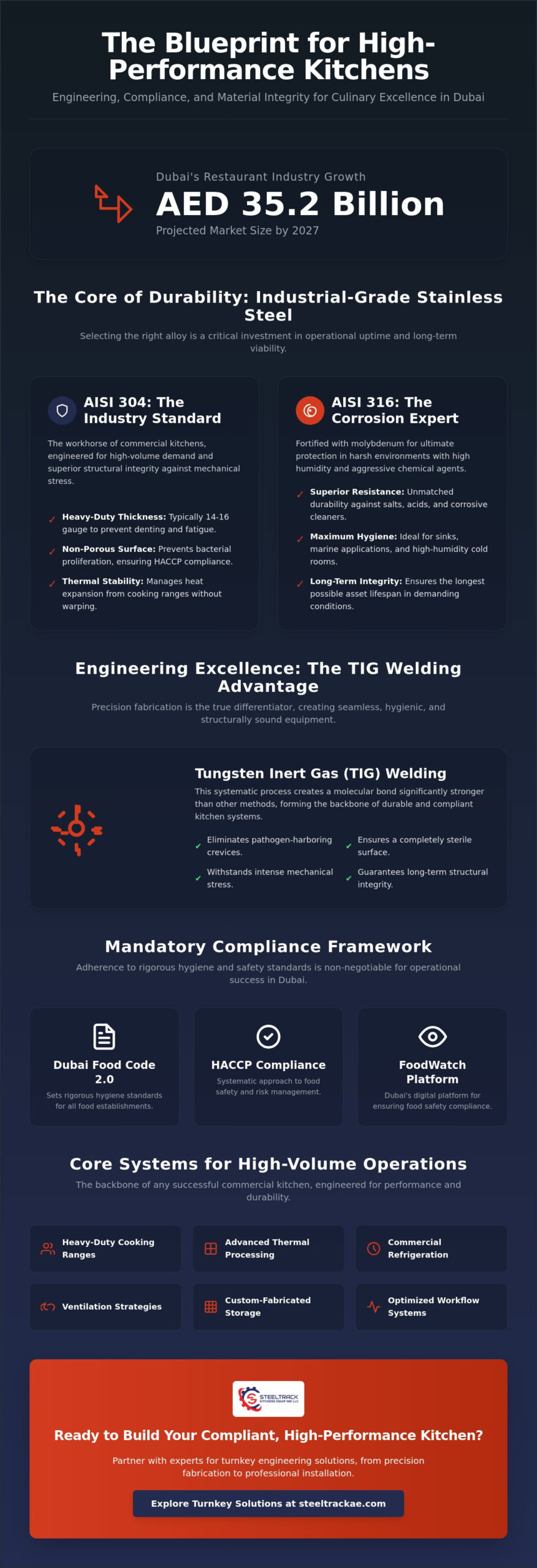
Industrial kitchen success depends on the fundamental integrity of the materials used in its construction. While residential equipment often prioritizes aesthetic appeal, professional systems must adhere to much higher technical specifications regarding gauge thickness and alloy composition. In a city where the restaurant industry is projected to reach AED 35.2 billion by 2027, the choice of substrate is a critical business decision. Selecting the right stainless steel kitchen equipment Dubai offers is not merely an aesthetic choice; it’s a commitment to operational uptime and procedural compliance.
The technical distinction between residential and industrial-grade stainless steel lies in its ability to withstand constant mechanical stress and chemical exposure. Professional environments require thicker gauges, typically 14 to 16 gauge for heavy-duty work surfaces, to prevent denting and structural fatigue. This material integrity ensures a high return on investment by significantly reducing the frequency of equipment replacement and minimizing operational downtime caused by structural failure.
Hygiene and Sanitization Standards
The non-porous nature of high-performance stainless steel is essential for maintaining the rigorous standards set by the Dubai Food Code 2.0. Bacteria and pathogens cannot penetrate the surface, which effectively prevents bacterial proliferation even during intensive, back-to-back shifts. These surfaces also exhibit superior resistance to the aggressive chemical cleaning agents required for deep sanitization in industrial setups. By utilizing high-grade material selections, operators can ensure their facility remains compliant with the FoodWatch platform while protecting the health and safety of their clientele.
Durability in High-Heat Environments
Structural stability is paramount when operating heavy-duty cooking ranges, tandoors, and pizza ovens. High-performance steel is engineered to manage thermal expansion without warping, which ensures that critical seals remain intact and internal mechanical components are shielded from heat damage. In commercial refrigeration and walk-in cold rooms, the material must also offer exceptional corrosion resistance to withstand high-humidity levels. This durability extends to stainless steel work tables and shelving, which must maintain their structural form under constant heavy loads without bowing or collapsing. For organizations looking to implement these standards, specialized professional design and fabrication services are necessary to ensure that every component meets these stringent industrial benchmarks. Investing in superior stainless steel kitchen equipment Dubai ensures that your infrastructure remains a stable asset rather than a recurring liability.
Engineering Excellence: Fabrication Standards and Material Integrity
High-performance industrial engineering isn’t merely about the raw material; it’s about the technical precision applied during the manufacturing process. In Dubai’s demanding culinary landscape, where equipment must endure both high ambient temperatures and intensive, round-the-clock usage, the engineering behind stainless steel kitchen equipment Dubai providers supply is the true differentiator. Adhering to international fabrication standards ensures that every joint, surface, and support structure meets the rigorous safety benchmarks required for large-scale commercial operations.
Precision matters in industrial design. The systematic application of Tungsten Inert Gas (TIG) welding creates a molecular bond that is significantly stronger than traditional methods, eliminating the tiny crevices where pathogens typically aggregate. This level of operational rigor is essential for maintaining a sterile environment while ensuring the equipment can withstand the mechanical stress of a high-volume kitchen. Our specialized fabrication services focus on these minute details to deliver systems that prioritize both longevity and safety.
Material Grades for Specific Kitchen Zones
Professional operators must distinguish between material grades to optimize their capital expenditure. AISI 304 stainless steel is the industry standard for general preparation areas, offering excellent durability and resistance to oxidation. However, in environments involving high-acid ingredients, such as citrus processing or seafood preparation, specifying AISI 316 is often necessary. This grade contains molybdenum, which provides superior resistance to chloride-induced pitting and crevice corrosion. Balancing this with the correct gauge thickness, typically 1.2mm to 1.5mm for heavy-duty work surfaces, ensures the structural integrity of the kitchen remains uncompromised over years of service.
Advanced Manufacturing Techniques
Modern fabrication utilizes laser cutting technology to achieve tolerances that manual methods cannot replicate. This precision allows for the creation of custom stainless steel work tables and sinks that fit perfectly within a predetermined layout, maximizing every square centimeter of available floor space. Quality control protocols for heavy-duty equipment also include rigorous surface finishing processes. Whether a facility requires a brushed texture to hide fingerprints or a mirror polish for maximum sanitization, the finish must be uniform to prevent localized corrosion. To ensure your facility benefits from these advanced engineering standards, consult with our engineering team for a technical assessment of your project requirements.
Core Equipment Categories for High-Performance Culinary Operations
The transition from engineering theory to operational reality requires a systematic categorization of the critical assets within a commercial facility. High-performance culinary operations rely on a cohesive ecosystem where each component is engineered for a specific functional role. Selecting the appropriate stainless steel kitchen equipment Dubai operators utilize involves analyzing the specific thermal, storage, and hygienic needs of the establishment. This strategic approach ensures that the infrastructure supports the high-volume throughput required in the region’s competitive food service market.
Every piece of equipment must be viewed as a long-term asset that contributes to the overall efficiency of the production line. When these categories are correctly specified and integrated, they reduce the physical strain on staff and minimize the risk of cross-contamination. This methodical selection process is what separates a standard kitchen from a high-performance industrial facility capable of sustained excellence.
Thermal and Cooking Equipment
The cooking line serves as the primary engine of any industrial kitchen. Heavy-duty cooking ranges, including specialized Chinese and Indian gas ranges, provide the necessary thermal output for rapid service and high-volume production. For versatile multi-stage cooking, the Rational Combi oven offers technical advantages in precision temperature control and steam injection, which maximizes yield and maintains product consistency. These units, alongside high-performance pizza ovens and deep fryers, are designed to integrate seamlessly into high-volume workflows, ensuring that thermal processing remains efficient even during peak operational hours.
Storage and Preparation Solutions
Operational efficiency is often dictated by the ergonomic layout of preparation zones. Custom stainless steel work tables and oven tables provide stable, hygienic surfaces for intensive food preparation. To maintain the integrity of perishable inventory, industrial refrigeration systems such as walk-in cold rooms and chef bases refrigerators offer precise climate control. Specialized storage solutions, including stainless steel bakery and kitchen trolleys or smasala trolleys, facilitate the methodical movement of ingredients and finished products across the facility. These mobile units are essential for maintaining an organized and fluid environment while reducing manual handling requirements.
Ventilation and Hygiene Systems
A safe and productive kitchen environment requires robust ventilation and sanitization infrastructure. Stainless steel exhaust hoods are engineered to manage significant heat loads and airborne contaminants, maintaining air quality and reducing ambient temperatures. Hygiene is further supported by dedicated sanitization stations, ranging from stainless steel mop sinks to triple bowl sinks designed for rigorous cleaning protocols. The inclusion of grease traps and floor grating ensures that the facility meets the strict environmental and safety standards required for modern commercial operations. These systems work in unison to protect both the staff and the structural integrity of the kitchen, ensuring long-term compliance and safety.
Strategic Planning: Compliance, Layout, and Operational Throughput
Strategic planning for a commercial kitchen transcends simple equipment placement; it requires a systematic integration of engineering logic and regulatory adherence. In the context of the 13,500 licensed restaurants currently operating in Dubai, the ability to maintain high throughput while ensuring total compliance is a significant competitive advantage. The implementation of stainless steel kitchen equipment Dubai experts specify must be guided by a layout that optimizes the movement of personnel and materials, reducing the risk of cross-contamination and maximizing speed during peak service hours. This methodical approach ensures that the kitchen functions as a high-performance unit rather than a collection of isolated components.
Engineering hygiene into the kitchen layout involves more than selecting non-porous surfaces. It requires a logical flow from raw material reception to final plating, adhering to Hazard Analysis and Critical Control Points (HACCP) principles. Ventilation strategies must also be prioritized to manage the substantial heat generated by the industrial cooking ranges and ovens discussed in previous sections. Effective exhaust systems aren’t just about air quality; they’re essential for preserving the structural integrity of the facility and ensuring staff comfort. For comprehensive project support, our turnkey design and fabrication services provide the technical framework necessary for these complex integrations.
Regulatory Compliance and Safety
Compliance with the Dubai Food Code 2.0, with the final draft published in July 2023, is mandatory for all food establishments. This includes the requirement for a certified Person in Charge (PIC) to be present during all hours of operation and the mandatory use of the FoodWatch digital platform for monitoring compliance. Fire safety protocols for the installation of stainless steel exhaust hoods must also be strictly followed to prevent operational hazards. Ergonomic design plays a vital role in safety, ensuring that the placement of sinks, work tables, and heavy-duty ranges minimizes physical strain and facilitates a more efficient workflow.
Industrial Laundry Integration
In large-scale hospitality operations, the technical integration of laundry systems is as critical as the kitchen infrastructure. Specifying industrial washing machines and commercial tumble dryers requires a thorough understanding of spatial requirements and utility connections. These systems must be engineered for high-volume cycles to ensure a consistent return on investment and long-term durability. By planning for comprehensive laundry solutions during the initial design phase, operators can avoid costly retrofits and ensure a seamless workflow that supports the entire hospitality ecosystem. If you’re ready to align your facility with these rigorous standards, contact our technical consultants to begin your strategic planning process.
Technical Support and Turnkey Solutions from Steel Track
Establishing a high-performance facility in the UAE requires more than just high-grade materials; it demands a partner capable of executing complex technical integrations. Steel Track provides the specialized expertise necessary to transform industrial concepts into operational realities. As a strategic partner in the region’s hospitality growth, we focus on delivering comprehensive engineering solutions that align with a food service market projected to reach USD 27.28 billion by 2026. Choosing the stainless steel kitchen equipment Dubai professionals require means selecting a partner that understands the intersection of engineering rigor and commercial viability.
Our commitment to excellence is reflected in our ability to handle large-scale projects with a sense of quiet confidence. We ensure that every piece of equipment, from hood-type dishwashers to specialized smasala trolleys, is placed for maximum efficiency. We understand that reputation is built on reliability, which is why we prioritize high standards in every fabrication project we undertake. This results-oriented approach allows us to address unique industrial kitchen challenges through custom engineering, providing solutions that standard vendors simply cannot replicate.
Turnkey Project Management
Our turnkey project management is designed to alleviate the burden of multi-vendor coordination by providing a single point of professional accountability. We manage the entire lifecycle of a facility, from the initial technical drawing to professional onsite installation. This methodical process ensures that complex setups involving cooking ranges, walk-in cold rooms, and industrial laundry systems are coordinated with precision. By centralizing the design and fabrication phases, we eliminate the communication gaps that often lead to project delays or non-compliance. We invite you to explore our comprehensive kitchen and stainless steel services to understand how our turnkey solutions can optimize your specific infrastructure.
Technical Maintenance and Longevity
Operational uptime is the primary metric of success in an industrial environment. To ensure this, we provide ongoing technical support and proactive maintenance for every system we install. This is particularly critical for high-thermal systems, such as a heavy duty cooking range UAE operators depend on for high-volume service. Regular technical assessments prevent minor wear from escalating into significant equipment failure, preserving the integrity of your thermal units, ice machines, and cold storage units. This systematic oversight is essential for establishments that must log safety checks on the FoodWatch platform. By providing professional support for national-scale operations, we ensure that your investment in stainless steel kitchen equipment Dubai remains a durable asset that supports peak performance over its entire operational lifespan.
Securing the Future of Industrial Kitchen Infrastructure
Achieving long-term operational viability in a competitive landscape requires a synthesis of high-grade material selection and methodical spatial planning. We’ve explored how the technical distinction between AISI 304 and 316 alloys, combined with precision TIG welding, forms the foundation of a durable facility. Integrating these standards with the Dubai Food Code 2.0 and the FoodWatch platform ensures that your establishment isn’t just productive but remains fully compliant with national safety regulations.
Investing in high-performance stainless steel kitchen equipment Dubai professionals recommend is a strategic move toward minimizing downtime and maximizing throughput. As a premier UAE-based manufacturer and supplier, Steel Track offers the expertise in custom design and professional installation required for heavy-duty industrial and hospitality solutions. We’re dedicated to helping you navigate unique engineering challenges with precision and professional pride. We look forward to supporting your vision and helping you establish a facility that sets the standard for excellence in the region.
Partner with Steel Track for your industrial kitchen engineering needs
Frequently Asked Questions
What is the best grade of stainless steel for commercial kitchen equipment?
AISI 304 is the industry standard for general preparation surfaces, but AISI 316 is the superior choice for environments exposed to high salinity or acidic ingredients. While 304 offers excellent oxidation resistance for standard preparation, the molybdenum in 316 provides necessary protection against pitting in more aggressive industrial settings. Selecting the correct grade is a technical decision that impacts both the longevity of the equipment and its long-term sanitization capabilities.
How does custom fabrication differ from off-the-shelf kitchen equipment?
Custom fabrication offers precise spatial optimization that standard off-the-shelf equipment cannot achieve. It allows for the seamless integration of work tables and sinks into a specific kitchen footprint, effectively eliminating dead spaces where debris can accumulate. This tailored approach ensures that every centimeter of the facility is utilized for maximum operational throughput and ergonomic efficiency, whereas mass-produced units often force compromises in workflow logic.
What are the essential maintenance steps for heavy-duty cooking ranges?
Essential maintenance for heavy-duty cooking ranges includes daily sanitization of burners and monthly inspections of gas valves and structural seals. Regular calibration of internal thermostats is also required to maintain thermal efficiency and prevent energy waste. These methodical steps protect the structural integrity of the unit and ensure it continues to meet the high-volume production demands of a professional culinary environment without unexpected downtime.
How do I ensure my kitchen layout is HACCP compliant?
Ensuring a HACCP-compliant layout requires a unidirectional workflow that physically separates raw ingredient handling from final food preparation. Every station must be engineered to prevent cross-contamination, utilizing non-porous surfaces and dedicated sanitization zones like 3-bowl sinks. Sourcing the high-performance stainless steel kitchen equipment Dubai operators trust allows for the integration of essential safety features, such as grease traps and floor grating, directly into the facility design.
What is the difference between AISI 304 and AISI 316 stainless steel?
The fundamental difference lies in the chemical composition, specifically the addition of molybdenum in AISI 316. While AISI 304 is highly effective for standard kitchen environments, AISI 316 provides significantly higher resistance to chloride-induced corrosion and acidic compounds. This makes 316 the technical standard for seafood processing or facilities located near coastal areas where salt-laden air can accelerate the degradation of lower-grade alloys.
Why is professional exhaust hood installation critical for industrial kitchens?
Professional installation of stainless steel exhaust hoods is critical for ensuring effective heat management and fire safety compliance. An incorrectly installed hood can lead to inadequate air capture, causing grease buildup in ductwork and increased ambient temperatures that stress refrigeration systems. Expert installation guarantees that the ventilation system meets the precise static pressure requirements necessary to maintain a safe and productive environment for kitchen personnel.
How do industrial laundry systems impact hospitality ROI?
Industrial laundry systems improve hospitality ROI by reducing the consumption of water and electricity through advanced cycle programming. These systems are engineered to handle high-volume loads that would cause residential units to fail, ensuring that linens are processed quickly and maintain their quality over more wash cycles. This durability reduces the frequency of linen replacement and ensures that large-scale operations remain efficient and cost-effective.
What factors influence the cost of custom stainless steel fabrication?
The cost of custom fabrication is primarily influenced by the material gauge, the complexity of the technical engineering, and the chosen alloy grade. Thicker gauges provide greater structural stability but require more intensive fabrication techniques, such as laser cutting and TIG welding. When procuring stainless steel kitchen equipment Dubai projects must also account for the technical requirements of professional installation and the integration of specialized components like grease traps or custom shelving.