
A single instance of surface corrosion or a failed health inspection can disrupt the operational continuity of a premier hospitality establishment, proving that the structural integrity of your facility is as critical as the menu itself. For B2B stakeholders in the UAE, the selection of a partner for commercial kitchen fabrication Dubai is a strategic decision that impacts long-term ROI and regulatory standing. You’ve likely discovered that standard, off-the-shelf solutions often fall short of the heavy-duty requirements found in industrial settings, especially when faced with the high-volume demands of the Dubai market.
This article serves as a technical blueprint for high-performance stainless steel fabrication, focusing on the precision engineering required to survive rigorous industrial use. You’ll gain insights into designing HACCP-compliant layouts that streamline workflows while ensuring every component, from Grade 304 work tables to custom exhaust hoods, meets the specific mandates of the Dubai Municipality and Civil Defence. We’ll also detail the integration of advanced refrigeration and cooking systems, providing a methodical overview of how to build a kitchen that’s both durable and fully aligned with the FoodWatch digital platform.
Key Takeaways
- Identify the technical necessity of utilizing Type 304 and 316 stainless steel to ensure structural durability and resistance to corrosion within industrial environments.
- Recognize how precision-engineered commercial kitchen fabrication Dubai aligns with mandatory HACCP guidelines and the specific health protocols mandated by UAE regulatory bodies.
- Examine the critical integration of custom stainless steel bases and exhaust systems with high-performance equipment like combi ovens to maximize operational efficiency.
- Evaluate the methodical engineering process, including CAD feasibility analysis, required to translate technical blueprints into a functional and compliant kitchen environment.
- Understand the strategic role of a professional fabrication partner in securing long-term reliability and institutional safety standards for large-scale hospitality projects.
The Fundamentals of High-Performance Commercial Kitchen Fabrication
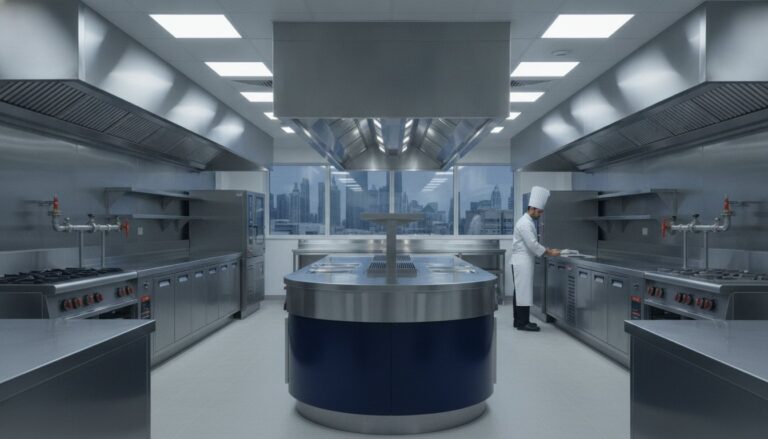
High-performance commercial kitchen fabrication Dubai represents a rigorous engineering discipline that extends far beyond the simple assembly of stainless steel furniture. It is the technical foundation upon which the efficiency, safety, and longevity of a hospitality establishment are built. Understanding the commercial kitchen fundamentals requires a deep appreciation for material science and structural integrity, as these elements dictate how a facility will withstand the relentless pressure of high-volume industrial use. Every component, from a stainless steel work table to a complex exhaust system, must be engineered to precise tolerances to ensure seamless integration into a professional workflow.
Selecting the appropriate materials is a critical step in the design phase. In the UAE, where high ambient temperatures and humidity levels are standard, the choice of stainless steel grade isn’t just a preference; it’s a requirement for operational survival. Utilizing sub-standard materials leads to rapid oxidation and structural failure, which can compromise food safety and necessitate costly premature replacements. Professional fabrication services prioritize the use of high-grade alloys that offer superior resistance to the corrosive cleaning agents and high-heat environments typical of industrial kitchens.
Material Science: Why Stainless Steel Grade Matters
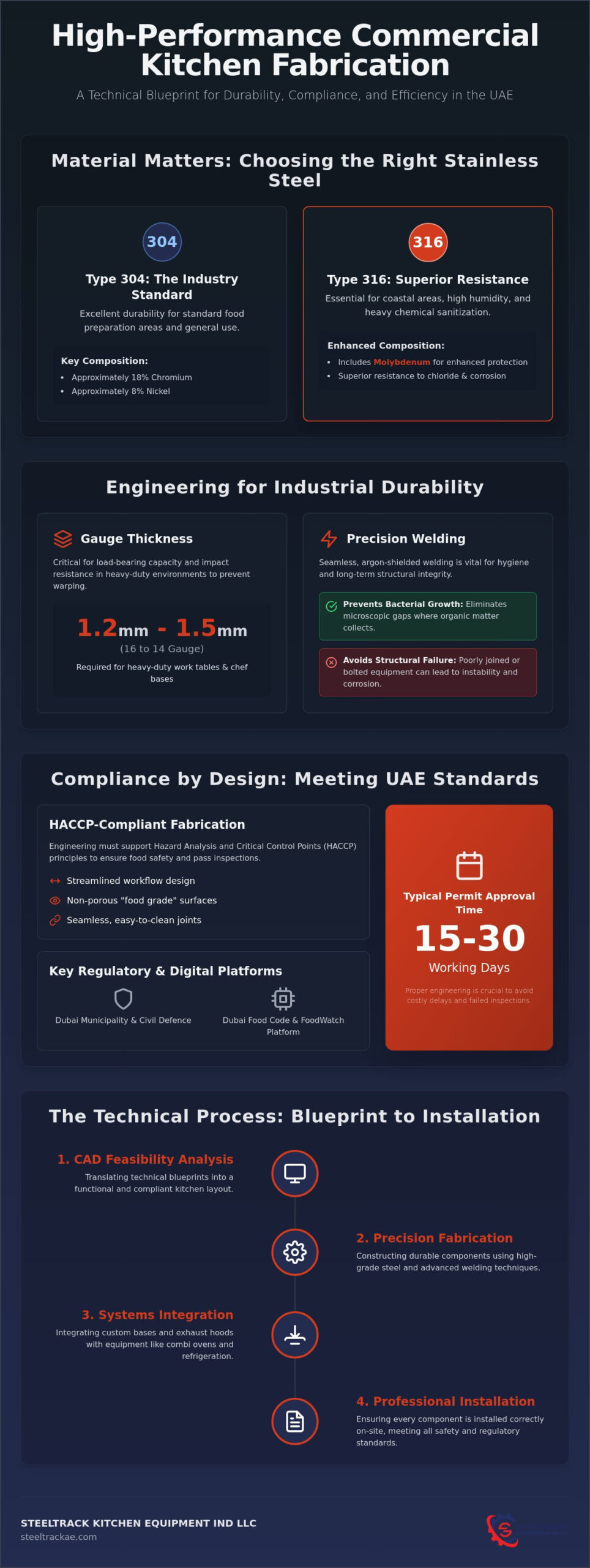
The distinction between different grades of stainless steel lies in their chemical composition. Type 304 stainless steel is the industry standard for most kitchen applications, containing approximately 18% chromium and 8% nickel. This combination provides excellent corrosion resistance and durability for standard food preparation areas. However, for facilities located near the coast or those utilizing heavy chemical sanitization, Type 316 is often specified. This grade includes molybdenum, which significantly enhances resistance to chloride-induced pitting and stress corrosion cracking. Ensuring that surfaces are “food grade” involves verifying that the manufacturing process leaves no porous areas where bacteria can colonize, a standard that is non-negotiable for maintaining HACCP compliance.
Durability Standards for Industrial Environments
Industrial durability is largely determined by the gauge thickness of the steel used. For heavy-duty work tables and chef bases, a 1.2mm to 1.5mm thickness (16 to 14 gauge) is essential to provide the necessary load-bearing capacity and impact resistance. Thinner steel often warps under the weight of heavy cooking ranges or deep fryers, leading to unstable work surfaces and potential safety hazards.
Precision welding is another pillar of durability. Seamless, argon-shielded welding eliminates the microscopic gaps found in bolted or poorly joined equipment. These smooth transitions are vital because they prevent the accumulation of organic matter and moisture, which are primary drivers of bacterial growth and localized corrosion. In the harsh UAE climate, these engineering details ensure that your equipment remains structurally sound and hygienically superior throughout its intended service life.
Engineering for Compliance: UAE Regulatory Standards and HACCP
Securing operational approval in the UAE requires more than just high-quality equipment; it demands a facility engineered to meet the stringent mandates of the Dubai Municipality and Civil Defence. In the context of commercial kitchen fabrication Dubai, compliance is a structural requirement that influences every weld and joint. Failure to adhere to the Dubai Food Code can result in significant delays, as permit approvals typically span 15 to 30 working days. A methodical approach to design ensures the physical environment supports the rigorous demands of the FoodWatch digital platform, which monitors safety compliance across the emirate.
Technical precision in the fabrication phase mitigates the risk of failed inspections and operational downtime. Every installation must account for the specific environmental conditions of the region, ensuring that materials and layouts remain resilient under the pressure of high-volume industrial use. By prioritizing regulatory alignment during the engineering phase, stakeholders protect their investment and ensure a seamless path to commissioning.
HACCP-Compliant Fabrication Layouts
The architecture of a professional kitchen must facilitate a logical, one-way flow of materials to prevent cross-contamination. This linear progression starts from the receiving area, moves through cold storage in walk-in cold rooms, and concludes at the service line. By integrating specialized fabrication such as stainless steel 3-bowl sinks and dedicated mop sinks, operators maintain the high hygiene levels required by international food safety standards. Custom wall shelves and cabinets with doors provide sanitized storage solutions that keep utensils protected, meeting the requirement for non-porous, washable surfaces throughout the facility.
Effective waste management is equally vital to the HACCP framework. We integrate stainless steel grease traps and floor grating into the initial blueprint to manage effluent effectively. These components are essential for maintaining a sanitary environment and preventing drainage failures that could lead to health code violations or inefficient kitchen workflows.
Ventilation and Civil Defense Alignment
Fire safety is a primary concern for the Dubai Civil Defence. All Type I stainless steel exhaust hoods must be engineered to accommodate mandatory wet-chemical fire suppression systems. These hoods are designed to manage the intense heat loads generated by high-volume cooking ranges and Chinese gas ranges common in the UAE hospitality sector. Proper ventilation doesn’t just ensure safety; high-efficiency systems can reduce energy consumption by up to 25%, providing a clear operational advantage. If you’re preparing for a new installation, you can consult with our technical team to ensure your layout is fully compliant from day one.
Synergy Between Custom Fabrication and Industrial Equipment
Operational excellence in the UAE hospitality sector depends on the seamless marriage of industrial hardware and bespoke structural support. Professional commercial kitchen fabrication Dubai is not merely about creating standalone furniture; it’s about engineering a cohesive ecosystem where equipment and stainless steel structures function as a single unit. When custom-fabricated bases are designed with the specific weight and thermal output of industrial appliances in mind, the result is a kitchen that sustains high-volume output without structural fatigue or operational bottlenecks.
This synergy ensures that every square meter of the facility is utilized with mathematical precision. By aligning the dimensions of stainless steel work tables with the capacity of cooking ranges and refrigeration units, we eliminate the physical gaps that often lead to inefficiency and hygiene risks. This methodical approach to integration is what separates a standard kitchen from a high-performance industrial facility.
Thermal Equipment Integration
High-performance cooking lines require robust foundations to handle the physical and thermal stress of daily operations. Custom-fabricated oven tables and heavy-duty bases are essential for supporting sophisticated Heavy-Duty Cooking Range UAE systems, ensuring they remain level and secure during peak service. Precision engineering also ensures that combi ovens and pizza ovens have the necessary clearance for ventilation, which is vital for preventing overheating and maintaining manufacturer warranties.
Integrating deep fryers and Chinese gas ranges into a continuous stainless steel line requires a deep understanding of heat loads and grease management. We design custom stands and surrounding surfaces that can withstand localized high temperatures without warping. This level of technical detail ensures that the equipment operates at peak efficiency while the surrounding environment remains safe and easy to sanitize.
Cold-Line and Refrigeration Fabrication
The structural integrity of walk-in cold rooms and refrigeration systems relies heavily on precise fabrication. Custom meat display cabinets and salad bar chillers must be integrated into the surrounding stainless steel work tables to maintain a professional aesthetic and functional continuity. This integration is critical for maintaining the strict temperature controls required by the Dubai Food Code, as poorly fitted equipment can lead to thermal leakage and increased energy costs.
Logistics within the kitchen are further optimized through the use of specialized stainless steel bakery and kitchen trolleys. These units are engineered to interact perfectly with cold-room dimensions and preparation surfaces, facilitating the safe movement of temperature-sensitive products. By matching the fabrication to the specific equipment capacity, we ensure that the cold-chain remains unbroken and that the kitchen’s throughput is maximized during high-traffic periods.
The Technical Process: From Blueprint to Professional Installation
The transition from a conceptual design to a fully operational industrial facility requires a methodical, multi-stage engineering workflow. Commercial kitchen fabrication Dubai is a systematic discipline that begins long before the first sheet of stainless steel is cut, ensuring that every component is tailored to the specific spatial and operational requirements of the client. This process is grounded in technical accuracy, moving through five distinct phases to guarantee a result that’s both durable and compliant with UAE standards. It starts with a comprehensive site survey and a detailed assessment of electrical and plumbing configurations to confirm that the existing infrastructure can support high-capacity cooking ranges and refrigeration systems.
Following the survey, technical CAD drafting and feasibility analysis are conducted to translate operational needs into a precise blueprint. This phase is critical for identifying potential bottlenecks in the kitchen flow and ensuring that every piece of custom-fabricated equipment, from stainless steel work tables to exhaust hoods, integrates seamlessly. By verifying these details during the design stage, we eliminate the risk of costly on-site modifications and ensure that the final layout supports peak throughput.
Precision Manufacturing and Quality Control
Manufacturing occurs within a controlled industrial environment where technical precision is paramount. We utilize laser cutting technology to achieve exact dimensional accuracy, ensuring that custom sinks and base cabinets fit perfectly within their allocated footprint. This level of detail is a hallmark of SteelTrack Services, where every weld is inspected for structural integrity. Multi-stage polishing follows the fabrication process, producing the smooth, non-porous finishes required for hygienic food contact surfaces. This rigorous approach to quality control ensures that our stainless steel products don’t just meet but exceed the durability standards required for high-volume industrial use.
On-Site Logistics and Installation
The installation phase requires close coordination with other technical contractors, including electrical and mechanical engineers, to manage site logistics effectively. Ensuring that drainage-sensitive equipment, such as 3-bowl sinks and grease traps, is installed perfectly level is essential for preventing stagnant water and maintaining long-term hygiene standards. Our teams manage the entire process, from the initial positioning of heavy-duty equipment to the final securing of wall shelves and cabinets.
Post-installation, we conduct rigorous quality assurance testing to verify gas and electrical connectivity and ensure that all ventilation systems operate at peak efficiency. The process concludes with final commissioning and a regulatory handover, providing stakeholders with the documentation needed for Dubai Municipality inspections. If you’re ready to begin your facility’s transformation, you can request a technical consultation with our engineering team today.
SteelTrack: Your Strategic Partner for Industrial Kitchen Excellence
SteelTrack has established itself as a cornerstone of industrial engineering within the UAE’s hospitality landscape. Our approach to commercial kitchen fabrication Dubai is defined by a commitment to institutional strength and methodical precision. We don’t just supply equipment. We architect the structural foundations that allow large-scale facilities to operate with uninterrupted efficiency. This legacy of authority is built upon decades of technical skill and a deep-seated understanding of the regional market’s unique demands, positioning us as a strategic partner rather than a mere vendor.
Our comprehensive capabilities encompass every critical facet of B2B infrastructure, from high-performance cooking ranges and Rational combi ovens to sophisticated walk-in cold rooms. This holistic oversight ensures that all fabricated components, such as stainless steel exhaust hoods and chef bases refrigerators, are engineered to function as a unified, high-performance system. By maintaining control over the entire fabrication and integration process, we guarantee that each installation meets our rigorous standards for durability and operational ROI.
Beyond the Kitchen: Industrial Laundry Systems
While our expertise is deeply rooted in food service, we provide extensive fabrication support for industrial laundry operations across the UAE. This specialized service includes the manufacturing of custom stainless steel trolleys designed for high-volume hotel logistics and the structural infrastructure required for industrial washing machines and tumble dryers. By offering these integrated solutions, we serve as a single-source partner for the diverse technical needs of the modern hospitality sector, ensuring that back-of-house operations are as robust as the front-of-house experience.
Why Institutional Clients Choose SteelTrack
Large-scale hospitality and catering entities require a partner that understands the complexity of UAE regulatory frameworks. Our engineering teams maintain a rigorous adherence to both local municipality standards and international safety protocols, ensuring every project is delivered with full HACCP compliance. The longevity of our installations is a testament to our technical mastery and our dedication to using only the highest grades of industrial steel. We provide more than just commercial kitchen fabrication Dubai; we offer the professional reliability and technical support necessary to sustain high-performance environments over the long term.
Every project we undertake is managed with the same level of detail, from the initial CAD feasibility analysis to the final commissioning of the facility. This methodical progress ensures that our clients receive a kitchen or laundry system that’s ready to handle the most demanding industrial workflows. If you’re seeking a partner that values safety, sustainability, and engineering excellence, we invite you to partner with SteelTrack for your next industrial project.
Advancing Industrial Standards in UAE Hospitality
The long-term success of any hospitality venture in the region depends on the structural integrity and regulatory alignment of its back-of-house operations. By prioritizing precision-engineered commercial kitchen fabrication Dubai, stakeholders ensure their facilities possess the industrial resilience required to withstand high-volume demands while maintaining absolute hygiene standards. We’ve examined how the strategic selection of Grade 304 and 316 stainless steel, combined with a methodical approach to HACCP-compliant design, creates a foundation for operational excellence and sustained ROI.
SteelTrack remains dedicated to providing the institutional strength and technical expertise necessary for large-scale projects across the Emirates. Our solutions offer comprehensive UAE national coverage. We ensure your facility meets every local mandate with sophisticated, industrial-grade equipment. Whether you’re establishing a new cloud kitchen or upgrading a premier hotel facility, our engineering team is prepared to translate your operational requirements into a high-performance reality.
Consult with SteelTrack Technical Services for Custom Fabrication to secure a partner committed to your long-term success. We look forward to engineering your next milestone.
Frequently Asked Questions
What is the standard grade of stainless steel for commercial kitchen fabrication in the UAE?
Grade 304 stainless steel is the mandatory industry standard for food-contact surfaces across the UAE. For facilities located in coastal areas or those utilizing aggressive chemical sanitization, Grade 316 is often specified due to its superior resistance to chloride-induced pitting. Both grades provide the non-porous, durable finish required to maintain long-term structural integrity and meet the hygienic mandates of the Dubai Municipality.
How does custom fabrication improve HACCP compliance in a restaurant?
Custom commercial kitchen fabrication Dubai improves HACCP compliance by facilitating a logical, one-way workflow that eliminates cross-contamination between raw and cooked materials. Precision-engineered layouts ensure that stainless steel sinks, preparation tables, and sanitized storage units are positioned to support rigorous hygiene protocols. This methodical approach ensures the physical environment aligns perfectly with the digital monitoring requirements of the FoodWatch platform.
What are the technical requirements for a commercial exhaust hood installation?
Commercial exhaust hoods must be constructed from high-grade stainless steel and meet specific Dubai Civil Defence safety standards. Technical requirements include the integration of a mandatory wet-chemical fire suppression system for all Type I hoods. Additionally, the ventilation system must be engineered to manage specific heat loads and grease output to ensure operational safety and energy efficiency within high-volume industrial environments.
Is it better to choose custom stainless steel work tables or modular units?
Custom stainless steel work tables are generally superior for industrial environments due to their heavier gauge thickness and seamless integration. While modular units offer flexibility, custom fabrication eliminates the physical gaps where bacteria and moisture accumulate. Bespoke tables are typically manufactured with 1.2mm to 1.5mm steel, providing the structural durability required to support heavy-duty cooking ranges and high-volume preparation tasks.
How long does a typical commercial kitchen fabrication and installation project take?
A comprehensive project encompassing design, regulatory approvals, and installation typically requires between 30 and 44 weeks to reach final commissioning. Securing the necessary permits from the Dubai Municipality and Civil Defence generally takes 15 to 30 working days. This timeline ensures that every phase, from CAD drafting to on-site quality assurance, is executed with the methodical precision required for large-scale industrial facilities.
Do you provide fabrication for industrial laundry equipment areas?
We provide specialized fabrication support for industrial laundry areas within the hospitality sector. This includes the manufacturing of custom stainless steel trolleys for linen management and structural foundations designed to support heavy-duty washing machines and tumble dryers. Our engineering team ensures these systems are as robust as our kitchen installations, providing a complete B2B infrastructure solution for hotel and institutional clients.
Can custom fabrication be integrated with existing cooking ranges and ovens?
Custom fabrication is specifically designed to integrate seamlessly with your existing cooking ranges, combi ovens, and refrigeration units. Technical surveys allow us to engineer bespoke oven tables, chef bases, and work surfaces that match the exact dimensions and thermal requirements of your current hardware. This synergy ensures a continuous, professional finish that maximizes workspace efficiency without requiring the replacement of functional industrial equipment.
What maintenance is required for stainless steel kitchen equipment to prevent corrosion?
Preventing corrosion requires a consistent maintenance regimen using non-abrasive cleaning agents and soft cloths. It’s essential to avoid chloride-based cleaners or steel wool, as these can damage the protective chromium oxide layer of the stainless steel. Regular rinsing and thorough drying of surfaces, particularly in high-humidity UAE environments, will preserve the equipment’s finish and ensure its longevity in a high-volume industrial setting.